
My stay in England for my university’s semester abroad started in Dungeness, a tiny village on the South coast of Kent. I stayed in the Dungeness Bird Observatory. This had the big plus of being surrounded by birders who are very knowlegeable on the birds in the area, and was also interesting to get in contact with people I wouldn’t have had I stayed at a different accommodation. It was also closer to the birding sites and cheaper than other accommodations including camping, so it was the ideal place for me to stay. I took a train to Ashton followed by a bus to Dungeness (seeing a Merlin from the bus) and arrived at the observatory at around 3pm. I was welcomed by David, the observatory warden, who showed me around the building and also introduced me to Jacob, the assistant warden. Both are very friendly and extremely experienced birders, which was a huge help with pelagic birds, a main draw of the site. As a headland on the South coast, great birds can be seen in Dungeness, and I had a very productive time here.
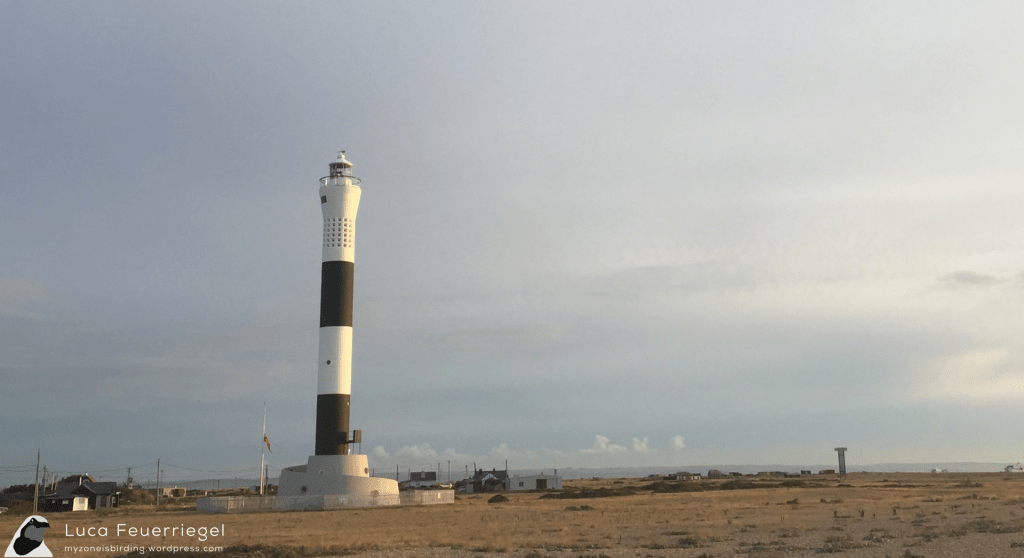
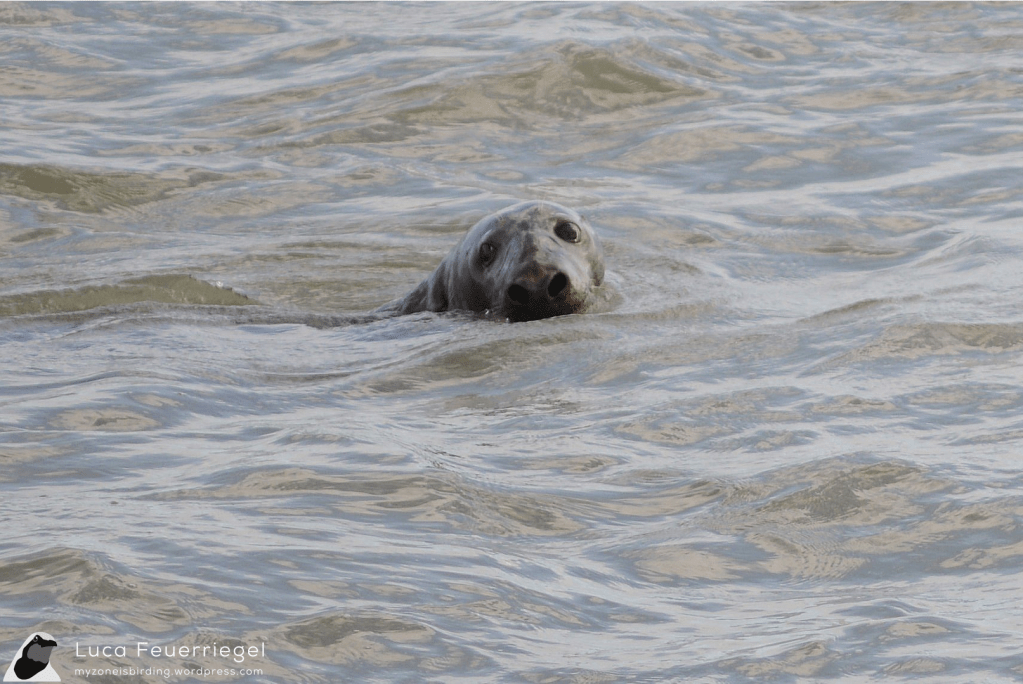
On the first morning I joined David for some seabirding from the east side of the point, which was the first time for me to do land-based seabirding. Although I did take a scope, I only had a monopod which makes a real difference. The wind was icy, but we saw Northern Gannet, Parasitic Jaeger (Arctic Skua), Sandwich Tern and Common Scoter flying past out at sea. Northern Wheatear, White, Grey and Yellow Wagtails, Common Chaffinch and Meadow Pipit and were also recorded passing overhead. Porpoises and a large Grey Seal regularly appeared at the water surface, both being mammal species I hadn’t seen before.
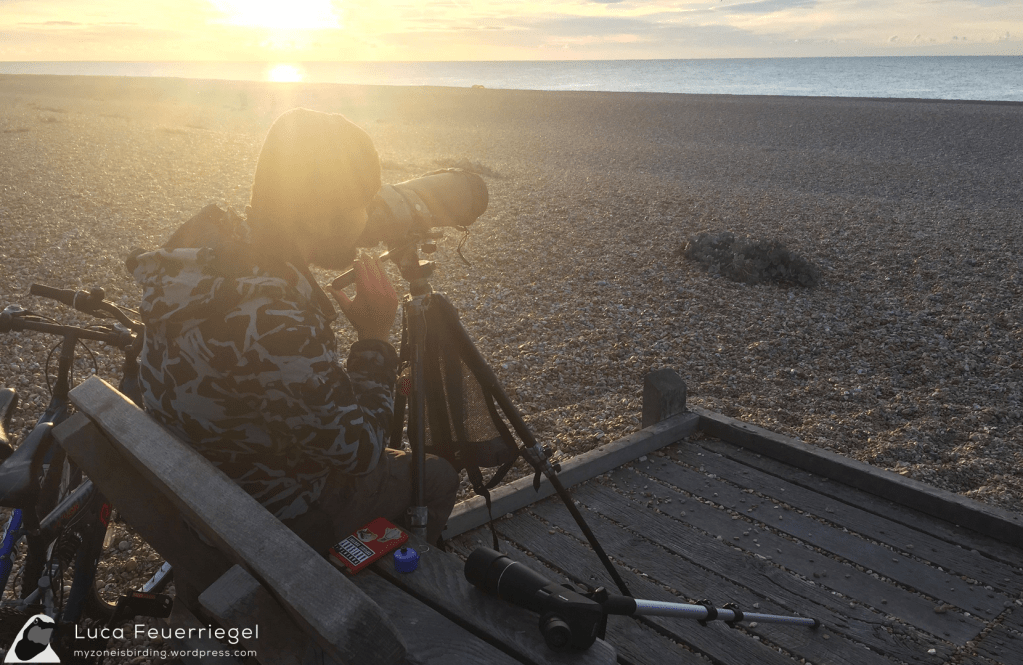
I also spent several hours over the three days with Jacob sea-watching from the bench at the tip of Dungeness. In addition to the birds seen on the first morning, we had Great Crested Grebe, Brent Goose, Common and Arctic Terns, European Oystercatcher, Dunlin, Sanderling, and Eurasian Hobby. I was particularly happy however to connect with Razorbill, Guillemot, and Black-legged Kittiwake, all of which were my target birds for Dungeness. Even better was a fly-by Red-throated Diver, a real stunner! Since coming across a photo in a bird guide 10 years ago, this species has captured my imagination and I was very happy to finally see it. Several Sooty Shearwaters were impressive sights, although many of them were extremely distant. With his incredibly trained eyes, Jacob was hugely helpful during the seawatches. He easily identified Northern Fulmar and Manx Shearwater, which to me appeared as barely visible specks on the horizon. One afternoon, huge schools of mackerel and smaller fish caused a massive frenzy that made the water appear to boil. Countless gulls, terns, cormorants, and Northern Gannets took advantage of the opportunity and dropped into the chaos from above.
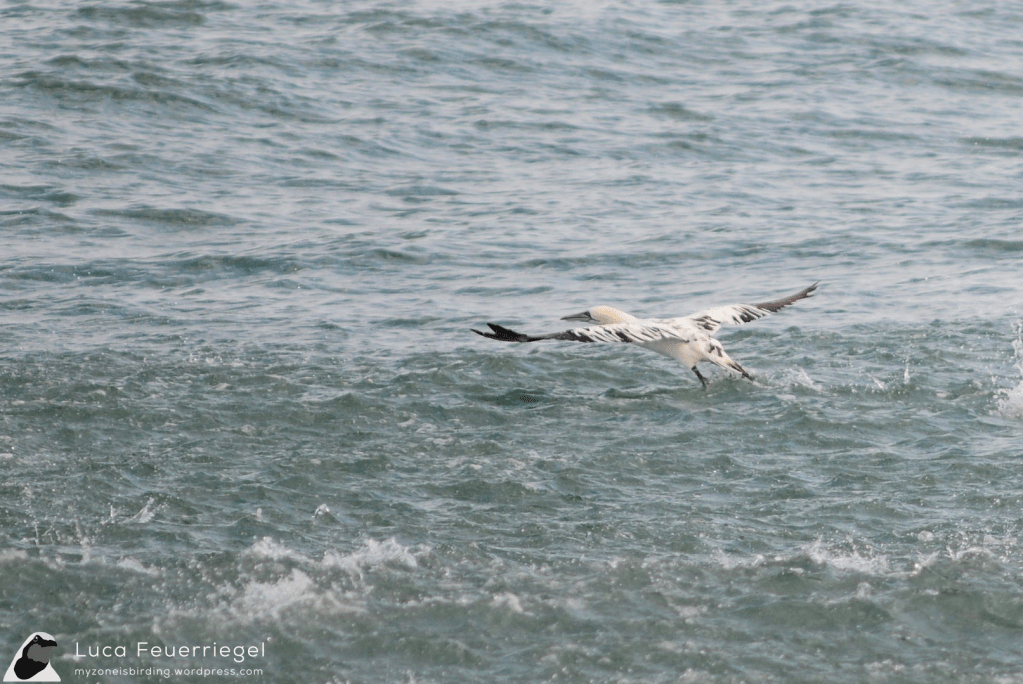
These days were also useful for studying gulls in their different plumages, something I really want to get better at. While Black-headed, Lesser Black-backed, Great Black-backed, and Herring Gulls were abundant as always, other species frequented the flocks as well, which David and Jacob usually pointed out to me. A few juvenile Common Gulls were around, which looked like miniature Caspian Gulls. A dainty Little Gull got me very excited, being another species I hoped to see. The list of gulls grew to an impressive eight species with a single Mediterranean Gull flying past, very similar in colouration to Black-headeds, but larger.
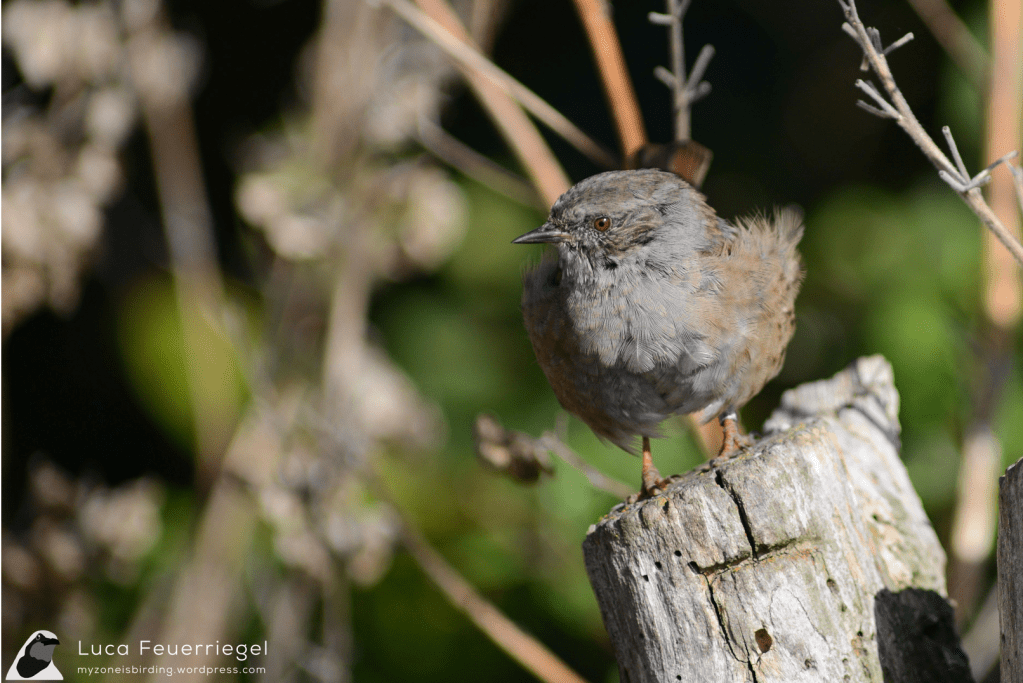
From the observatory (or ‘the obs’, as David and Jacob referred to it), we saw Eurasian Sparrowhawk, Black Redstart, Dunnock, and a single Common Swift that was seemingly not in a rush to migrate South. The trapping area just north of the observatory also had quite a few birds, including Lesser and Common Whitethroats, European Stonechat, Great, Blue, and Long-tailed Tits, Common Chiffchaff, Willow Warblers, European Blackcap, White, Yellow, and Grey Wagtails and Tree Pipit passing overhead, Common Kingfisher, Common Kestrel, and Stock Dove. Cetti’s Warblers were also calling but I learnt from Jacob that it is an extremely elusive species, and I did not manage to see any.
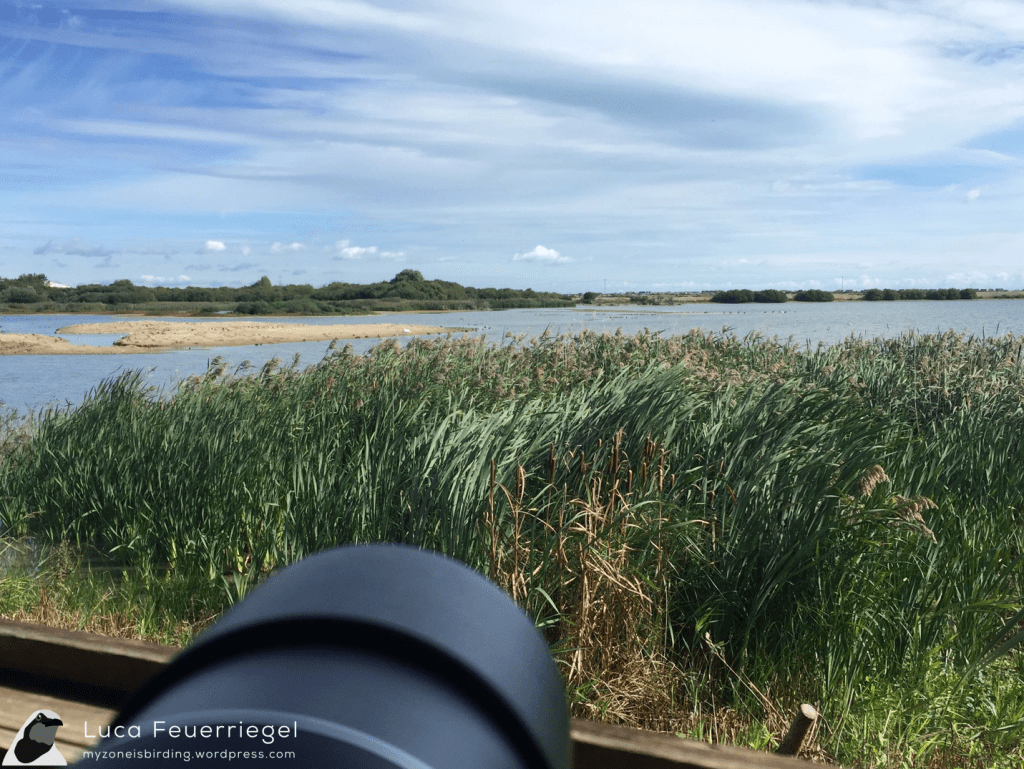
I spent a few hours in the Dungeness Nature Reserve, which held quite a few birds. Glossy Ibis and Wood Sandpiper were around, which also attracted several birds from the area as these species are quite rare here. At the lake, Tufted Duck, Common Pochard, Northern Shoveler, Gadwall, Eurasian Wigeon, Northern Pintail, Eurasian Coot, Eurasian Moorhen, Little Grebe, Mute Swan, Sand Martin, Northern Lapwing, European Golden-Plover, and Common Snipe were all around. The thickets had Common Linnet, European Goldfinch, Eurasian Green Woodpecker, and several calling Cetti’s Warblers. After having failed to spot one in the trapping area, I tried hard but left empty-handed again, only getting un-tickable bursts of brown amongst the reeds. This skulker reminded me of Barratt’s Warbler in South Africa and Sri Lanka Bush-Warbler in Sri Lanka, two similar and infamously elusive species that I managed to see only after long periods of waiting and staring into dense vegetation. The same happened here as several weeks later, I did see a beautiful Cetti’s Warbler in the morning sun at the London Wetland Center (this was my only birding outing during my time in London).
After unsuccessfully trying to track down a calling Yellow-browed Warbler in the tracking area on the last morning, I headed to the beach. Just seconds before Jacob arrived, I spotted an unusual small bird far out at sea, but we could not relocate it. Based on my description of its flight and plumage, he confirmed that it must’ve been a phalarope. Soon after I left for London, it was found again and turned out to be a Red-necked Phalarope, apparently only the second record for the observatory ever! Thus produced a feeling surely well-known to many birders: satisfaction at having spotted a rare bird but simultaneous frustration that the view is inadequate for it to be tickable. I have never seen a phalarope but would very much like to, so this made me even more eager to finally see one.
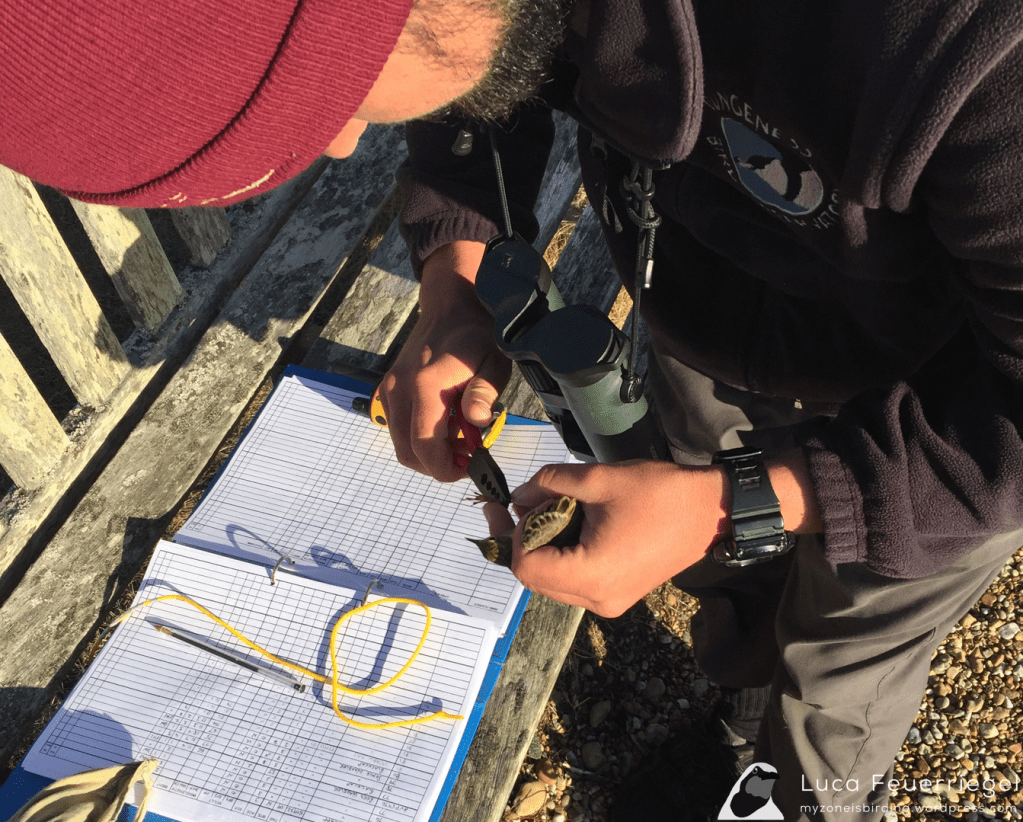
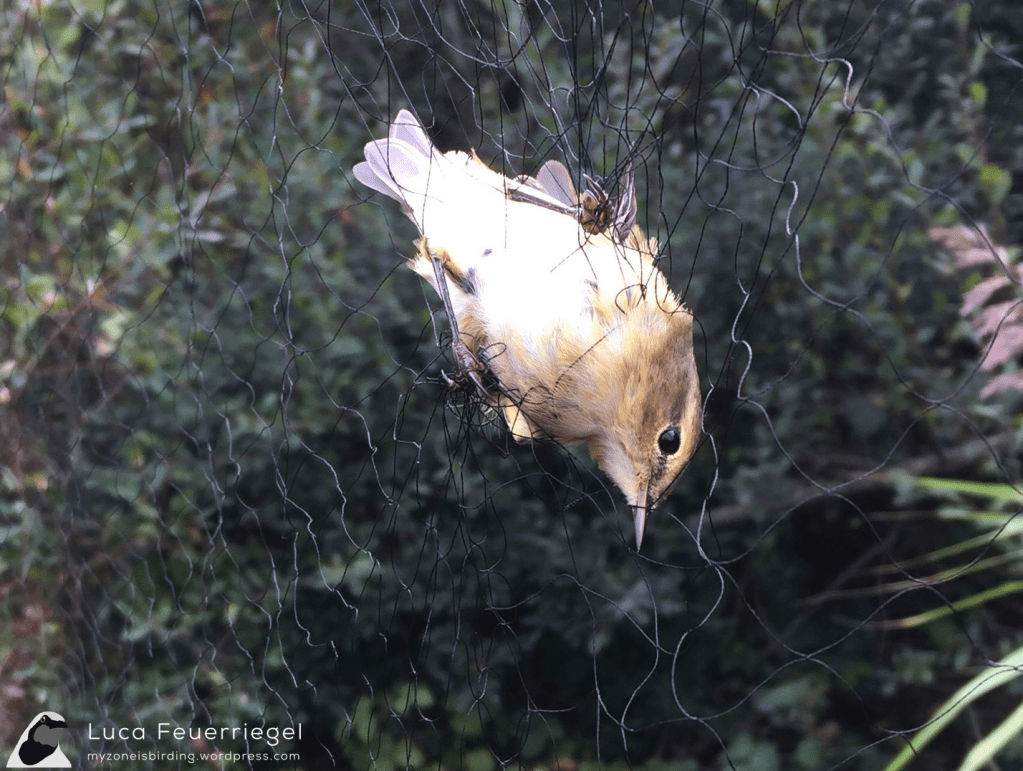
This sighting (or non-sighting!) wrapped up three very rewarding days. I counted over 90 species in my birding journal, including multiple lifers. It was also fun and interesting to chat with David and Jacob, such as their take on the royal family, a regular topic of conversation as the funeral of the Queen coincided with my visit to Dungeness. It was also interesting to get an impression of their work at the observatory, and also conduct some counts, such as of Meadow Pipits, Barn Swallows, and Sandwich Terns. Watching the ringing process was also interesting, although I couldn’t avoid feeling sorry for the birds when tangled in the net and handled during ringing (although Jacob worked very carefully and quickly to limit the stress).
Upon returning to London, I moved into the student residence for University College London which I attended for the semester, and in the following days met many new people with whom I got to know some places in London. The term, which lasted until mid-December, went by extremely fast as I was constantly occupied, primarily with meeting friends in the beginning but increasingly with university work towards the end. I also enjoyed studying as two of my courses, one about vertebrates and the other about wildlife conservation, were very interesting and led by fun and inspiring professors. The social aspect was the most important part of my time in London however, and as I hadn’t done as much social stuff before, partly due to Covid and the high workload in Maastricht, I enjoyed every day of this semester to the fullest.
 My Zone Is Birding
Dungeness looks like an amazing place to bird in England. We did some at New Norfolk at the wetlands centre near there. You saw so many species, and good weather helped also. well done !
LikeLike
Thanks! I was fortunate to have the staff from the observatory around, without them I wouldn’t have seen half of what I did!
LikeLiked by 1 person