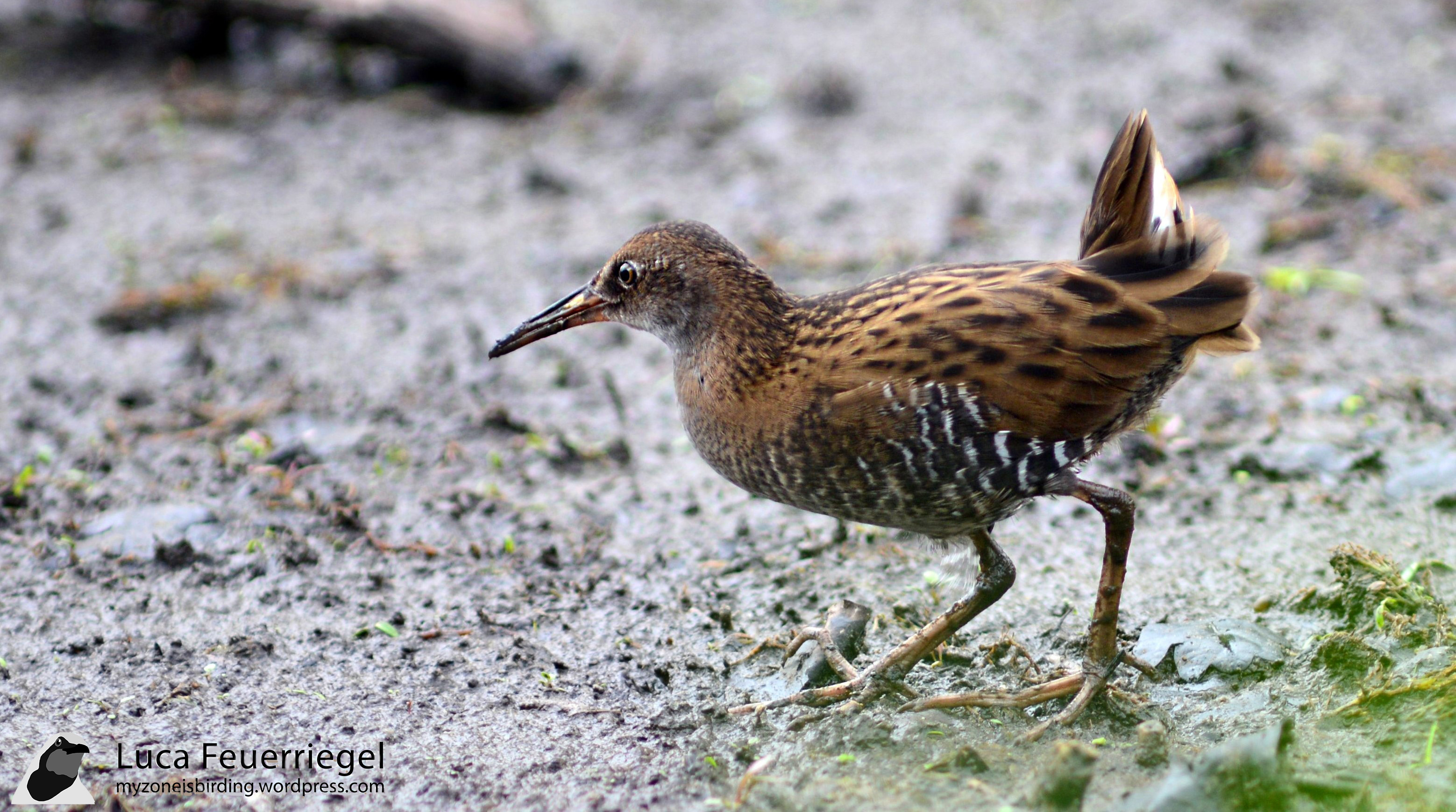

For the second half of my summer after the cycling tour in July, I did an internship at the Max Planck Institute (MPI) for Ornithology. I was looking for internship opportunities earlier in the year and got a response from Dr. Henrik Brumm at the institute, who was very accommodating and agreed for me to do an internship in his research group, Communication and Urban Ecology. The group studies bird acoustics – the production and function of bird sounds, as well as the impact of anthropogenic noise on bird biology. The institute is in the process of merging with another MPI, forming the MPI for Biological Intelligence.

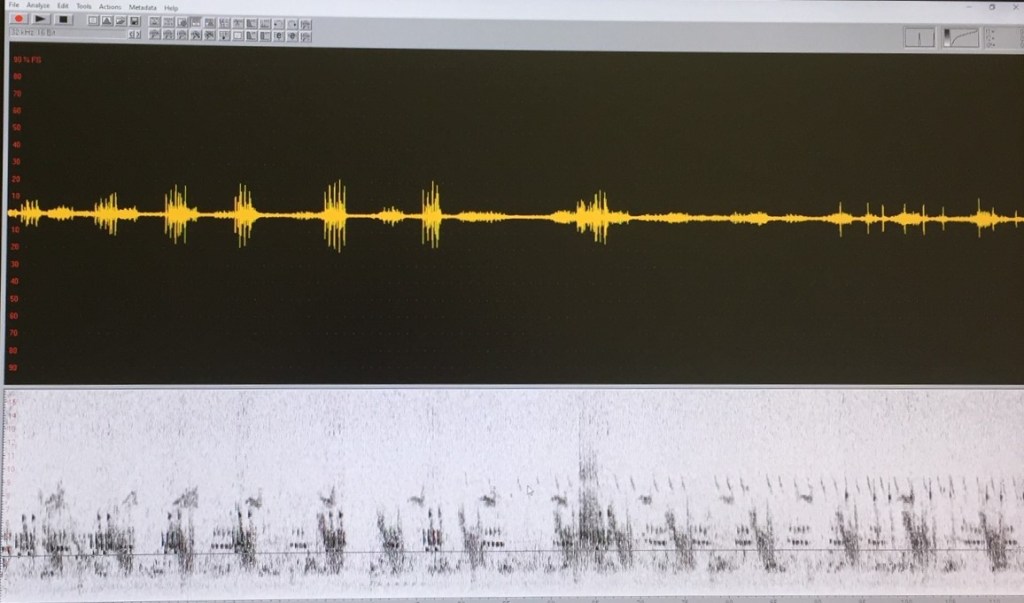
Henrik was kind enough to pick me up at the nearby Possenhofen train station. After showing me around the institute and introducing me to his research group, he explained what I’d be working on over the coming four weeks, which consisted of listening to recordings they made and record when I hear Common Chaffinch songs and rain calls. The Common Chaffinch produce the rain call – usually a series of short notes – primarily in spring, but its function is currently still unknown. Quite some focus was required to listen attentively to hours of recordings every day and pick out the songs and rain call against the variable background noise, but simultaneously it was very interesting as I didn’t have any knowledge of bio-acoustic research before, and I can’t really complain about listening to bird calls either. In addition to the work itself, I enjoyed the workplace atmosphere as everyone was friendly and appeared to be interested in the work they were conducting.
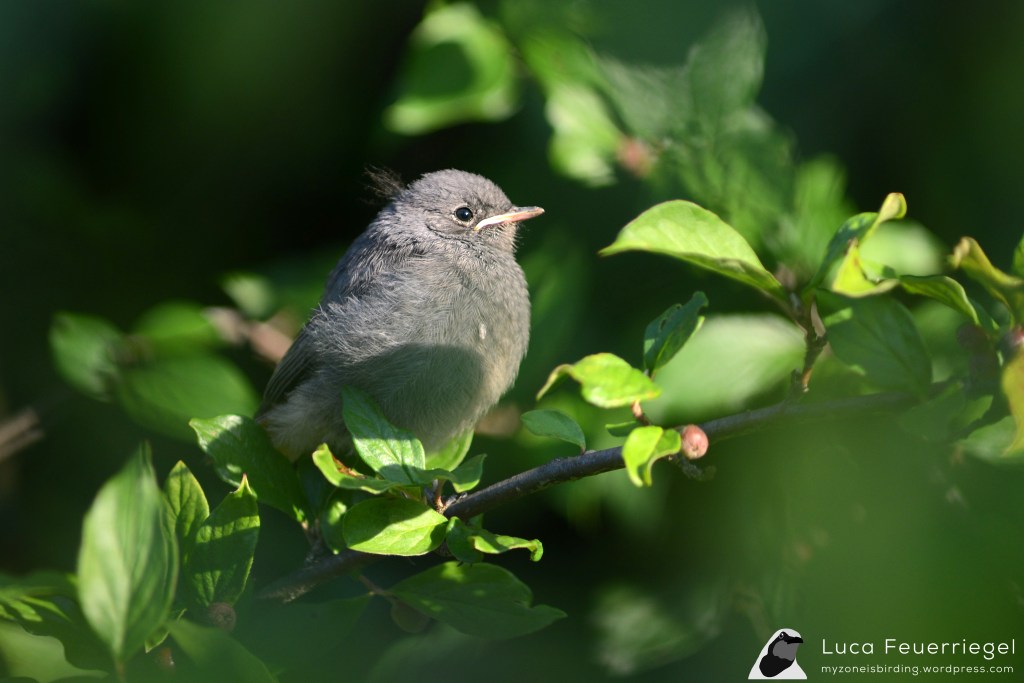
The institute is beautifully located by the small Eßsee and surrounded by forest and farmland. I had left my bicycle at my brother’s place in Munich after the cycling tour and picked it up during my first week at the institute, which allowed me to get around the area easily. While work kept me busy during the day, I did go on walks in the mornings and evenings and went out to explore the area more fully on weekends. The institute was alive with birds: Marsh, Coal, Long-tailed and Crested Tits were present alongside Great and Blue Tits and lots of other common species. I also saw White Stork, Yellow-legged Gull, Northern Goshawk, Eurasian Sparrowhawk, Common Raven, Black Woodpecker, European Pied Flycatcher, Yellowhammer, Common Kingfisher, Red-backed Shrike, Mistle Thrush, European Goldcrest, and Firecrest. Eurasian Nutcracker was a lifer for me, which I observed from my office chair. An unusual bird for the area was a European Oystercatcher that passed overhead.
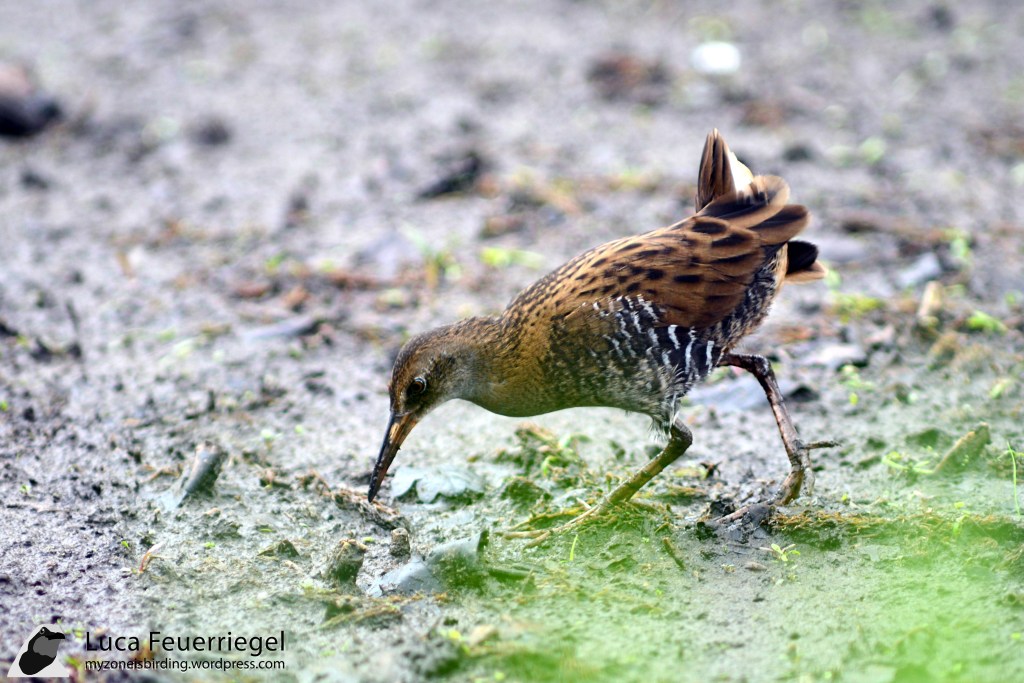
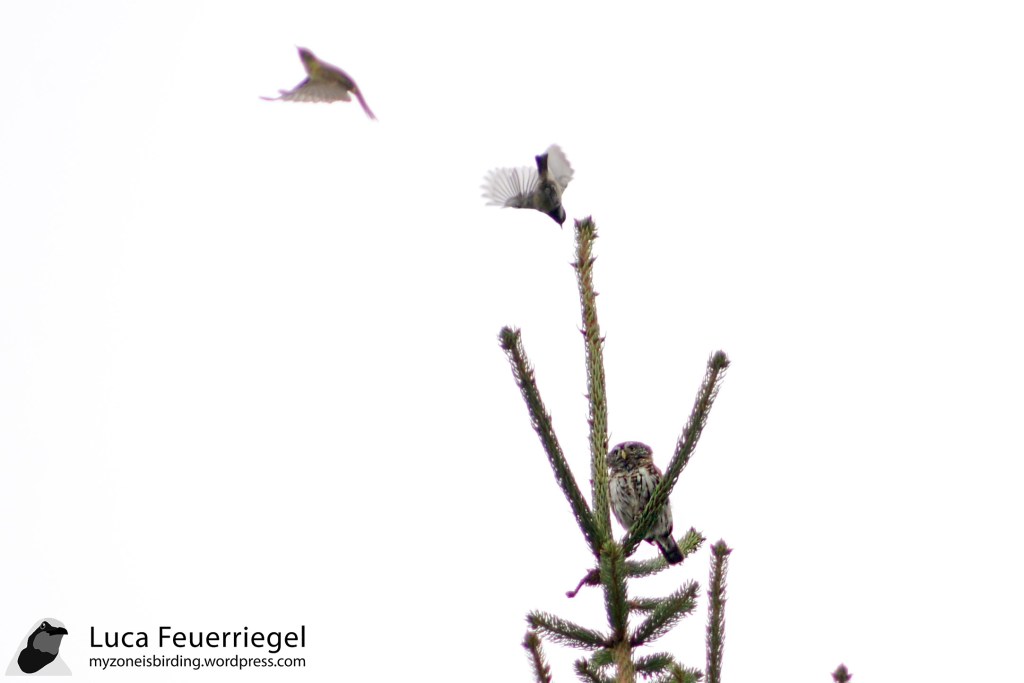
Exploring the farmlands and forests around the institute was also productive. I had several had good sightings, but a Eurasian Pygmy-Owl South of Machtlfing and an approachable Water Rail at Seachtn stole the show. Both were not only lifers but also afforded good views. A White-throated Dipper was present in a small stream that runs through the village of Pähl. The Maisinger See closer to the institute did not yield any special birds, .

The best birding spot in the area is the Vogelfreistätte Ammersee-Südufer, a nature reserve protecting important habitat for breeding and migrating birds. I visited this area a few times and got an excellent haul of birds. The path towards the Binnensee (starting here) was alive with birds, with all expected common species being present together with Icterine and Garden Warblers, Spotted and European Pied Flycatchers, Fieldfare, Eurasian Nuthatch, Great Spotted and Grey-headed Woodpeckers, Western Marsh-Harrier, and European Honey-Buzzard. I was happy about the honey-buzzard since I’ve had an funny history of sightings of this species. My first sighting was of a juvenile in Ndumo Game Reserve back in 2013, although I couldn’t identify it back then. Earlier this year I remembered that sighting and sent my photo of the bird to Trevor Hardaker who identified it for me (he runs the Southern African Rare Bird News service). I also saw what I now know was a European Honey-Buzzard in Magoebaskloof forest a year or so after my first sighting, although back then I was not experienced enough to feel confident about its ID. So, I spent many years in South Africa longingly reading Trevor’s messages of sightings of this rare migrant when I actually already had seen it twice!
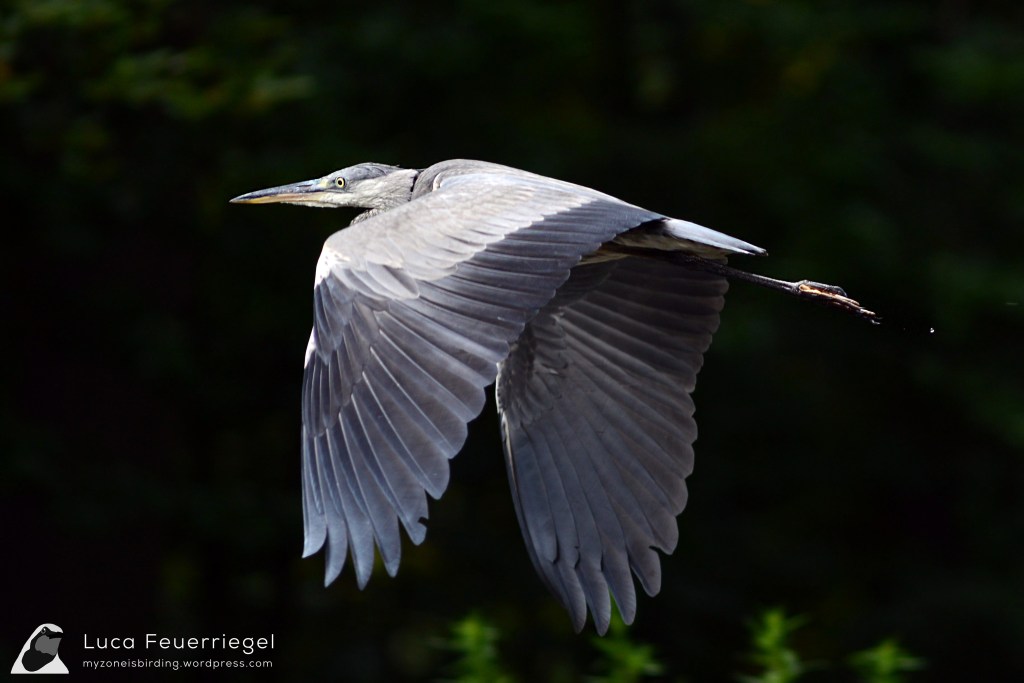
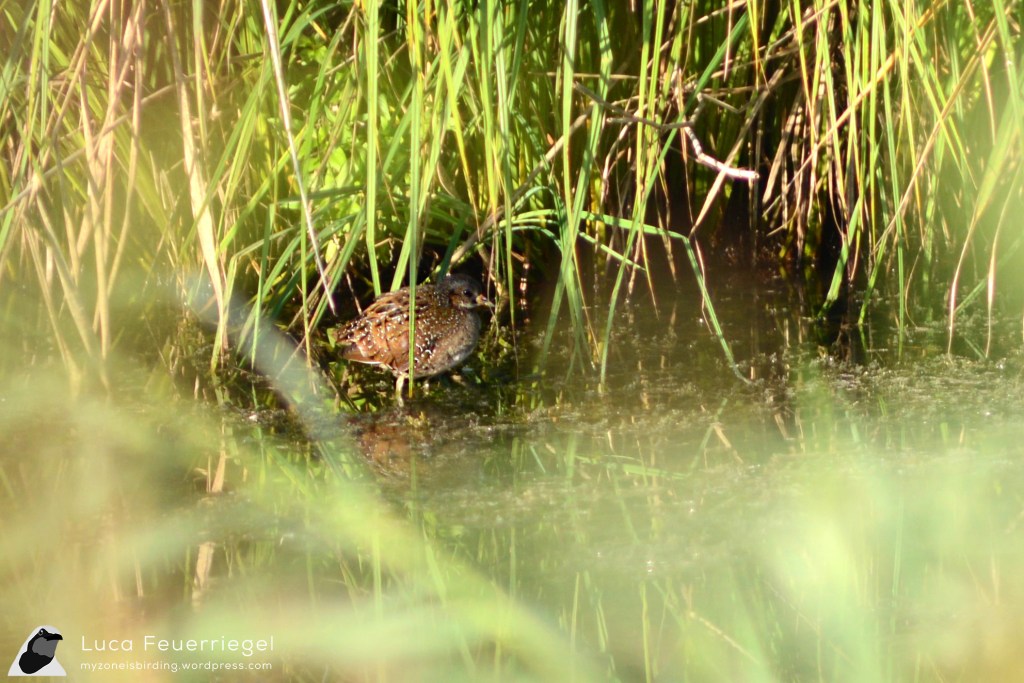
The Binnensee held Eurasian Coots, Mallard, Green-winged (Eurasian) Teal, Garganey, Red-crested Pochard, Greylag and Egyptian Geese, Grey Heron, Great Egret, Great Crested and Little Grebes and Yellow-legged Gull. Waders were well-represented on the muddy edge, with Northern Lapwing, Wood Sandpiper, Common Snipe, Dunlin, Little Stint, Ruff, Common and Spotted Redshanks, and Black-winged Stilt. The small reedbed right next to the track by the Binnensee delivered Eurasian Reed and Sedge Warblers, Common Reed-Bunting, Bluethroat, … were hiding in the reeds. I was also elated to find a Spotted Crake here, preening itself by a small open patch barely visible between the reeds. Like any birder would tell you, crakes are a particularly tantalizing group of birds, and this species has been on my wish list for years. A photographer who was there said it’s been around for a few days and sometimes shows itself well, so I returned a day before my internship ended, and managed to take some nice photos. The Ammer stream on the opposite side of the path here held Goosander and a Common Kingfisher. Beavers are clearly also around, as indicated by some trees felled by this species.
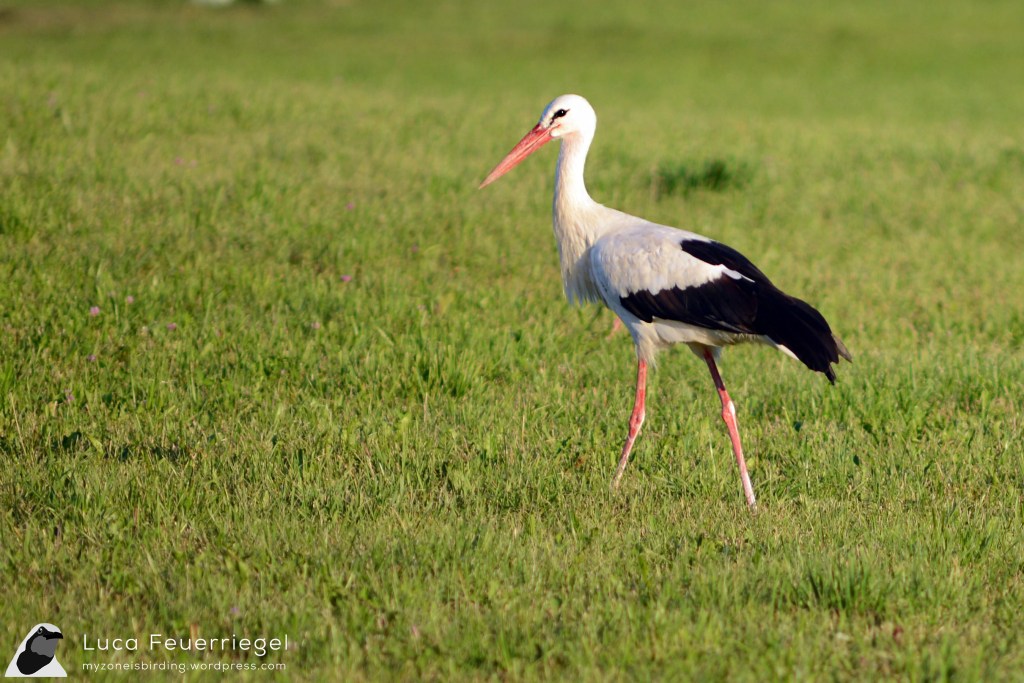
Another path that leads into the reserve here was accessible only for a few hundred meters to prevent disturbance to breeding birds, but I had good views of Marsh and Wood Warblers, Rook, Red and Black Kites, Stock Dove, White Stork, Common and Lesser Whitethroats, European Goldfinch, European Greenfinch, and Eurasian Golden Oriole. The only species of note at the observation tower in Diessen was a Sand Martin.
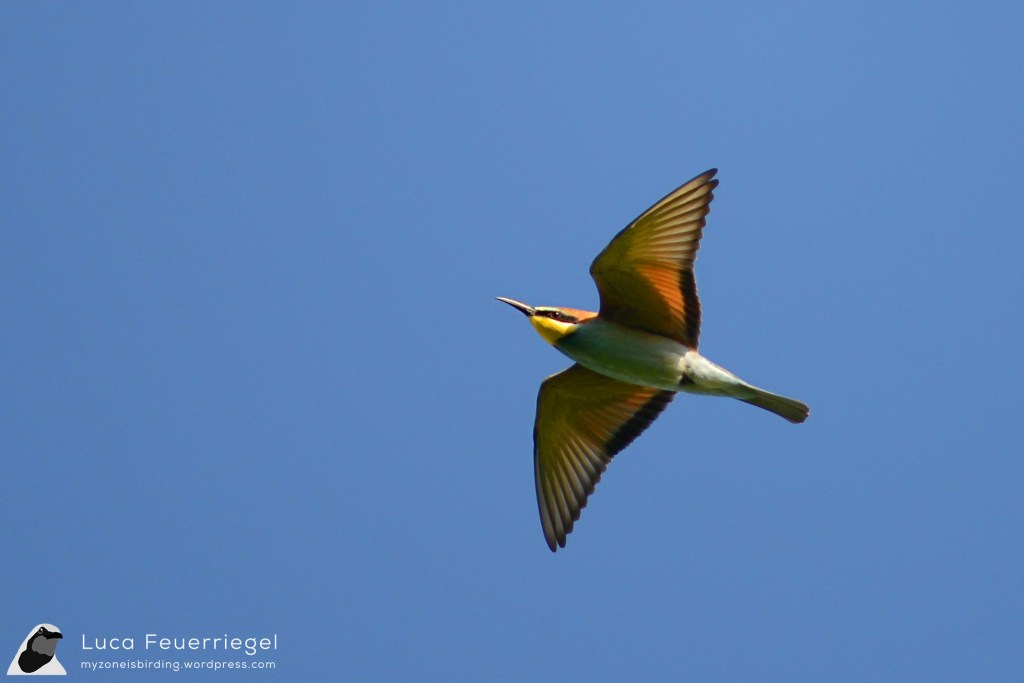
Our research group also made an afternoon outing to a European Bee-eater colony near Augsburg, around an hour’s drive. This species has become increasingly common in the last decade in southern Germany, likely because of the increasing temperatures, and now several breeding colonies exist. The breeding season was over of course, but the birds were still in the area and eventually we came across a distant flock of up to 80 birds. A few birds were feeding over a field very close to us so we just sat down in the grass and spent an hour watching these elegant and beautiful birds forage, occasionally swooping right over our heads in hot pursuit of an insect.
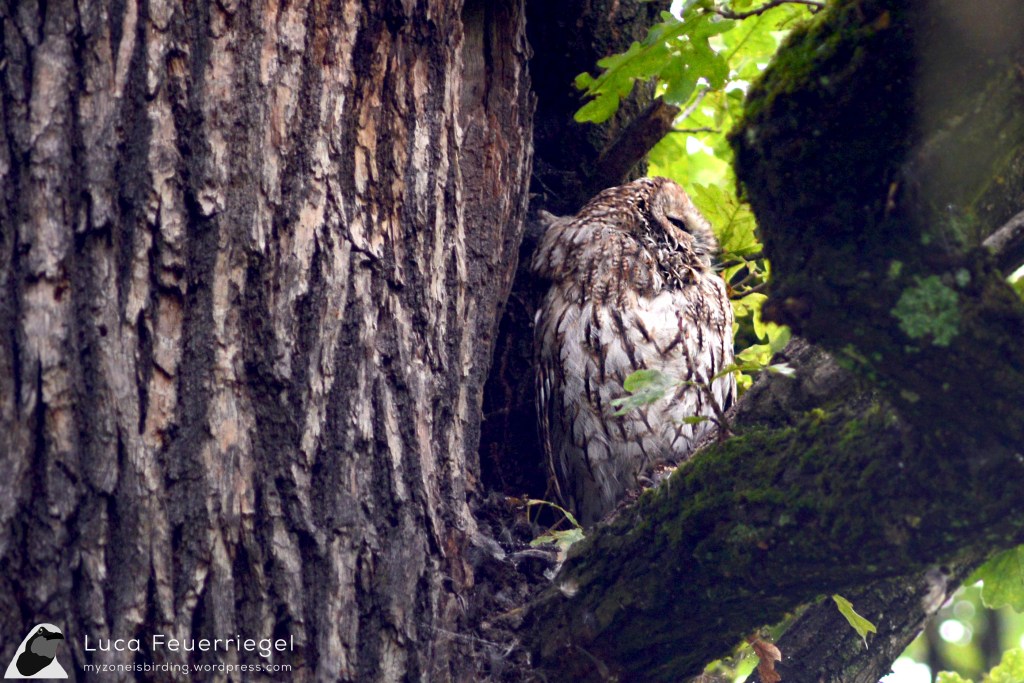
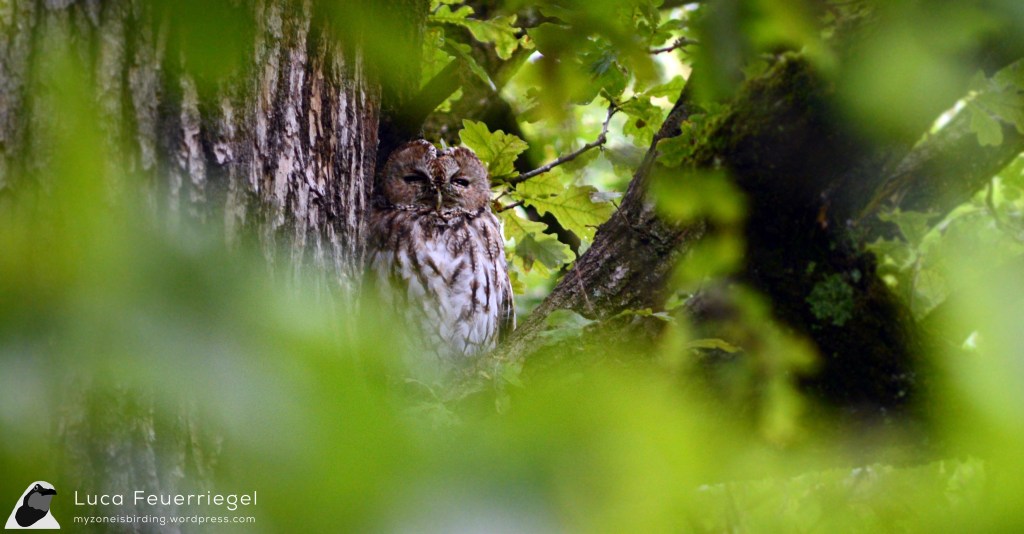
After two failed attempts, I also finally managed to find a Tawny Owl in the Nymphenburg Palace park in Munich. These owls are well-known residents of the park, and often roost in the same locations, although they are sighted more frequently in winter.
On the last day, I got to see a very interesting remnant of the earlier days of the institute – a wall that developed into a kind of mural by reknowned guest scientists being invited to draw a small sketch onto it. In addition to many animals, the wall curiously also featured lots of sketches of musical instruments and, perhaps more puzzling, Mount Fuji. It was great to see that many of the biologists who contributed significantly to developing the field of animal behaviour were at the exact same place, including people such as Donald Griffin, who discovered echolocation, and Nikolaas Tinbergen. Similarly, I was impressed to be told by Henrik on the first day that the Eßsee, the small lake by which the institute is situated, was the site of Konrad Lorenz’s famous experiments on imprinting in geese.

The internship felt like a holiday, largely because of the peaceful location, many interesting and fun chats with my colleagues, and the work itself being interesting as well. I thoroughly enjoyed getting an impression of how working in such a research institute is like. The birding in the area was also very enjoyable – I never expected to see so many excellent species! The time thus fittingly ended with Grey Wagtails and Eurasian Hobby in Aschering as I cycled back to the Possenhofen train station, giving me a list of 104 species in the four weeks. After the internship I returned to Bonn, where I stayed for a week. As I am writing this, I am on the train to Amsterdam, where I’ll stay for a few days to see my friend Rashmi (and go birding of course!), before continuing to London for my semester abroad.
 My Zone Is Birding
What a wonderful experience and opportunity to see so many bird species and lifers, you were truly blessed.
LikeLike
I was indeed very lucky! I didn’t expect to have so many great sightings!
LikeLiked by 1 person