
The unusual circumstances created by the COVID-19 pandemic made the last several months far from normal. I had two months in Maastricht to get to know the town, meet new people, and have a few university courses. However, the worsening COVID-19 situation and my girlfriend being in Sri Lanka prompted me to do my courses online and join my parents when they returned to Sri Lanka to allow my father to finish his job contract. This proved to be a good choice, as my university soon switched to online-only education. We arrived in Sri Lanka in December, and after COVID-19 tests and quarantine, I divided my time between our house in Colombo and Thalpe, a small town close to Galle where my girlfriend’s family had moved recently. I stayed here after my parents returned to Germany in mid-April.
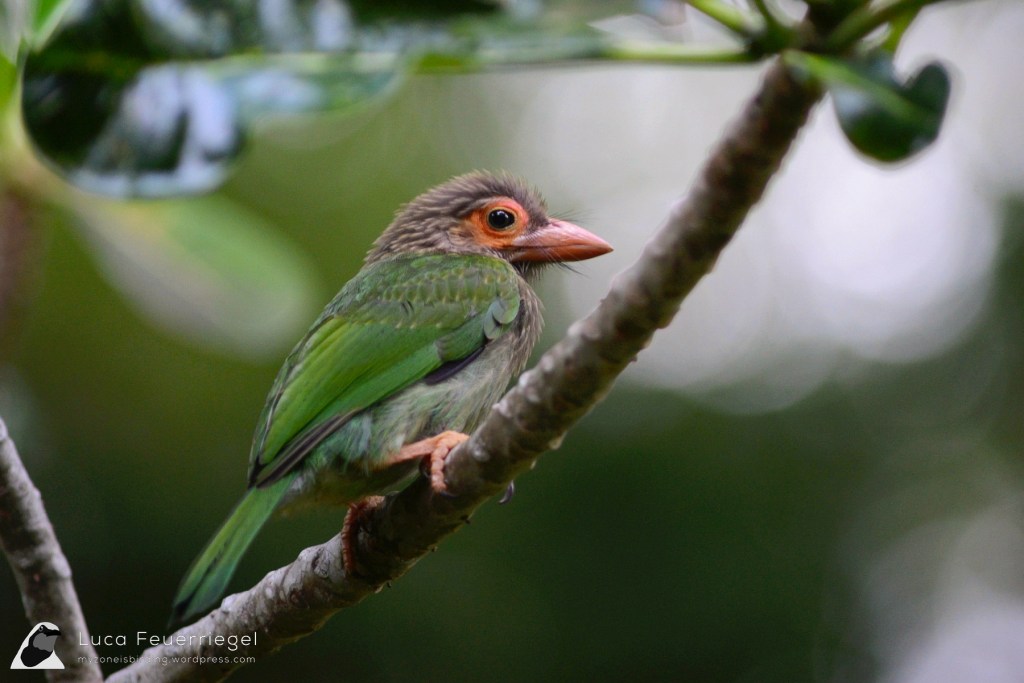
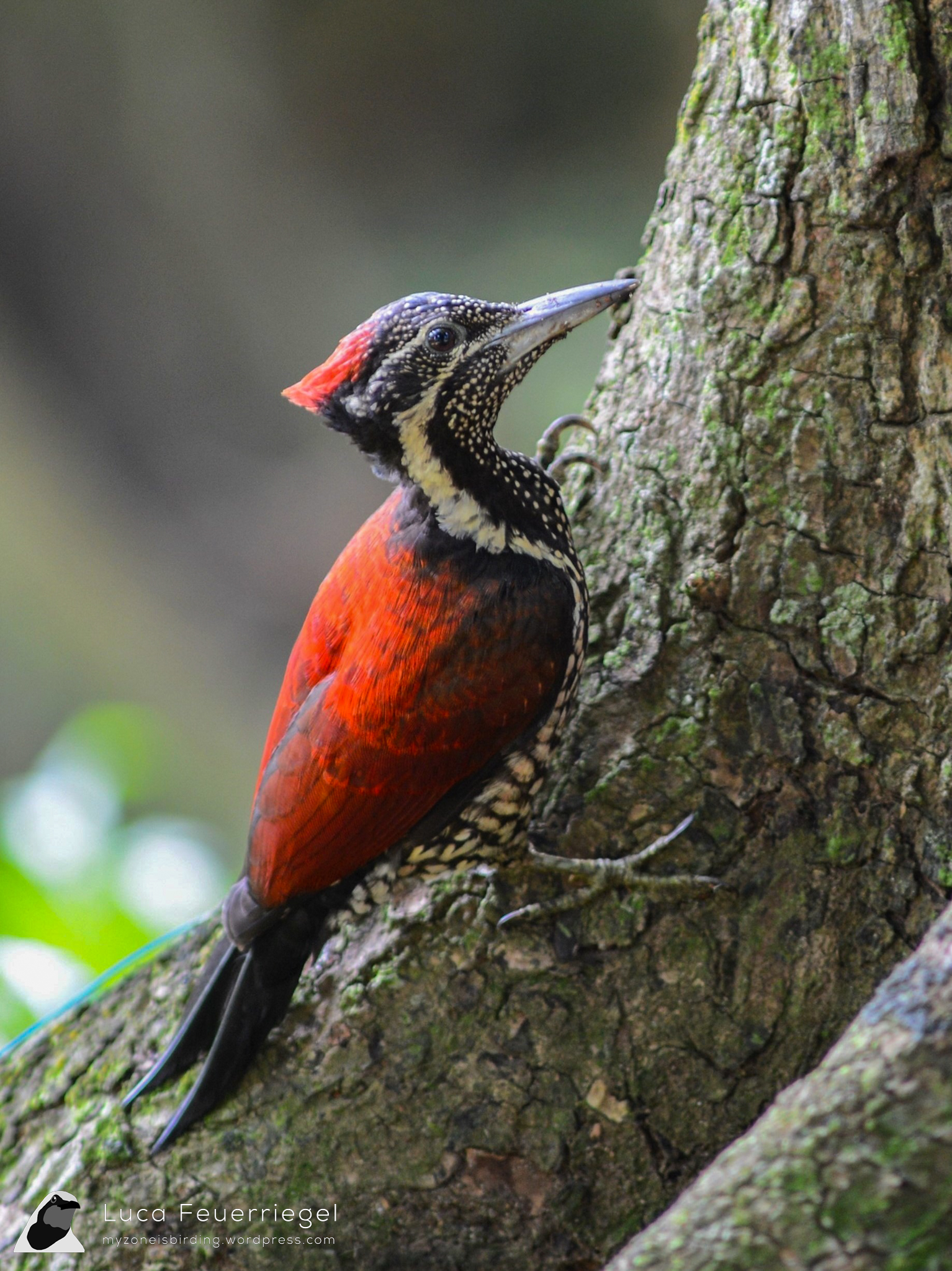
The last few months have been so busy with university work that I had very little time for birding. However, I did get the chance to watch birds in the garden every day, and over time, we had some good observations. Most migrants had already left by April, but seeing some more common birds up close was equally rewarding. As the garden has many tall trees, I often stood on the balcony, binoculars around my neck, after an online class or a long session of studying. From here, common passerines seen included Asian Koel, Common Myna, Red-vented Bulbul, Oriental Magpie-Robin, Black-hooded Oriole, Common Tailorbird, Black-rumped and Scaly-breasted Munias, Indian Paradise-Flycatcher, and Indian White-eye. Other ever-present birds were Ring-necked Parakeet, Sri Lanka Hanging-Parrot, Crimson-fronted and Brown-headed Barbets, Red-backed Flameback and White-throated Kingfisher.

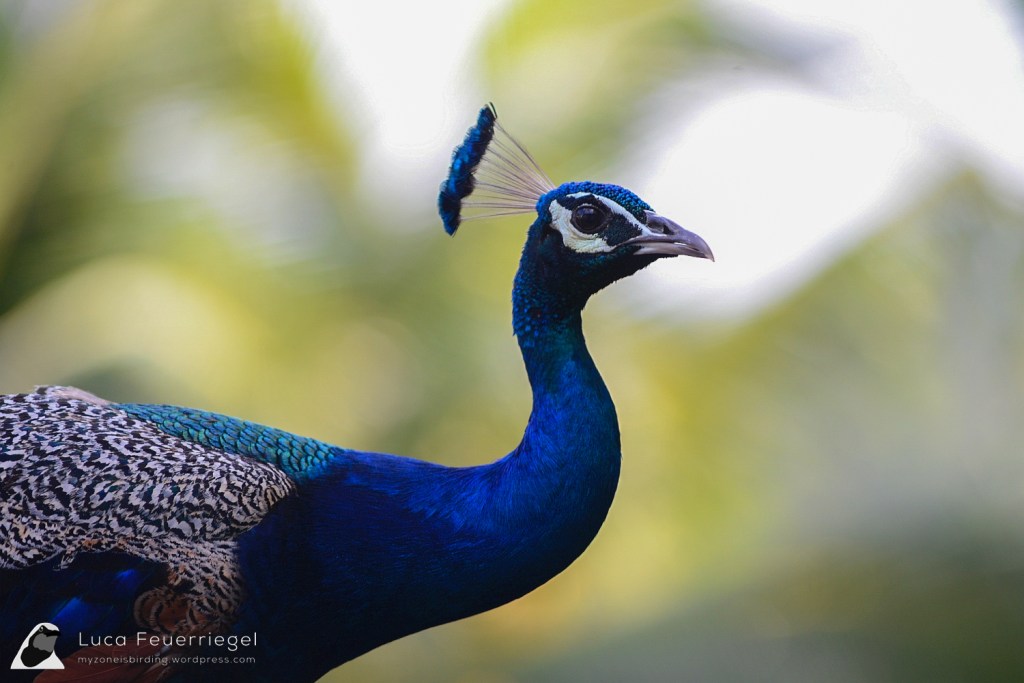
The Columbidae family was particularly well-represented, with Rock Dove, Green Imperial-Pigeon, Orange-breasted and Sri Lanka Green-Pigeons, and Spotted and Emerald Doves all being present. Little and Orange Minivets, Jerdon’s and Golden-fronted Leafbirds, Alexandrine Parakeet, and Black-headed Cuckooshrike were very attractive birds that also put in an appearance from time to time. Indian Peafowls are spectacular birds; before coming to Sri Lanka I wouldn’t have believed anyone referring to them as a common garden species, but their wake-up calls from the palm trees every day at dawn and chasing each other noisily across the roof made them too easy to get more than used to. All these species were complemented by Changeable Hawk-Eagle, Brahminy Kite, Asian Palm-Swift, Indian Swiftlet and Sri Lanka Swallows in the skies. Fly-bys of Crested Treeswift and Ashy Woodswallow were more special, as was the occasional Brown Boobook that passed overhead or called from hidden vantage points in the evenings.
A special sighting was that of an Indian Pitta, which occasionally visited the garden in the early mornings. The pittas were actually still common in the area in early April and had not left for India, where they spend the Northern summer. They called from thicket areas and home gardens along the roads at dusk, and sometimes showed themselves in the dark understory. Since I had told my girlfriend a lot about pittas – one of my favourite groups of birds – she also wanted to see the Indian Pitta, so we called in one of the birds to get a better view. It responded instantly and flew into a tree right in front of us where it remained for a minute or so, providing excellent views. I try to avoid using call playback or recordings, since it diverts the birds from their current activities into responding to some non-existent competitor (aka desperate birders). It is also much more satisfying to find birds by following their calls or seeing them by chance and patience than by simply calling them in through recordings or playback. Admittedly, I unfortunately do use them occasionally when the urge to see a species becomes big, such as on my trip to Borneo, where some rainforest species appeared impossible to see without recordings (in that case the Black-headed Pitta).
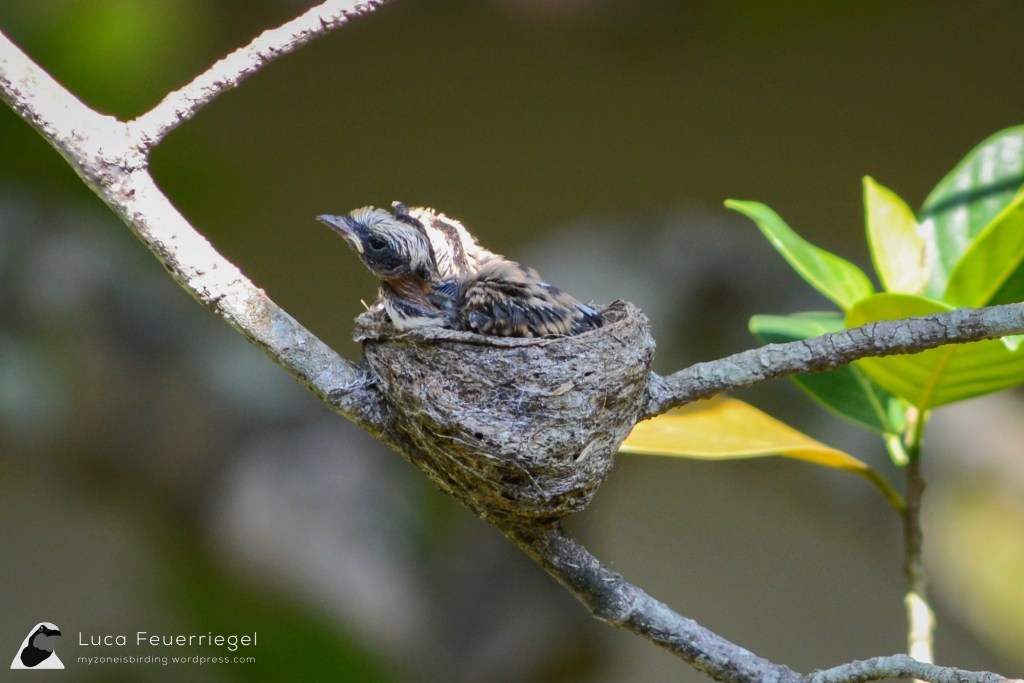
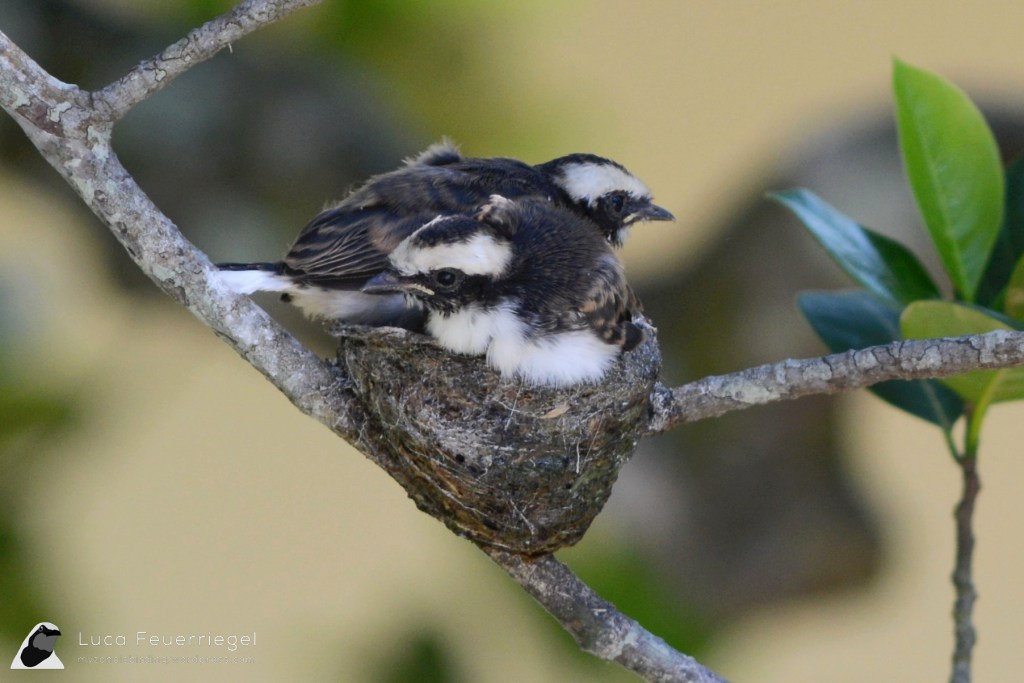
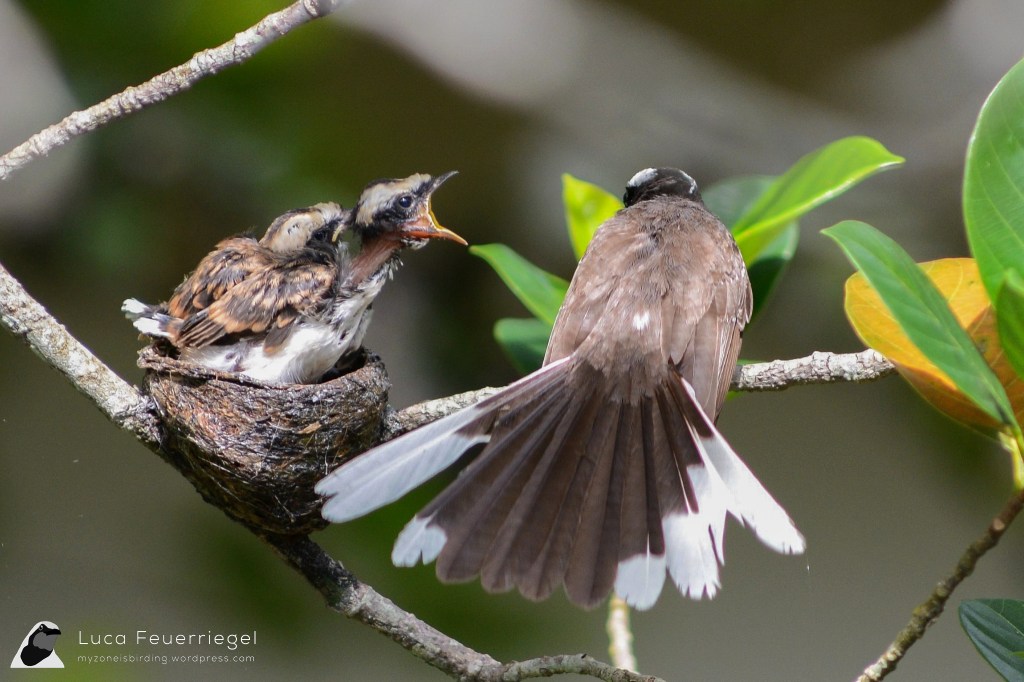
Back to the birds I saw, a particularly special observation was that of breeding White-browed Fantails. It was very entertaining to watch these active birds flitting around the foliage to collect insects for their chick waiting in the neat cup nest. Both parents appeared to be equally involved in incubating and feeding the chicks, and when doing so, the birds were extremely tame. While watching them, they occasionally stooped down and chased insects on the ground literally right next to my feet. Interestingly, the pair of fantails returned to the same nest for a second clutch just a few weeks after their first chick left the nest. This time they raised two chicks, which struggled more and more to fit into the tiny nest as they became older. Eventually, the chicks became too big and one of them had to sit on the branch. Both chicks fledged and a few days later, we noticed some commotion in the trees and saw that the parents had chased a Bronzeback Tree Snake through the canopy until it fell from the tree and disappeared into the bushes.
A small wetland area adjoining the rice fields that are right in front of our house yielded waterbirds such as Lesser Whistling-Ducks, Grey-headed Swamphens, Cattle, Intermediate, Great, and Grey and Purple Herons, and Black-crowned Night Herons, while a White-breasted Waterhen was guiding three newly-hatched chicks through reeds. I also flushed a Black Bittern, a bird I have only seen a handful of times in Sri Lanka. Overhead, Sri Lanka Swallow, Asian Palm-Swift and Indian Swiftlet were hawking insects and were occasionally joined by Ashy Woodswallow and Crested Treeswift, adding up to an impressive tally of birds in and around the garden. I was excited when Gary Allport, a birder and Senior Advisor to the CEO of BirdLife International who is the father of one of my volleyball teammates at school, invited me to a pelagic trip (which I’ll share in my next post). Overall however, birding remained limited to the neighborhood, and I would’ve appreciated the chance to get out more to explore the South coast. Nonetheless, it was always an excellent break from studying to be able to observe such a diversity of beautiful birds around the house.
 My Zone Is Birding
Beautifully written, glad you had a good time in Sri Lanka!
LikeLike
Thanks! I did indeed, largely thanks to you :).
LikeLike
Quite a collection of birds Luca, and very interesting. Love your nesting captures of the Fantail. Interesting that you also have Brahminy Kite there also as we do. The Flamebacks remind me of Woodpeckers.
LikeLike
Thank you and yes, it is quite amazing how many birds were around!
Yep, Flameback is just a name for this group of woodpeckers, like Yellownape is for another South and East Asian group of woodpeckers. There’s been some discussions about the status of this particular species, which has now recently been split as the endemic Red-backed Flameback from the Black-rumped Flameback, which occurs in India and northern Sri Lanka.
LikeLiked by 1 person