
Due to a Poya day, we were lucky to have a three-day weekend in the beginning of March. I was eager to use the opportunity for a trip to Sinharaja, a great place to visit even for such a short period of time with excellent birds in a beautiful setting, just three hours drive from our home. It turned out that my Geography teacher Mr Lockwood, as well as two other teachers and Rashmi, one of my best friends also wanted to go, so it ended up being a fun trip with several people from school. We managed to get five rooms at Martin’s Lodge for the group, undoubtedly the best place to stay in Kudawa as it’s right at the edge of the forest. The main reason I wanted to visit was to see Sri Lanka Thrush, the last endemic of the island I haven’t seen. Although I narrowly missed the thrush, we did see many great species and did the 24km return hike to the rarely visited Singagala, a rock outcrop in the middle of Sinharaja that provides you with excellent views of the rainforest.
07.03.:
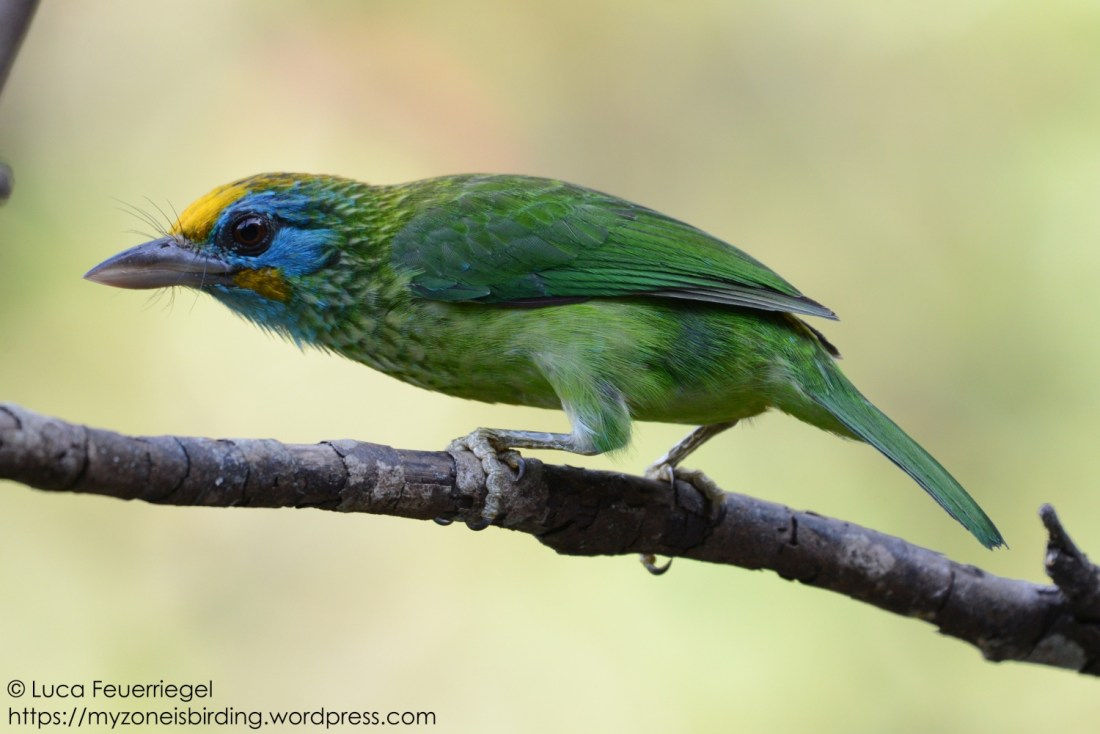
Despite having just returned from Germany the previous night due to my grandmother’s funeral, it was not hard to get out of bed at 5:00 as I was really looking forward to being at Sinharaja again. I was offered a lift by Rashmi and her mom, while my mother would leave later in the morning with Anuja, the driver we usually ask to drive us for these kinds of trips. On the way we stopped for a small breakfast of roti and dhal close to Agalawatta, where the scenery was already beautiful and we saw Bar-winged Flycatcher-Shrike, Yellow-fronted Barbet, Golden-fronted Leafbird, Green Imperial Pigeon, Sri Lanka Hanging-Parrot, Changeable Hawk-Eagle and Legge’s (White-throated) Flowerpecker.
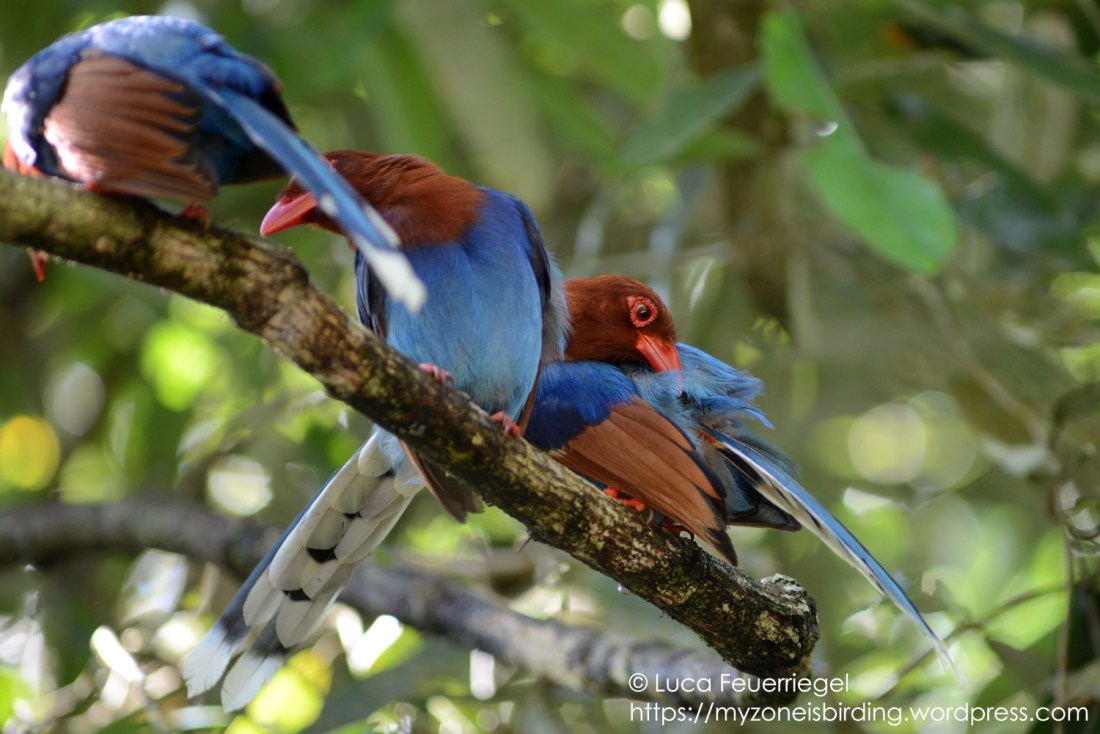
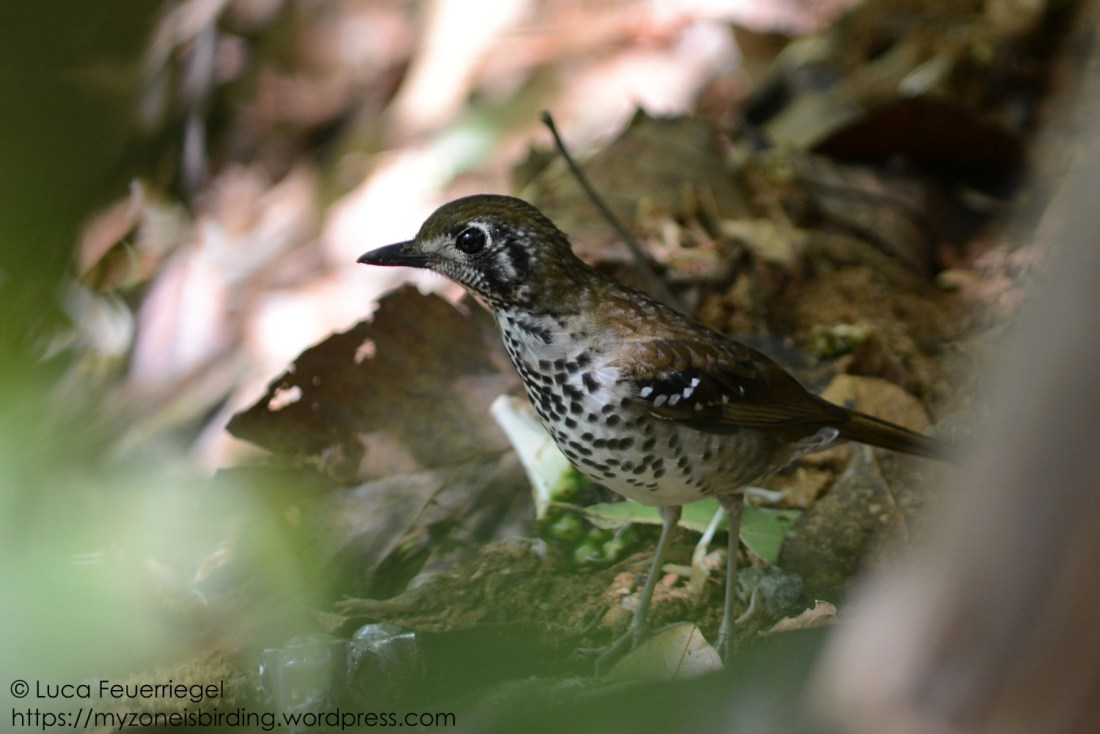
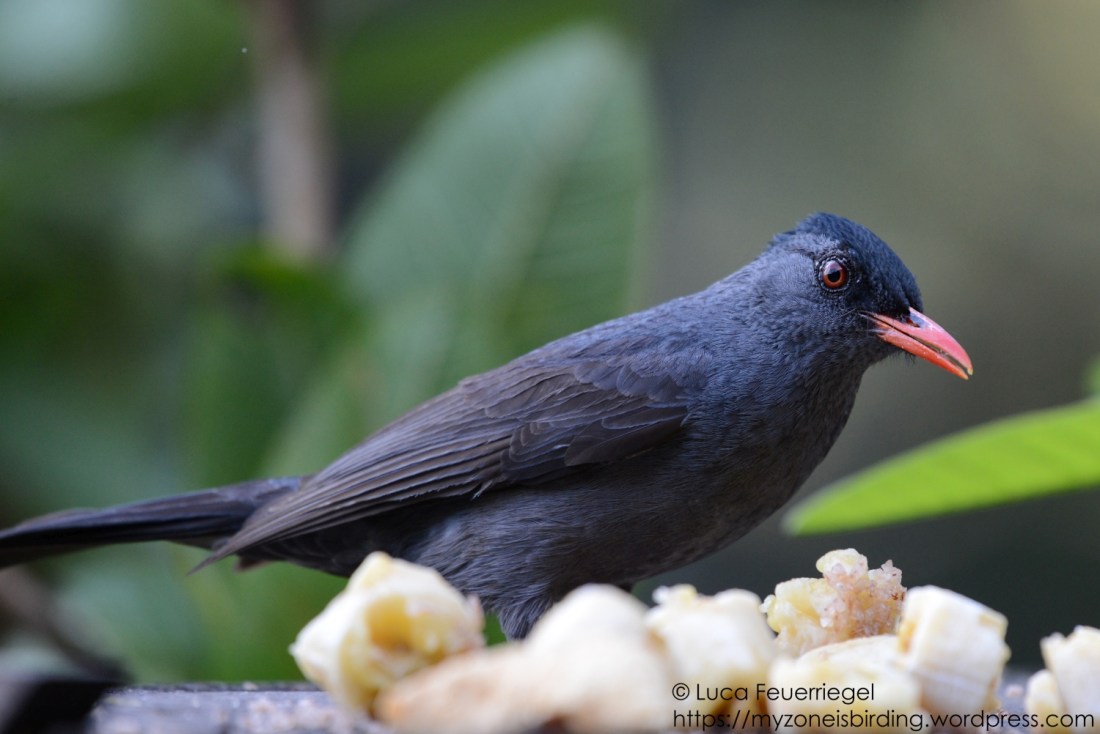
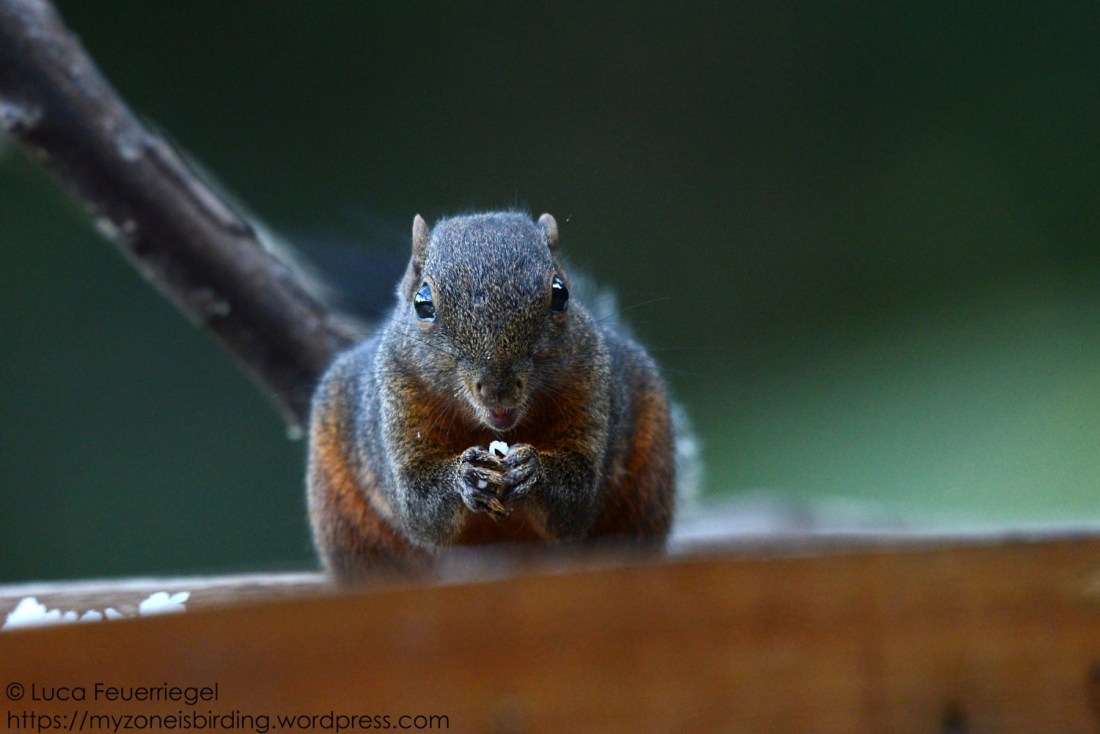
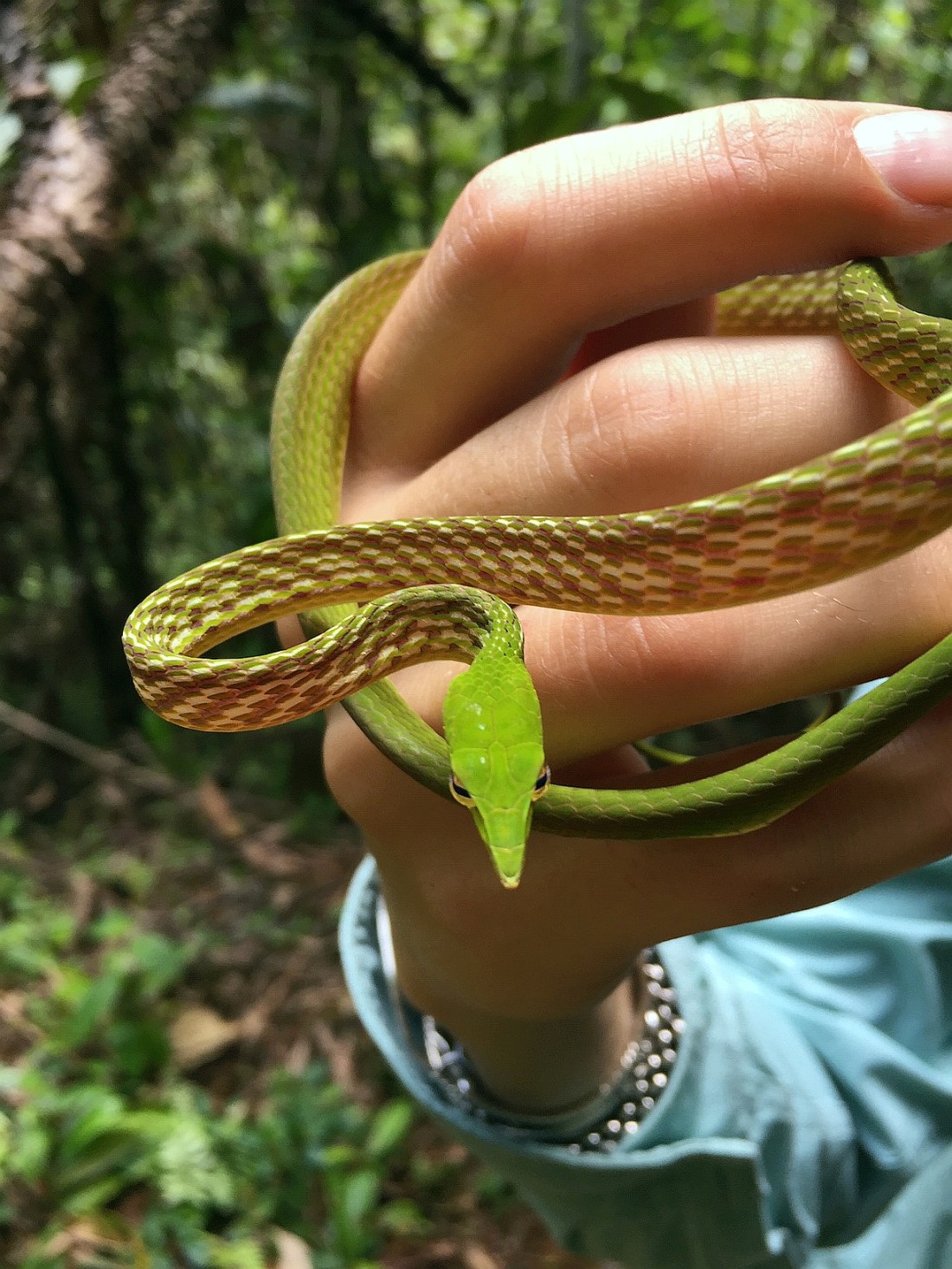
We arrived at the park entrance at around 9:00 and were greeted by Mr Lockwood, his son Lenny and the Mr LeBlanc, Rashmi’s chemistry teacher. They were being entertained by a tame group of Sri Lanka Blue-Magpies, which were a lot of fun to watch as they preened each other. Spot-winged Thrush, Emerald Dove, Sri Lanka Junglefowl, Indian Blue-Robin, Green Warbler, and Square-tailed (Black) and Yellow-browed Bulbuls were also around the small feeding station, as were Toque Macaques and Dusky Squirrel, while a Changeable Hawk-Eagle circled above. Mr Lockwood had organized a jeep to take our luggage up to Martin’s while we walked up to the lodge after sorting out our entrance fees for the following day. The walk up produced another Spot-winged Thrush, Sri Lanka Drongo and many other of the common forest birds, as well as a Vine Snake.
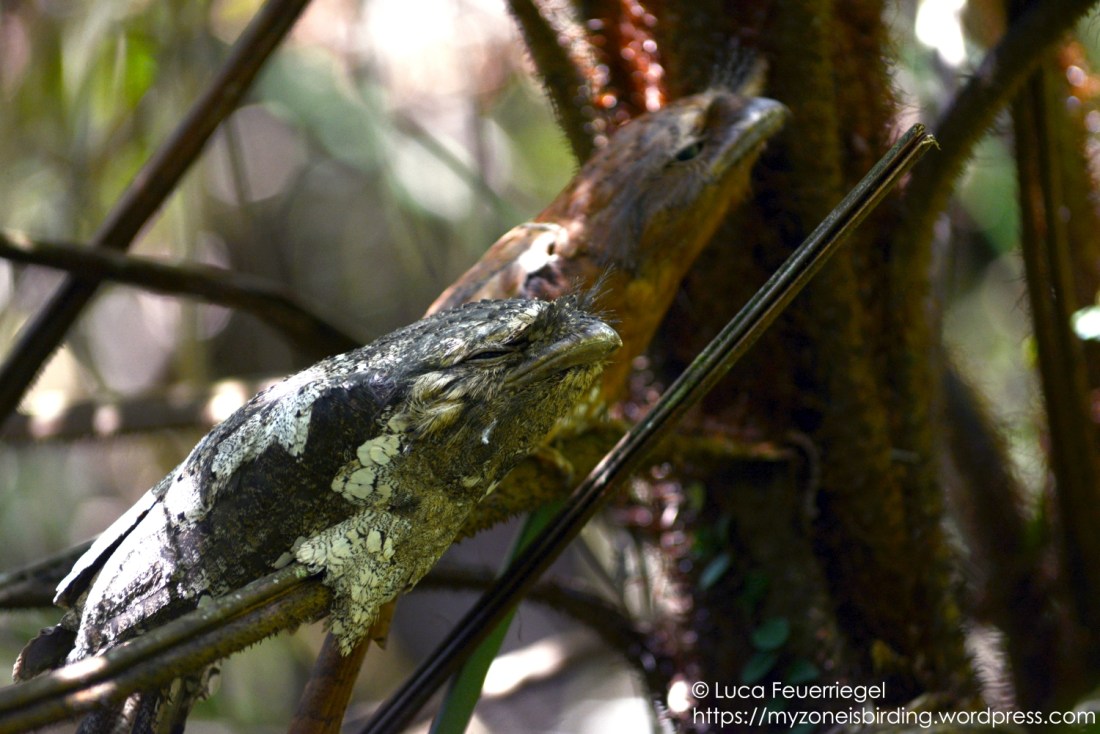
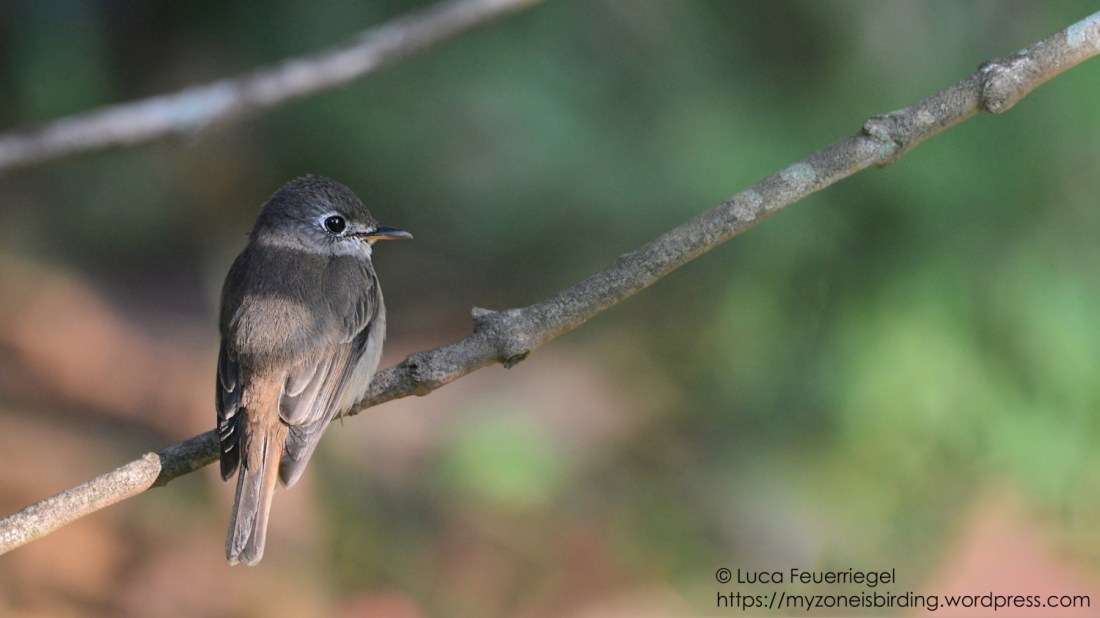
After settling in to our rooms, we decided to take a walk in the park as it was still only late morning (although undoubtedly it was not the best time for birds). I first contacted my mother to sort out how she would get up to our accommodation, which was difficult as connectivity is very bad at Martin’s. We put on our leech socks and headed into the park, although fortunately leeches were scarce due to the lack of rains. We were lucky as the pair of Sri Lanka Frogmouth in the fern swamp were roosting in the open, providing excellent views of their unique patterns and shape. Other birds we saw were Orange Minivet, Velvet-fronted Nuthatch, Indian Paradise-Flycatcher, Black-naped Monarch, Brown-breasted Flycatcher and Dark-fronted and Brown-capped Babblers. Close to the research center, I had my first lifer of the trip and one that I hoped to see – a juvenile Besra that was perched high above for a while. We also saw a pair of the impressive Hump-nosed Lizards.

Back at Martin’s, my mother had arrived by now so we ate lunch together before walking down to the stream where we got a fish massage from the abundant fish in one of the pools. This can be a good spot for Sri Lanka Spurfowl, which I saw on a previous trip a bit further down the gravel road. At the lodge we also met another family of birders from our school who stayed at the Blue Magpie Lodge in Kudawa. The oldest son, Louis, plays with me on the school’s volleyball team and they lived in Maputo previously, meaning it was easy and fun for me to talk to the father about birding he did in the area. When living in South Africa I played against Louis’s team in a volleyball tournament, although he wasn’t part of the team at that point. Additionally, the father wrote an article on ‘Steppe’ Whimbrel, an extremely little-known subspecies (or species?) recorded in Mozambique a few years ago, which I read but didn’t know I’d meet the author years later in another part of the world – quite surprising sometimes what coincidences occur.
Later in the afternoon we had some nice birds in the form of bulbuls, Brown-breasted Flycatcher, Yellow-fronted Barbet, Purple-rumped Sunbird, Sri Lanka Grey-Hornbill, Sri Lanka Myna, Emerald Dove and Layard’s Parakeet. In the evening the last member of our group, Ms De Jong, arrived, and after dinner we played some board games with her that she brought, a fun and interactive way to end the day.
08.03.:
Early in the morning, I walked up to the checkpoint with Rashmi, Mr Lockwood and the family we met yesterday, who drove up in their car. At the checkpoint there are stone steps going up some rocks and next to the small plot of tea. These continue as a path bext to the open wetland on the left for around 100 meters before leading through a short area of swampy forest – apparently a place for Sri Lanka Thrush and Malayan Night Heron. We spent some time in the area but were unlucky. Sri Lanka Spurfowls called just meters from me but remained invisible. Only Sri Lanka Green-Pigeon, Crested Serpent Eagle and Velvet-fronted Nuthatch were birds of note. We returned for breakfast before starting our walk to Singagala. A Sri Lanka Thrush called in some dense vegetation just meters from us – I even saw a brown bird flying away after a short wait – but the view was not good enough for a certain ID. New birds for the trip were Malabar Trogon and Ashy-headed Laughing-Thrush close to the research station, while Common Kingfisher, Orange-billed Babbler and Sri Lanka Scimitar-Babbler were seen closer to Sinhagala. We also saw a nice Vine Snake, Hump-nosed Viper and yesterday’s Green Pit-Viper on the way.
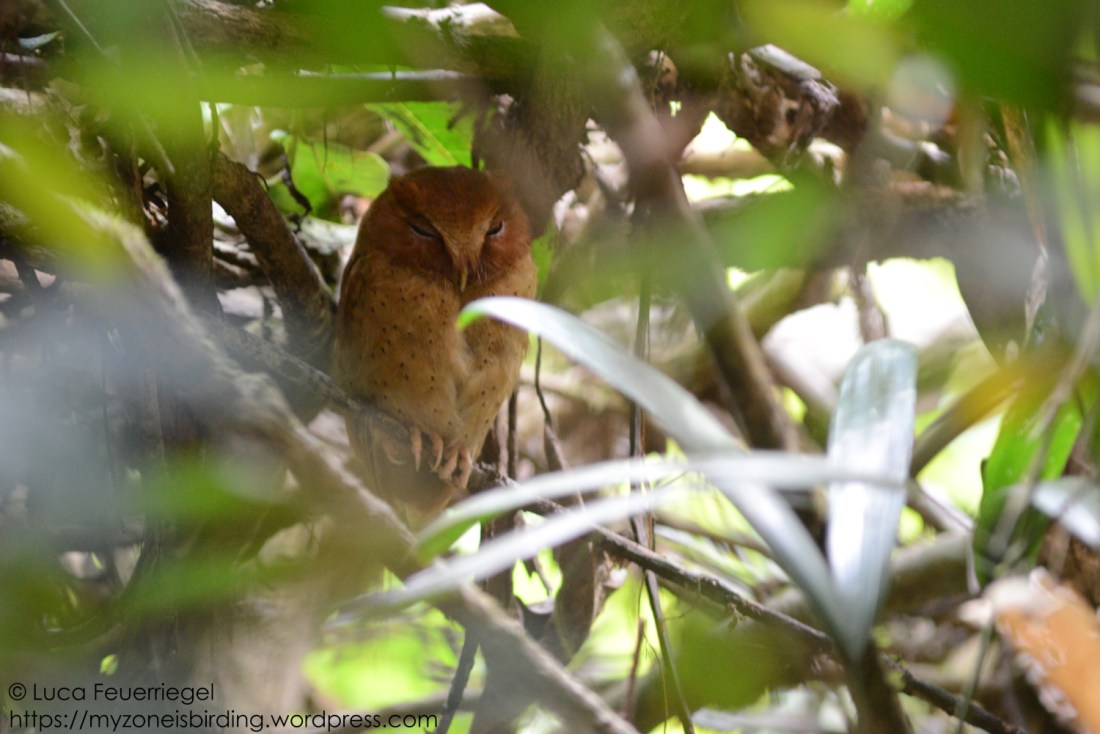
The last ascent onto Singagala was tough and we were all tired when we arrived at the top, where we enjoyed the incredible view over the rainforest and ate a delicious lunch (probably especially tasty as we were all fatigued from the hike). Three Brown-backed Needletails shot past at one point, but otherwise no birds were seen. The hike back was tiring and resulted in few new birds except Sri Lanka Wood-Pigeon, but close to the research center a guide informed us of a roosting Serendib Scops-Owl. Some of the group were too tired but a few of us, including my mother who hadn’t seen this amazing bird before, scrambled along the narrow path through thickets until we got to see the Serendib Scops-Owl hiding among bamboo! A fantastic bird to see again, although the sighting was far less good than my first one last year. This was an excellent end to the hike and shortly afterwards we were relaxing in the common area at Martin’s, where I saw my second lifer for the weekend, an unfortunately brief and distant Rufous-bellied Eagle. The evening was spent similar to the previous day’s one, with dinner, board games and a foot massage by the fish.
09.03.:
The last morning was spent first checking out the night-heron and thrush site (without luck) and then eating breakfast and watching birds at the feeder. My mother walked to the education center and saw some nice birds as well. After packing our bags, we loaded them into a jeep and made our way downhill back to the entrance gate. No new birds were seen, but a Golden-fronted Leafbird and Black-capped Bulbuls close to the entrance were fun to watch. Apart from the regular birds, the entrance had a Tickell’s Blue Flycatcher. My mother and I drove back to Colombo with the Mr Lockwood and Mr LeBlanc.
This was another short but fun trip to Sinharaja, and it reminded me how lucky we are to have such a beautiful rainforest virtually on our doorstep. Despite not seeing my target, I can not complain about the haul of specials, with the two lifers and scops-owl obvious contenders for the bird of the trip. Moreover, the rainforest is just amazing to be in and to appreciate the wealth of species and beauty of the vegetation, while Martin’s Lodge is a great place to stay at.
 My Zone Is Birding
Lovely to read of this trip. I need to make a trip to Sinharaja again and this time stay at Martin’s place 🙂
LikeLiked by 1 person
Yes the stay in Sinharaja is definitely much more special with a stay at Martin’s. Not just the location but also the atmosphere and the owners, the food, etc. – it really makes your stay more memorable.
LikeLike
A wonderful article!
LikeLike
Truly interesting trip, loved your Blue Magpie shot Luca ! Love your blog 🙂
LikeLiked by 1 person
Thanks so much! Yes Sinharaja is a truly great place to visit – you always find something interesting. And the magpies are always a highlight.
LikeLiked by 1 person