

Having last visited the north of Sri Lanka, a region quite different to the rest of the island, a year ago on a short trip to Mannar, I thought the Independence Day on February 4th would be a good opportunity to spend two full days birding in the area, this time focusing on Puttalam and Wilpattu NP, two places I’ve never visited before. The coastal town of Puttalam has an area of salt pans that provide good wader-watching (although not as extensive as Mannar and arguably less productive, although it is also under-birded). Finding information on the site was nearly impossible, but it was also nice to visit the place without much previous knowledge and just see what I find. Wilpattu National Park is a place I wanted to visit for a long time as it has great scenery, good birds, and is much quieter than most other national parks in the country, particularly the more popular ones like Uda Walawe and Yala.
I spent one night in Puttalam and two nights outside Wilpattu to be able to do a full-day tour in the park and explore the surrounding areas. The trip was more productive than I had expected, and I saw over 150 species in total, of which seven were lifers. I did this trip without my parents as they were unable to go. This had advantages in that I was more independent in when to stop, where to go birding, etc. However, not being able to share sightings with others (which is an important part of birding for me) was a drawback.
Itinerary
Feb. 01. – Battaramulla to Puttalam, stopping at Chilaw sand spit and Anawilundawa Sanctuary. Afternoon birding Puttalam salterns.
Feb. 02. – Morning birding Puttalam salterns and Vaan Lake. Bus to Wilpattu. Afternoon birding outside national park.
Feb. 03. – Whole day birding in Wilpattu NP.
Feb 04. – Morning birding outside national park. Late morning return to Battaramulla.
Accommodation
In Puttalam I stayed at Taj Residence, which is about 4km from the salterns. The place was much less attractive than I though, as WiFi, warm water, and lots of other features listed on booking.com were not available during my stay. However, when staying for a night this was no real problem for me. It’s located close to a new Keells supermarket and a restaurant, which made it useful for me.
In Wilpattu, I stayed in Green Sapphire Holiday Resort which, despite the name, is a small homestay on the Wilpattu Sanctuary Rd, a few kms from the park entrance. The place had a nice atmosphere, particularly in comparison to Taj Residence, and the owner was nice and organised the jeep for me. The room was simple but suitable for me, although the bed was too short and the shower was not much more than a trickle of water. It is close to a tank where I had very good birding. It was also surprisingly cheaper than Taj Residence.
Trip Report
Feb. 01.
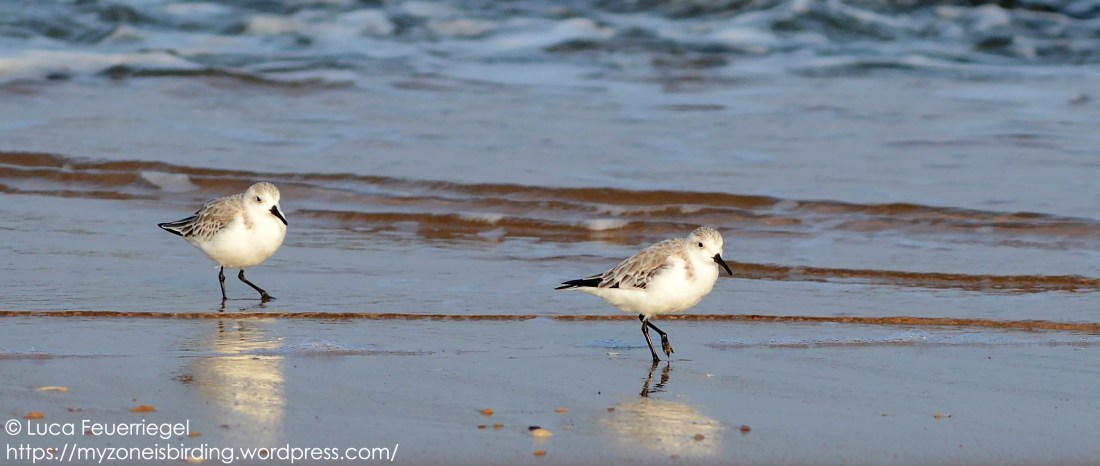
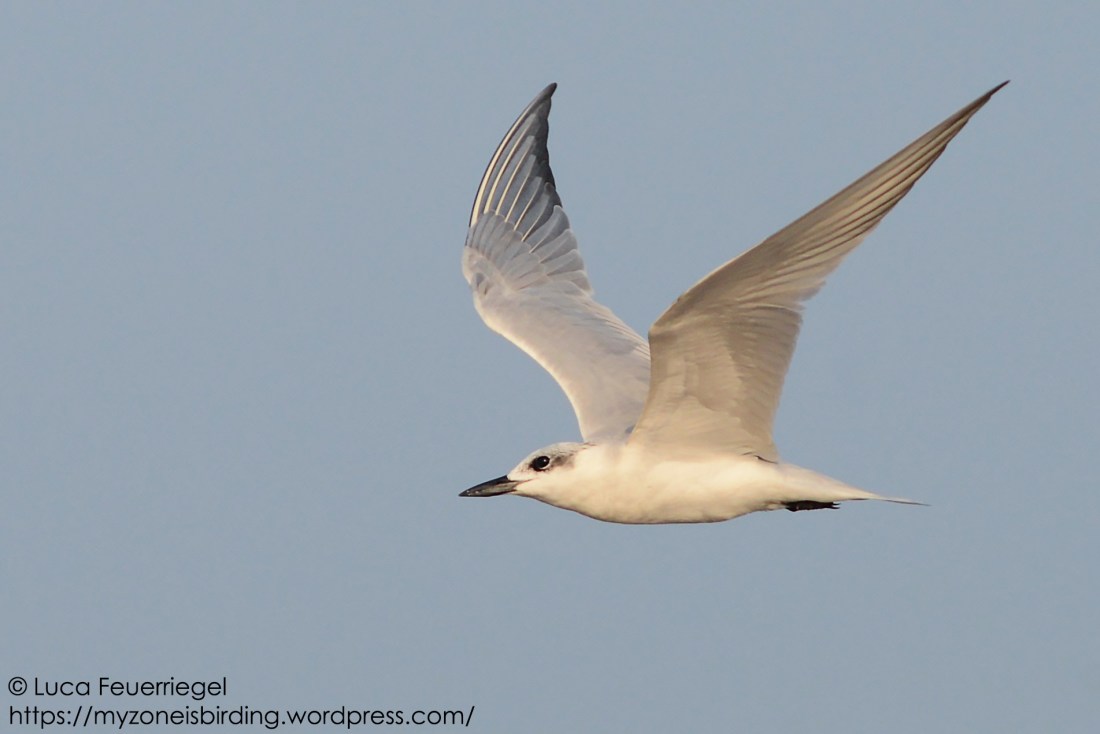
I was picked up by the driver who drove us to Mannar and Sinharaja the previous year. On the way to Puttalam, I wanted to stop at Anawilundawa Sanctuary, a RAMSAR site that is not very well known. Before that however, we spontaneously stopped at the Chilaw sand spit, which is easy to reach from the main road by driving through Chilaw town and then turning right after the bridge over the estuary, following the narrow road along the coast northwards until it disappears in the sand. We saw around ten Sanderlings, the speciality here, as well as Common Sandpiper (unusual on the coast), Lesser Crested and Cull-billed Terns, Little Egret, and other common species. Back on the main road, it wasn’t long until we turned left here. This track first passes through a rural area, where White-naped Woodpecker has been seen in the small coconut plantation, and then through beautiful dense woodland before reaching a beautiful wetland consisting of two tanks with a track running along the embankment. Birds seen here were Pheasant-tailed Jacana, Indian and Little Cormorants, Oriental Darter, Purple and Grey Herons, Indian Pond-Heron, Great, Intermediate and Little Egrets, Black-headed Ibis, Lesser Whistling-Duck, Garganey, Eurasian Moorhen, Eurasian Coot, Grey-headed Swamphen, Black-winged Stilt and Brahminy Kite along with several more species. I did not have a scope, which is necessary to check the floating vegetation in the distance. Vagrant Fulvous Whistling-Ducks have been seen here some time ago, but I didn’t find any. We drove the loop and came back to the main road here, seeing Crested Serpent-Eagle, Blue-tailed and Little Bee-eaters, Brown-headed Barbet and Black-hooded Oriole and hearing Sri Lanka Junglefowl in the woodland.
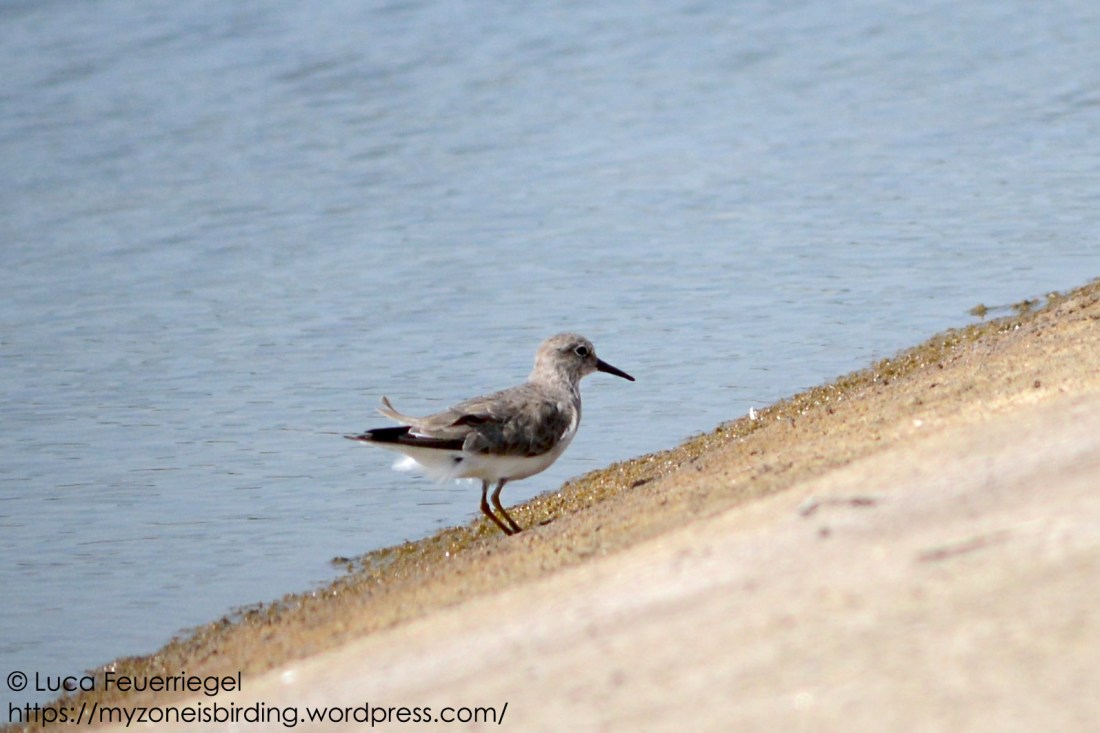
After a breakfast close to Puttalam, we briefly checked out the salterns in town before I was dropped at my accommodation. The salterns are accessed here along a gravel road that initially leads north and then north-west with pans on the left and a large shallow body of water on the right. Pretty much the first bird I saw was a Temminck’s Stint in one of the first pans, which foraged on a pan shore next to the road before being flushed by a Little Stint. It was easy to identify as it has a very different GISS (general impression of size and shape) than other waders and distinctive plain upperparts and yellow legs, although the latter were hard to see as the bird’s shadow made them look dark. This is a very rare migrant in Sri Lanka so I was very happy to see my main target here. At around 8.059542, 79.815196, we couldn’t continue in the car as the track was narrow and rough, so we turned around. Little Stint and Lesser Sand Plover were abundant in the pans, although most waders were after about 500m after the junction where the track first meets the open water, probably as they were least disturbed here and water levels were best. Other waders seen were Terek Sandpiper, Ruddy Turnstone, Marsh Sandpiper, Common Greenshank, Black-winged Stilt, Common Redshank, Wood Sandpipier, Kentish Plover and Eurasian Curlew, while Barn Swallow was common and a pair of Paddyfield Pipits were seen on the track. Above the water, Caspian, Little and Whiskered Terns were common, with the occasional Lesser Crested Tern flying past as well. The open area of water held Spot-billed Pelican and many herons.
My driver dropped me off at Taj Residence, where I settled into my room and relaxed for a few hours, before eating lunch at a restaurant right next to the Keells and organizing a tuk-tuk via the accommodation. I’ve never birded in a tuk-tuk, so I thought this might be interesting to try. I paid Rs700 for about two hours. The driver was good and spoke adequate English (his contact number is ). We took the same route as I did earlier in the day although we went much further, turning left here and continuing along the water and coconut plantation (where Red-wattled Lapwing, Indian Peafowl, Yellow-billed Babbler and Purple Sunbird were seen) until reaching some mangroves here. The salt pans yielded most of the birds seen earlier, although the Temminck’s Stint was nowhere to be seen. The mangroves held Striated Heron, Western Reef-Heron, Stork-billed Kingfisher and a heard-only Black-capped Kingfisher. On the way back, we turned right here, but this track is bordered by houses and no waders apart from Black-winged Stilts were seen. After my return, I walked to the neighboring Keells to buy some food.
Feb. 02.
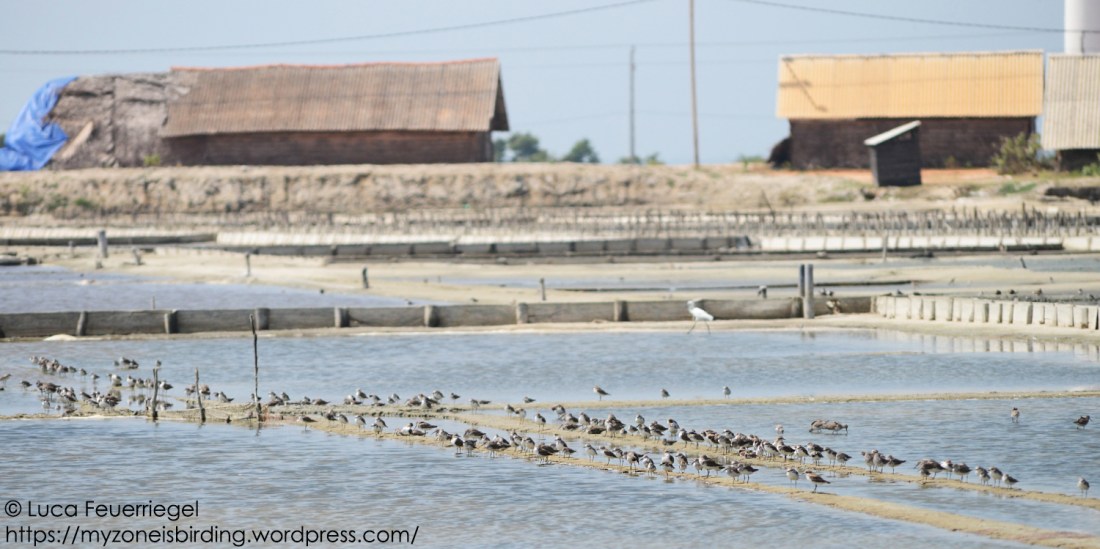
We arrived at the pans at , and it seemed like many of the waders hadn’t really left their roost yet, although activity started to increase. While most of the previously seen species were around, we didn’t spend much time in the pans but headed to the area of mangrove, hoping to see the Black-capped Kingfisher. I failed at this, but saw White-throated Kingfisher, Brown-headed Gull, many terns, White-breasted Waterhen and Ashy Prinia. After some time we made our way back and now, the number of waders was amazing. Dozens of Little Stints, Curlew Sandpipers and hundreds of Lesser Sand-Plovers were feeding in the pans, and all previously seen species (with the notable exception of Temminck’s Stint) were seen, together with a Grey (Black-bellied) Plover. An adult and juvenile Brahminy Kite were soaring above. We arrived back at the start of the track, at which point I got off the tuk-tuk and returned for a short walk along the pans, seeing Spot-billed Pelican, Intermediate Egret and a huge group of herons together with dozens of Whiskered and Little Terns fishing in the open water. I walked back to Taj Residence but wanted to check out a large tank on the way that I saw earlier on satellite imagery. I first walked a few metres along Bund Road but then saw that a track heads right through the reed bed. Many Clamorous Reed-Warblers and Streaked Weavers were around, together with Yellow Bittern, Lesser Whistling-Duck, Eurasian Moorhen, Little Grebe, Grey-headed Swamphen, Purple Heron, Oriental Darter and Asian Openbill. Everyone I met in the area was surprised to see someone with a camera and binoculars, which shows how rarely this area is visited by birders.

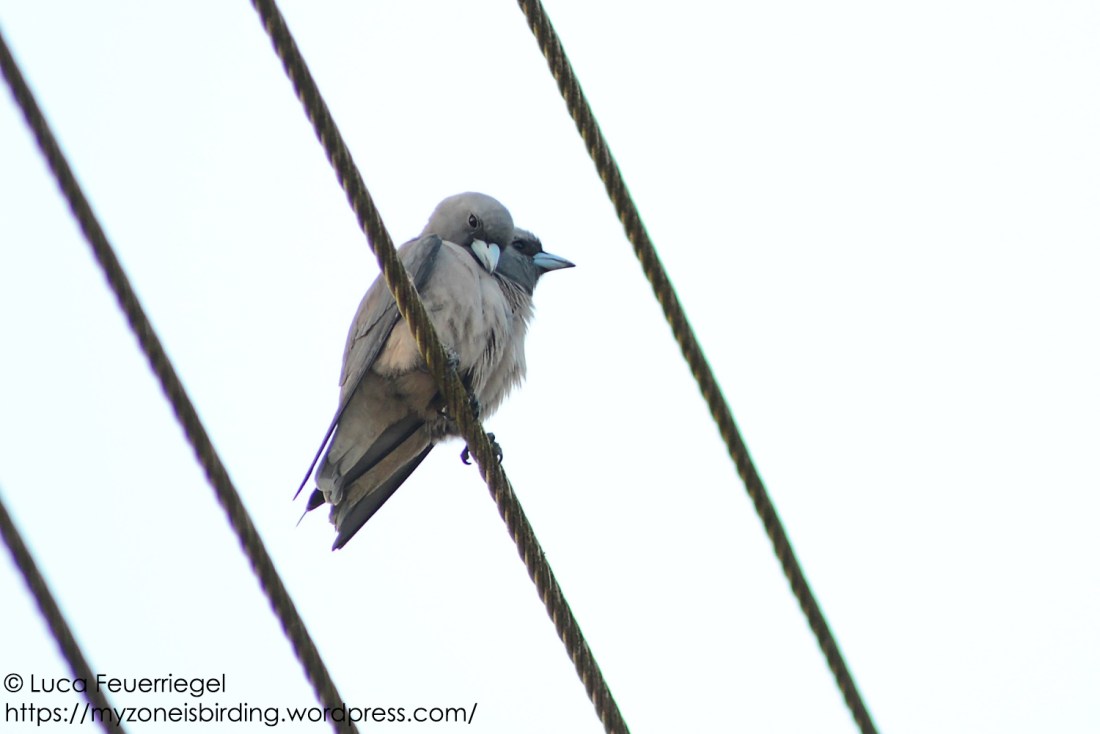
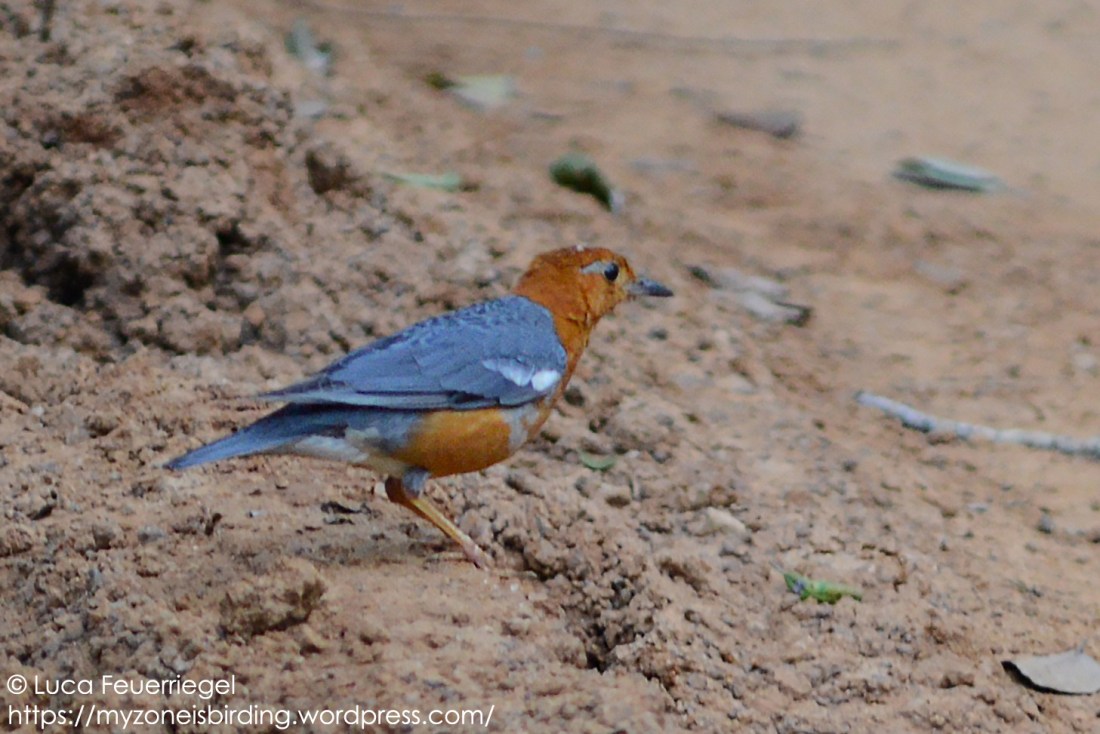
I returned at around 12:00 and was quite tired as I had walked in the sun for several hours, so I rested a bit before leaving for Wilpattu NP, taking a bus to Anuradhapura from the main bus stand. Exiting the bus at the Wilpattu Junction bus stop, I walked along the Wilpattu Sanctuary Rd, stopping at a tank accessed through a short scenic track here. I saw many birds despite the heat, including Jacobin (Pied) Cuckoo, Small Minivet, Coppersmith and Brown-headed Barbets, Black-hooded Oriole, Malabar Pied-Hornbill, Indian Robin, Greater Coucal, Large Cuckoo-Shrike and White-browed Bulbul. I settled into my room and headed out at 16:00, walking along the track on the embankment of a tank. This path, starting west from the main road at this point, had excellent birding. All the common waterbirds, as well as Malabar Pied-Hornbill, green-pigeons, and many passerines were seen. I was happy to see both Tawny-bellied and Yellow-eyed Babblers, both lifers, towards the end of the embankment. At the far corner, trees surround a small weir, after which the track disappears into dense grass. Here I saw Emerald Dove and got very excited when a male Orange-headed Thrush flew by, a rare migrant which I had been hoping to see for some time. The afternoon light made it seemingly glow orange and blue, a very delightful moment. I continued into the long grass, when I heard quails giving contact calls right next to me, suggesting they hadn’t noticed me! Unfortunately, a stray dog that had been accompanying me also heard the sounds and jumped into the grass, flushing the birds. Stray dogs are surely a significant threat to birds, particularly gamebirds, in Sri Lanka, and not much effort seems to be made to reduce this threat even in protected areas – I have even seen dogs in Sinharaja. After returning to the accommodation and having dinner, I walked along the road again, but calling Jerdon’s Nightjars remained heard only.
Feb. 03.
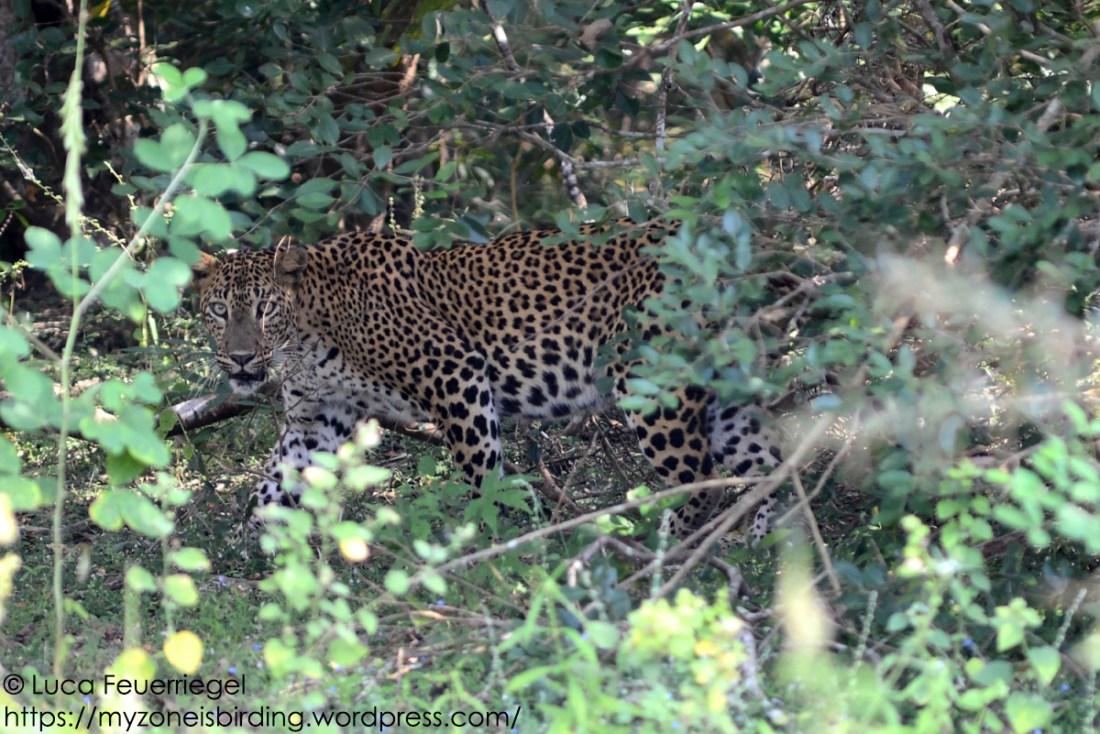
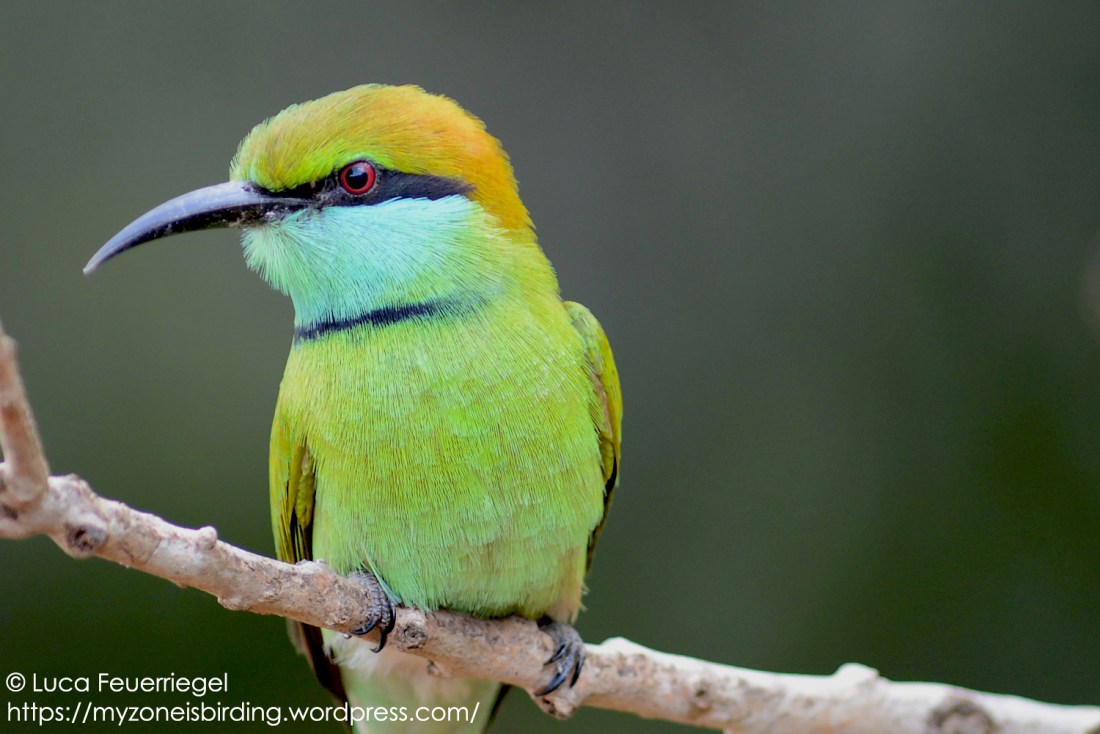
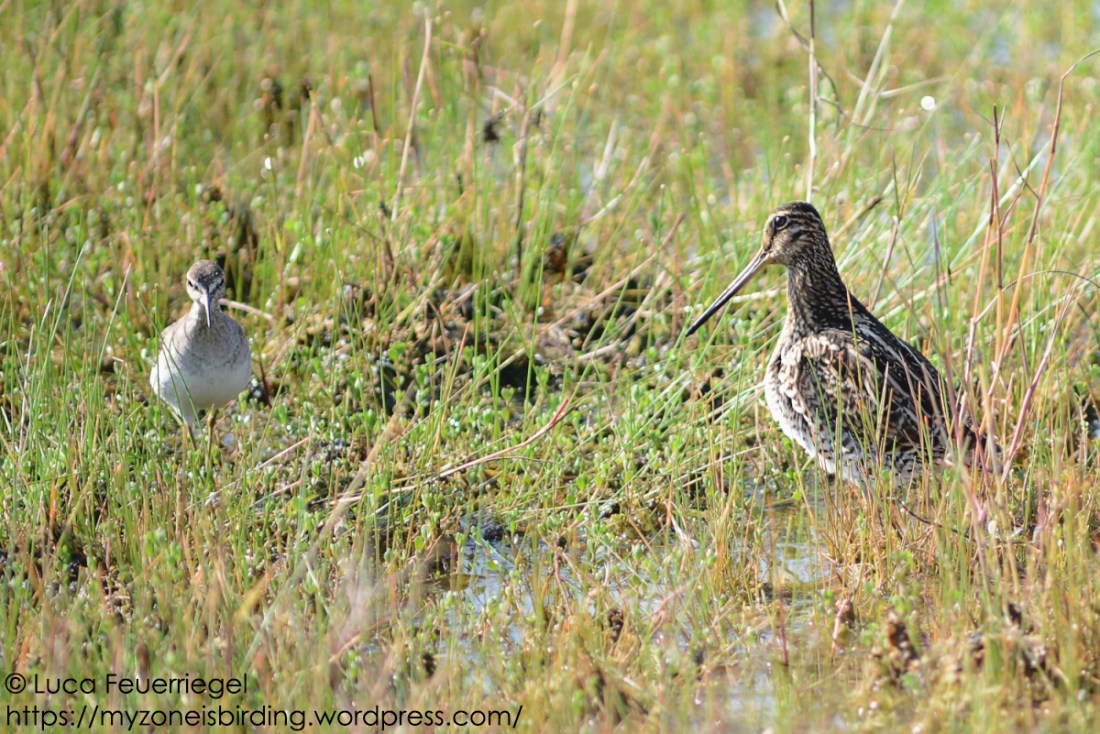
This morning, a jeep driver picked me up at 5:45. I got my ticket at the entrance for Rs720 as I had my Sri Lanka visa. I met a birding group from Australia and the US and told them about the previous day’s thrush sighting, at which they were understandably surprised. Upon entering the park, we immediately saw a Leopard crossing the road quite far away. Birding from the jeep was quite hard as it is hard to see and hear birds, so I saw much fewer birds than I probably would have by walking, but that is not allowed in the park. We saw two more leopards in the area where there are several villus (natural pans) close to the pick-nick site where I had breakfast. Birds were very active in the morning, and the dense forest held Large-billed Crow, White-rumped Shama, Sri Lanka Junglefowl, Blue-faced Malkoha, Sri Lanka Grey Hornbill, Black-capped Bulbul, Black-naped Monarch, Indian Paradise-Flycatcher, Tickell’s Blue-Flycatcher and Forest Wagtail. Small clearings in the woodland held many species as well, and I saw Changeable (Crested) Hawk-Eagle, Yellow-wattled Lapwing, Indian Thick-knee, Orange-headed Green-Pigeon, Crested Treeswift, Green Bee-eater, Grey-bellied Cuckoo, Grey-breasted Prinia and Brown Shrike. Several wader species were feeding on the grassy edges of the villus, including Black-tailed Godwit, Great Thick-knee, Little Ringed-Plover, Wood Sandpiper, Black-winged Stilt, Pin-tailed Snipe, Common Redshank, Lesser Sand-Plover and Common Greenshank. Woolly-necked and Yellow-billed Storks, Western Yellow Wagtail, Blue-tailed and Chestnut-headed Bee-eaters, Grey-headed Fish-Eagle, White-bellied Sea-Eagle and Common and White-throated Kingfishers also frequented these areas.
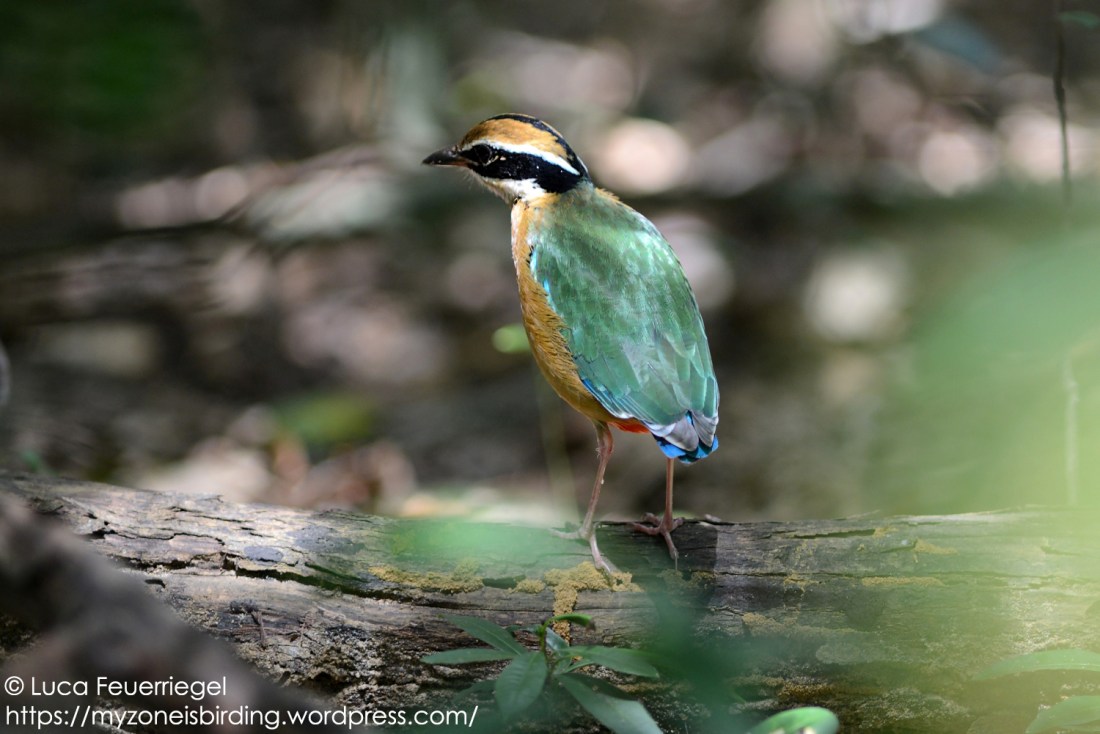
At the pick-nick site I met the birding group again, who told me that they saw the thrush at the exact same location as I did. After breakfast, where Sri Lanka Junglefowl were foraging for scraps and Toque Macaques were checking out the jeeps for anything left inside by tourists, we continued driving through an area with taller trees. Mammals seen in these forested areas were Grey Langur, Barking, Spotted and Sambar Deers, Golden Jackal, Water Buffalo, Asian Elephant and a mongoose marking its territory right next to the jeep. I was surprised to spot several Indian Pittas while driving and three individuals when walking along the track that leads into the forest behind the toilet block at the pick-nick site after a lunch break. A local birder saw Fork-tailed Drongo-Cuckoo, a species I really wanted to see, just seconds before I arrived at a bird flock that also had Velvet-fronted Nuthatch, Dark-fronted and Brown-capped Babblers and Black-rumped Flameback.
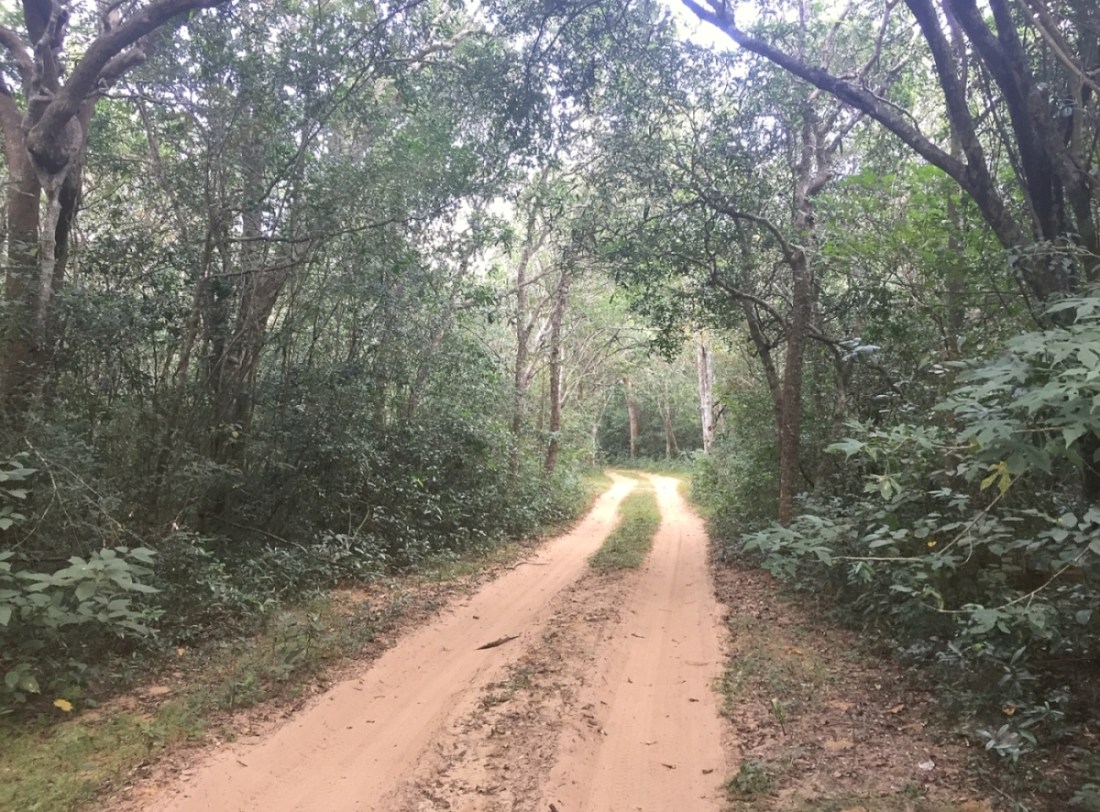
At dusk, we were returning to the gate when we flushed an Orange-headed Thrush. Amazingly, a pair returned after just a minute of waiting, and we had clear views in the waning light as the male was bathing in a roadside puddle. Amazing to see this rare migrant twice in two days. Arriving at the gate I heard the beautiful call of Indian Cuckoo in the tall trees, and after some time I got brief views of the bird in flight, a lifer and the 100th species for the day.
Feb. 04.
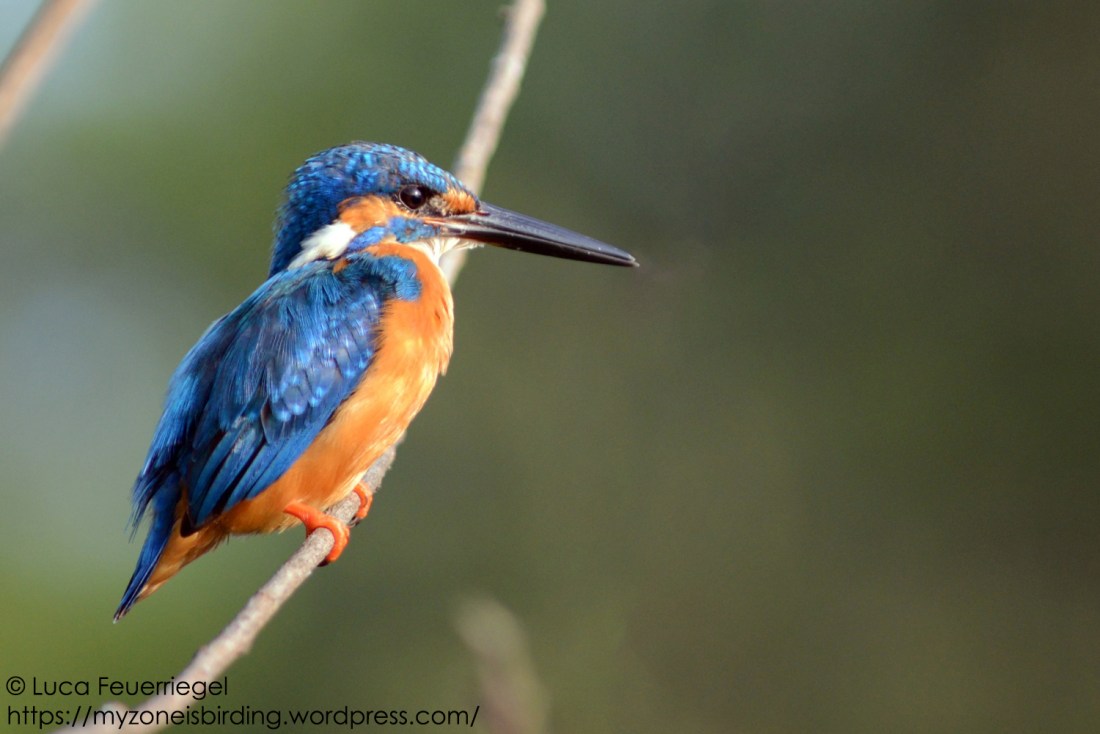
I asked my driver to be picked up at 9:00, so I had enough time to walk along the embankment of the nearby tank. Dark-fronted, Tawny-bellied and Yellow-eyed Babblers, Grey-breasted, Ashy and Plain Prinias, and White-rumped, Tricolored and Scaly-breasted Munias, Oriental Skylark and Indian Robin were seen on the path or in the long grass, while many Oriental Pied-Hornbills, Green Imperial-Pigeons and Orange-breasted Green-Pigeons were feeding in a large fruiting fig tree below the tank. Other nice birds seen were Sri Lanka Swallow, White-browed Fantail, Jerdon’s Leafbird, Emerald Dove, Small Minivet, Jacobin (Pied) Cuckoo, Sri Lanka Woodshrike and Baya and Streaked Weavers. A great sighting was a very approachable juvenile Common Kingfisher.
I was picked up timely at 9:00 and an uneventful but surprisingly fast drive saw us return to Colombo at 13:00. The weekend was very fun and rewarding, and was a good experience as it was the first time I traveled alone for several days. I did not expect to see so many nice birds and had some interesting encounters with other people, while the landscape, particularly in Wilpattu NP, was also great to see.


Excellent photography!
Do you know of a local Sri Lankan bird guide who could show me around the island for a few weeks?
LikeLiked by 1 person
Thanks! Yes there are several local guides. Amila Salgado is apparently very good. I have never met him but I recommend him from what I heard. His email is amila@birdwingnature.com. He has a website too: http://www.birdwingnature.com/.
Sri Lanka is also easy to bird on your own if you prefer that, given that infrastructure is quite good. The endemics can be found on your own, except that you need to use guides at specific locations such as Sinharaja.
LikeLike