
The Sinharaja rainforest is probably highest on the list of places international birders want to visit while in Sri Lanka, owing to the site’s high numbers of special and endemic birds, plus a big array of other interesting flora and fauna. I was supposed to be going to Sinharaja with the rest of the Geography class in May, but because of the terrorist attacks that lead to tightened security at my school, the trip was moved to September. The main purpose of the trip was to collect data by conducting surveys that will be used in a major assignment for the Geography class – an independent geographical research study. However, we managed to slip in a good amount of time for birding and appreciating the magnificent forest. A great advantage was that my teacher, Mr Lockwood, is a keen birder and photographer like me (he also has a blog), and several of my classmates were interested in nature as well, so spending some time at special sightings was no big issue.
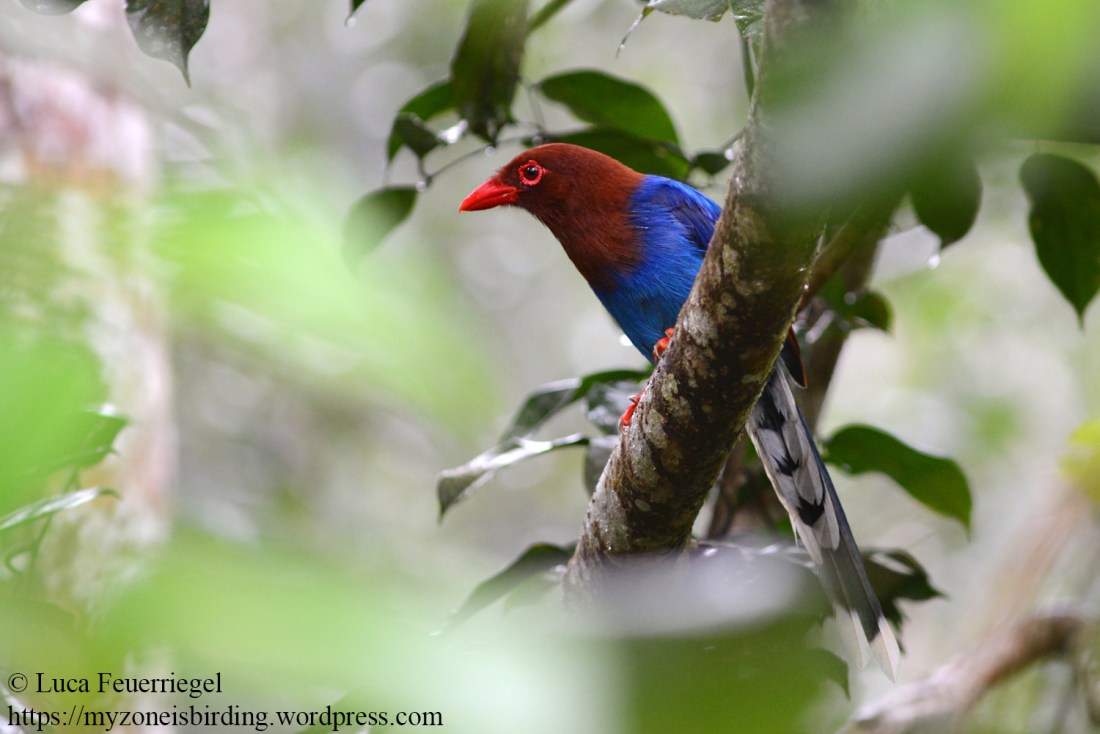
We stayed at Martin’s Lodge, which is unique compared to all other accommodations in that it is right at the forest edge – in the morning we were greeted with bird calls and mist rising from the trees while enjoying Ceylon tea and Sri Lanka Blue Magpies on the veranda. It was the first time I stayed here (and my second visit to the Kudawa entrance), but I will definitely stay here on future visits. The rooms were basic but clean and adequately equipped (including mosquito nets – we noticed that weirdly we did not have a single mosquito here – and a rack to dry clothing) and the traditional Sri Lankan food very good.
In the forest, we had many leeches and leech socks were necessary – unless you don’t mind getting dozens on your legs each walk. Some of us did not have socks, but they are available in a small store right at the bridge in Kudawa and at the ticket office.
The trip was a success, primarily as we were able to conduct over 50 surveys with residents in the area around Kudawa, the town bordering the northern and main entrance to the rainforest. As a bonus, we were also very lucky with bird and other animals. Of course, as for all school field trips, a main part of the trip was the social time, be it getting a fish massage at the stream next to Martin’s Lodge or playing cards after an eventful evening, with laughter and talk drowning the sounds of the forest in the background.
We had a sports day at school on Wednesday September 4th and therefore only left at lunch, which made us arrive in Kudawa in the early afternoon. The only nice bird on the drive was a Black Eagle. I didn’t realize that we would be walking up to Martin’s from the ticket office, so I just had my flip flops since a jeep was bringing our luggage up on the gravel road. Not wanting to get leeches, I decided to buy a pair of socks from the office (Lkr 300/ pair) and wear them in my flip flops – this worked surprisingly well. The gravel road leading to the second gate was repaved so we could walk along this rather than taking a long windy trail as we had to when I visited earlier this year. On the walk up we saw many of the rather common forest species, such as Yellow-browed and Black Bulbuls and Orange-billed Babbler. Together with a guide, we walked through the second gate a bit to get deeper into the forest. In this area, nice birds were Spot-winged Thrush and a pair of the impressive Sri Lanka Frogmouth that roost in a swampy area close to the path. A short night walk for frogs only revealed several stick insects but nothing else of note.
The two whole days we had here were spent surveying the residents with the help from a local guide from the morning till noon, after which we had lunch in Kudawa at an accommodation owned by Martin’s daughter. In the afternoon we walked back up to Martin’s and spent the rest of the day relaxing, nature-watching, or soaking in the stream below the lodge.
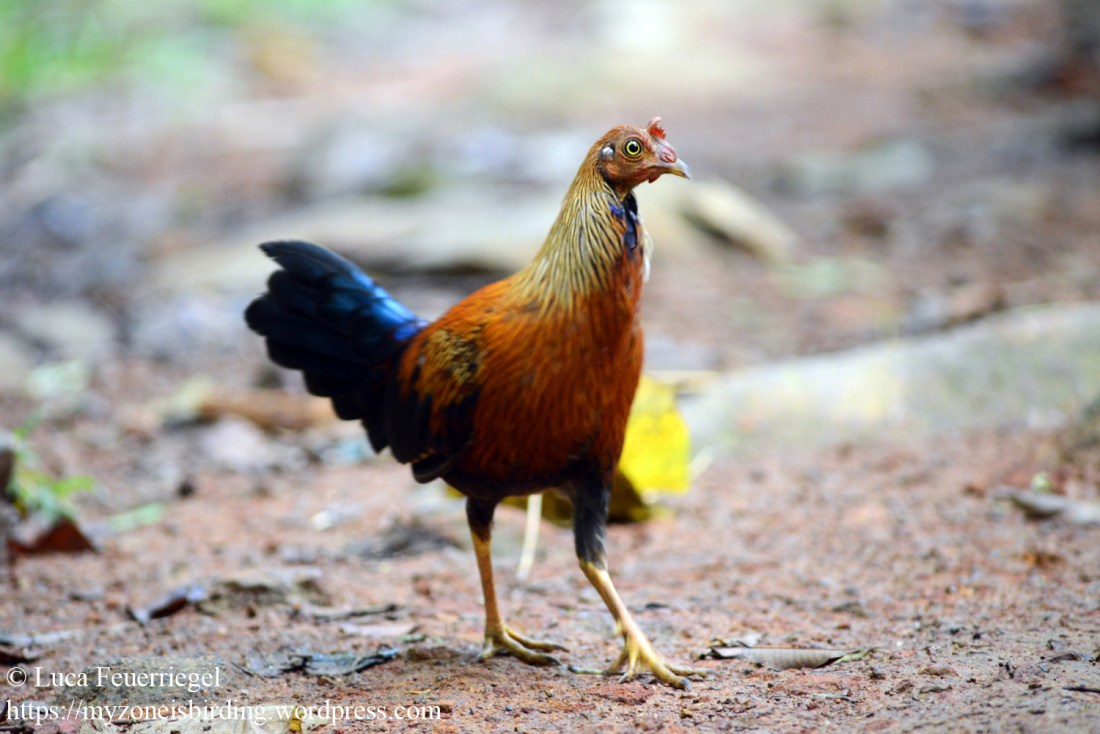
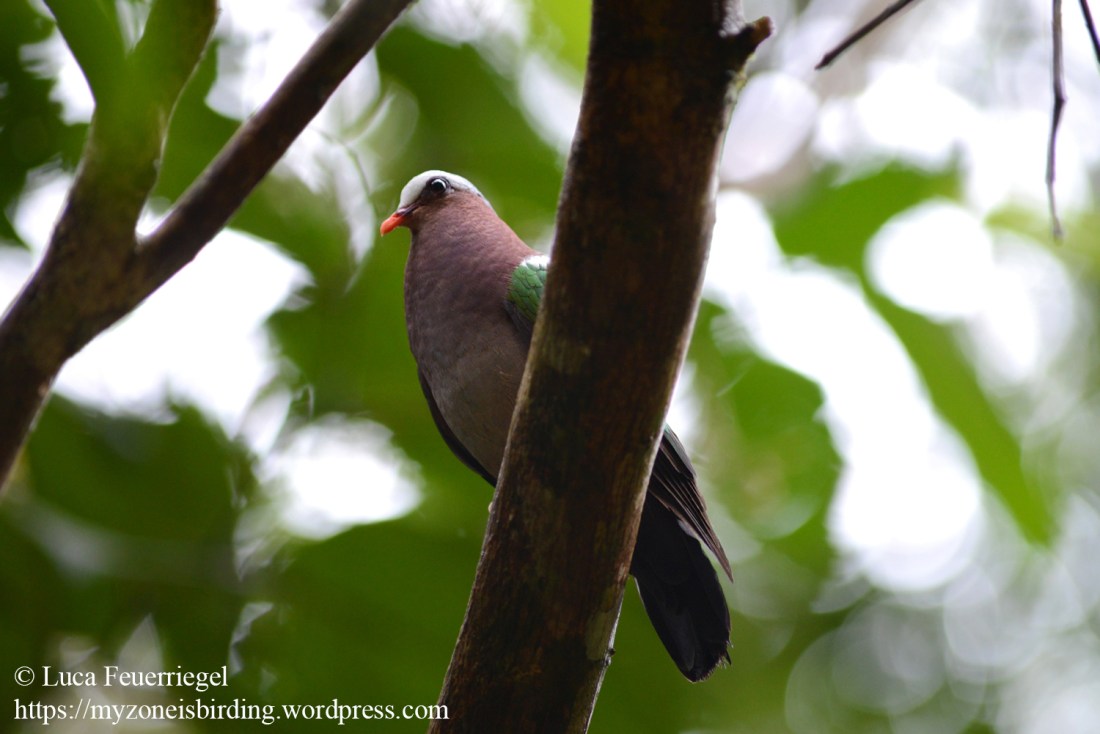
We started the first morning watching Sri Lanka Blue Magpies that visit the lodge at dawn. These were joined by a pair of Sri Lanka Grey Hornbill, while a Sri Lanka Spurfowl called in the distance. Before breakfast Rashmi, one of my classmates, and I walked up to the education centre. Bird activity was high and we had Legge’s and Pale-billed Flowerpecker, Small and Orange Minivets, Black-naped Monarch, Velvet-fronted Nuthatch, Sri Lanka Hill-Myna, Layard’s Parakeet, Sri Lanka Hanging-Parrot. After breakfast, we walked down to the ticket gate. Some of us had excellent but brief views of Brown-backed Needletail, Stork-billed Kingfisher and Greater Flameback at the top gate, while lower down we saw Emerald Dove, a female Malabar Trogon, and Yellow-fronted and Brown-headed Barbets. We got very lucky with a sighting of a Lowland Hump-nosed Viper next to the path. We did our first surveys with the guides at the ticket office. Following this, each group was assigned a guide and we split up at the bridge in Kudawa. I was lucky enough to be assigned the gravel road forking to the left when entering Kudawa from the north as my survey location together with my partner Seth. This is one of the premier birding locations outside the park, and includes a regular roost site for the magical Serendib Scops-Owl. Although our guide Chandralatha checked the location, she did not locate the birds, which is unsurprising considering they were only discovered in 2001 (the year I was born!) and described to science in 2004! We had some more common birds though, like Black-capped Bulbul, and many other previously seen species. On the walk back up to Martin’s we saw a group of Dark-fronted Babblers.
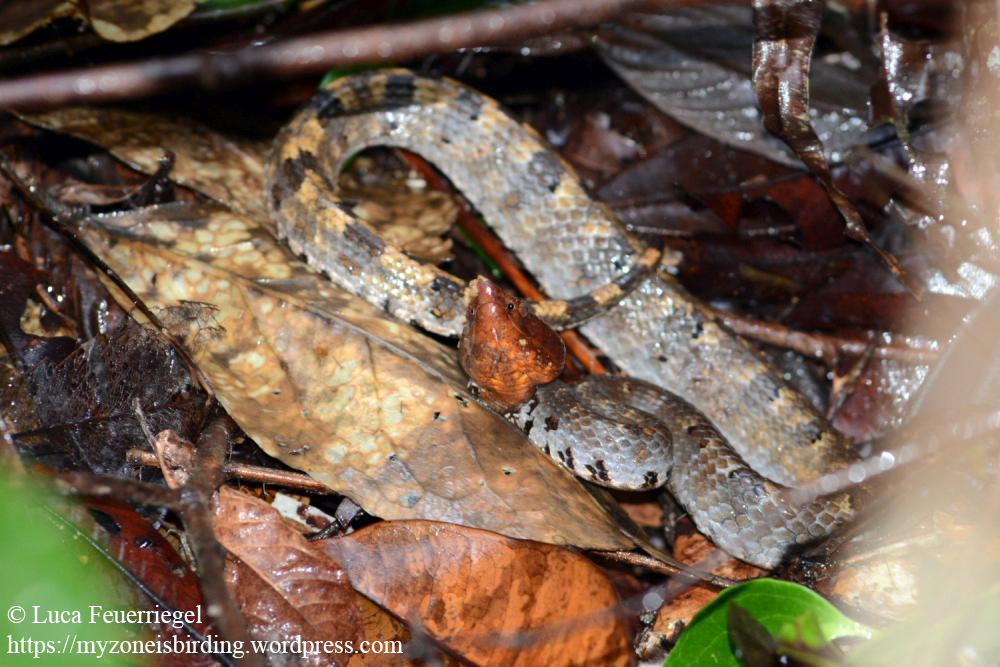
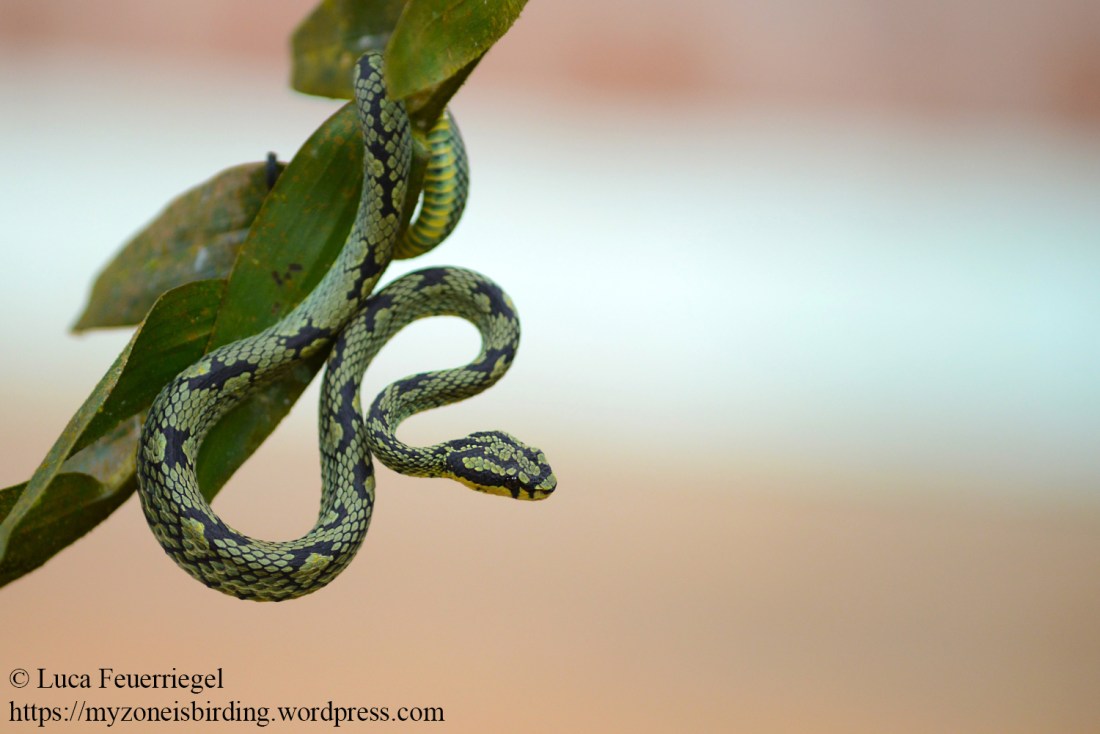
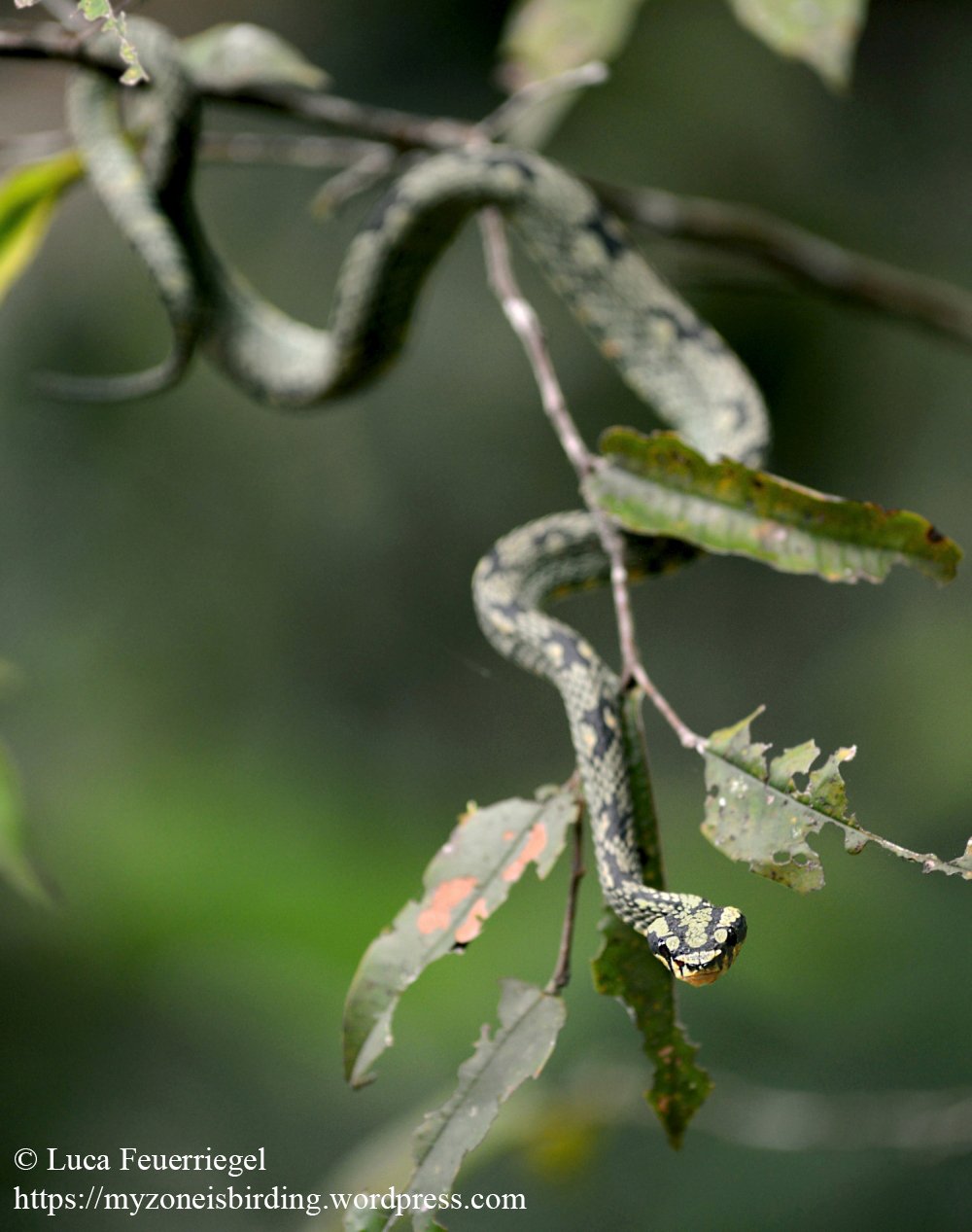
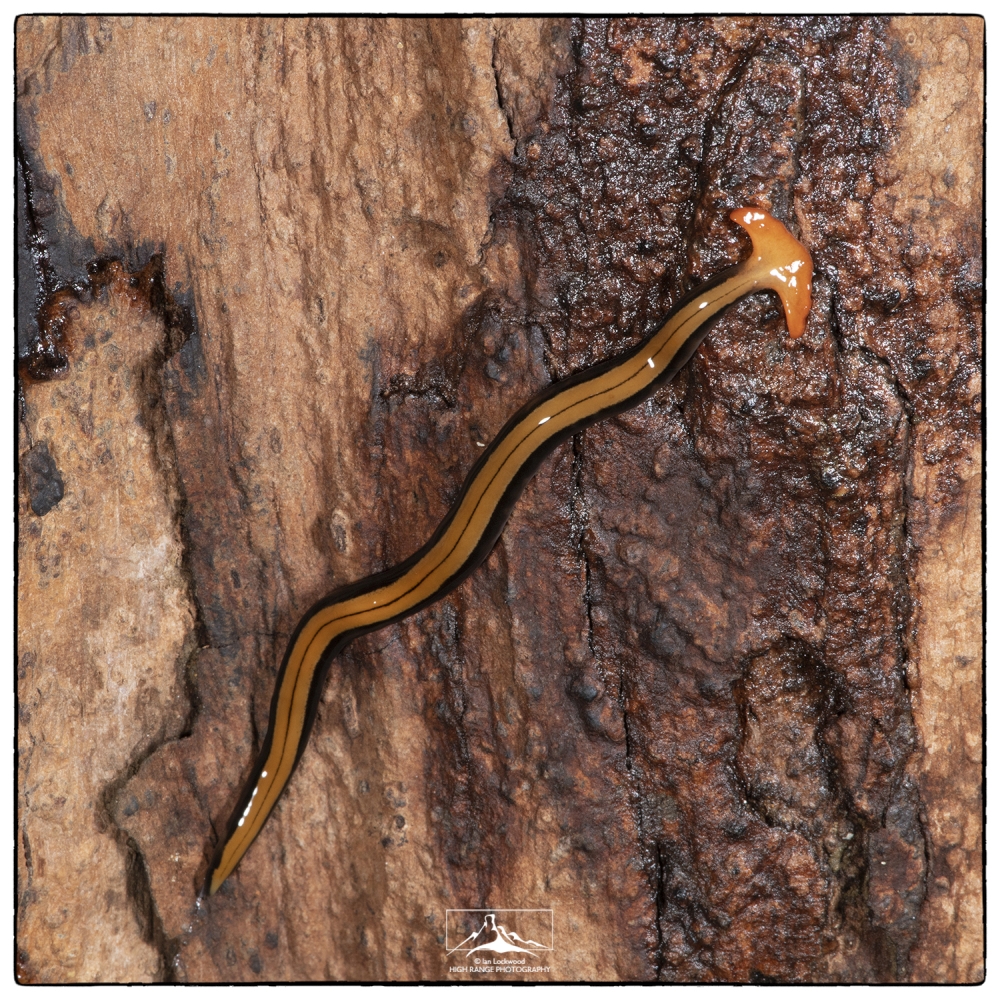
The second morning was spent watching the same birds as the day before while eating breakfast, after which we descended down to the village again. The walk produced our only Brown-capped Babblers, while a bird party had Black-rumped Flameback, Lesser Yellownape, Sri Lanka Drongo, Golden-fronted Leafbird, Scaly-breasted Munia, and several bulbuls. My first lifer of the trip came about 100m up the road from the Kudawa bridge in the form of a Green-billed Coucal that was in a flock together with Orange-billed Babblers and Black-rumped Flameback. This is a very elusive bird and although we heard it regularly, this was the only sighting we had. After the surveys, which were interesting again as we experienced a bit of the village life, as well as because we interviewed Thilak, an independent guide that is experienced in finding owls in the area (contact details: +9471196044 / +94454907260), who told us about his experiences in guiding in the area. Some of us who still had the will to walk decided to go up the jeep track to Martin’s, on the way seeing Yellow-billed Babbler, Crested Treeswift, Sri Lanka Swallow, Crimson-fronted Barbet and Crested Hawk-Eagle, while the other took a jeep up. In the afternoon, a Sri Lanka Green Pit Viper was found right at Martin’s, giving great viewing opportunities. What was funny is that Arnav, one of my classmates, is very passionate about snakes but had never seen one in the wild before that day, but booted six species on that day, most of them while doing the surveys! At night Mr Lockwood and I did a night walk, which was quite successful as we saw a huge black, red and white centipede, a beautiful hammerhead worm and two species of frog, one of which was the range-restricted Long-snouted Tree-Frog.
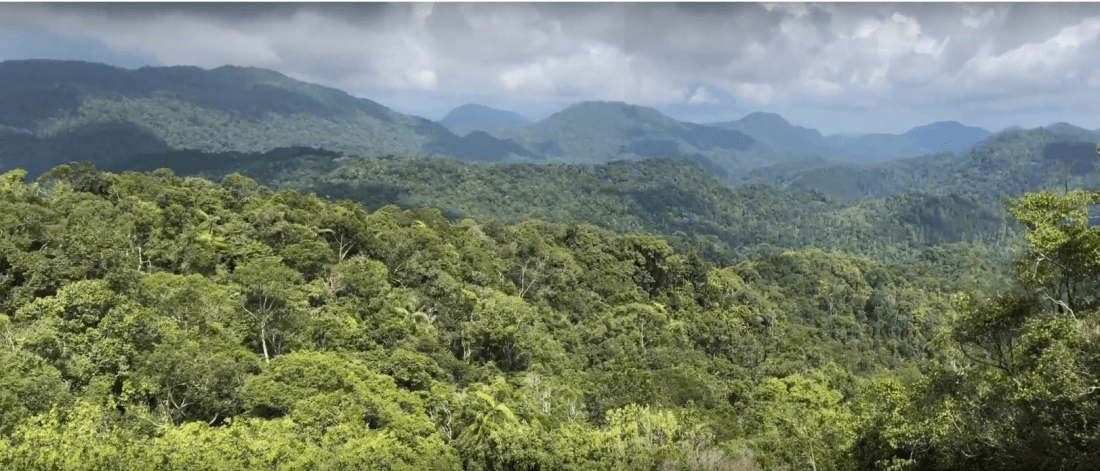
The final morning started with a walk down the jeep track that leads from Martin’s to Kudawa. I chose this route as it is supposedly one of the better sites for the secretive Sri Lanka Spurfowl, specifically about 1km down the road. On the track we had a Spot-winged Thrush, but not much else was seen, except a pair of Shikras. Just before Martin’s however, a dark gamebird flushed from the side of the road in front of us – Sri Lanka Spurfowl! Later on, we watched the cute Velvet-fronted Nuthatch while sipping our tea. After breakfast, we hiked into the forest and did the Mulawella hike, which ends on the Mulawella peak, from which breathtaking views can be had over the rainforest. The walk up did not produce many birds, except Ashy-headed Laughingthrushes and a pair of the cute Chestnut-backed Owlets about halfway up the steep trail. We spent quite some time on the rock outcrop on the top, taking in the view, until dark clouds rolled in and we decided to descend. Halfway down, we were met by a heavy downpour that lasted till we reached the main trail. On the way back to Martin’s we had an active bird party, with Greater Flameback, Malabar Trogon, Black-naped Monarch, Bar-winged Flycatcher-Shrike, and more common species. We went back to Martin’s and quickly ate lunch and packed our bags to return to Colombo.
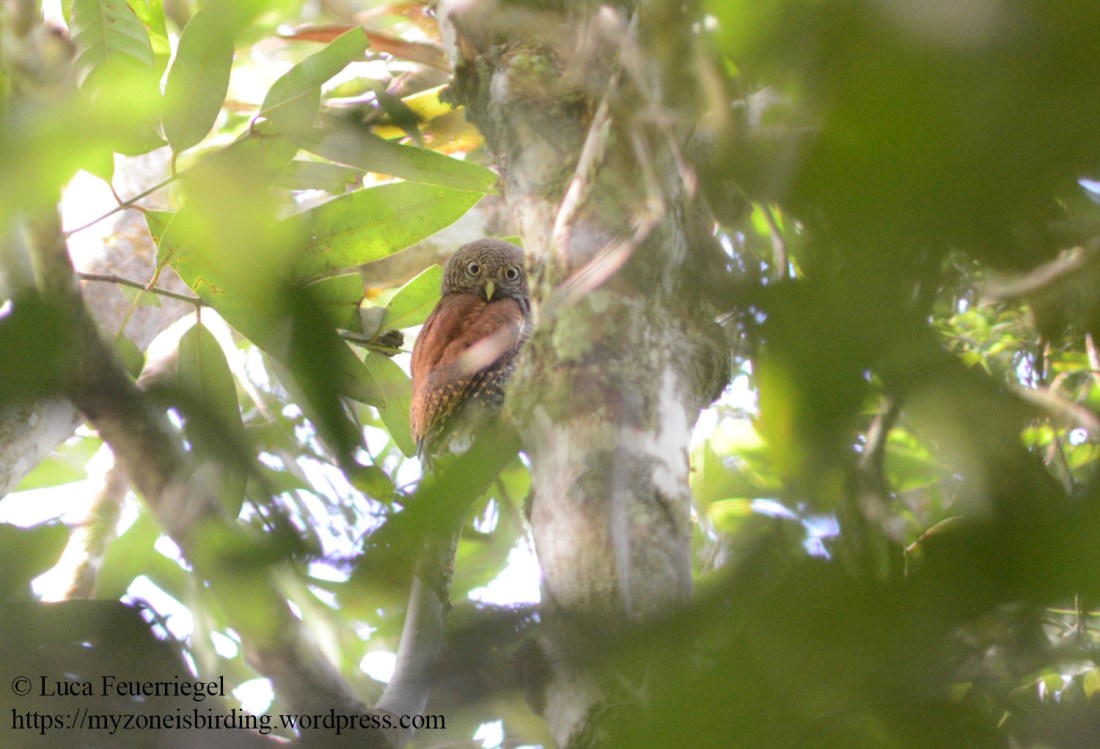
- Chestnut-backed Owlet
We stopped in Kudawa to check if a guide had found a Serendib Scops Owl. We planned that if he had found one, the ones who wanted could go looking for it, and turns out he did, so two of us plus the teachers were off along the gravel road Seth and I surveyed on the first day. I was really excited to see it, considering this is an incredibly special bird. We reached a spot of bamboo and pine, and started scrambling up the steep and slippery slope. In flip-flops, our progress was slow, but fortunately there were few leeches and after around 15 minutes, we reached a spot were the guide told us to wait. After checking for the birds and confirming that they were still there, my heart started pounding – I was about to see a Serendib Scops Owl! We were called one by one and went up a few more meters, from where the bird was roosting on a bamboo branch. It was incredible to lie on the forest view for a clear view, seeing it quietly gazing at you, without moving a muscle. Being able to watch any owl that closely in daylight would have already been enough to ask for, so a Serendib Scops Owl made this moment simply unbelievable. After everyone had gotten their fill (if that’s possible with this bird), we slipped back down-slope and returned to the van, excitedly sharing photos and experiences.
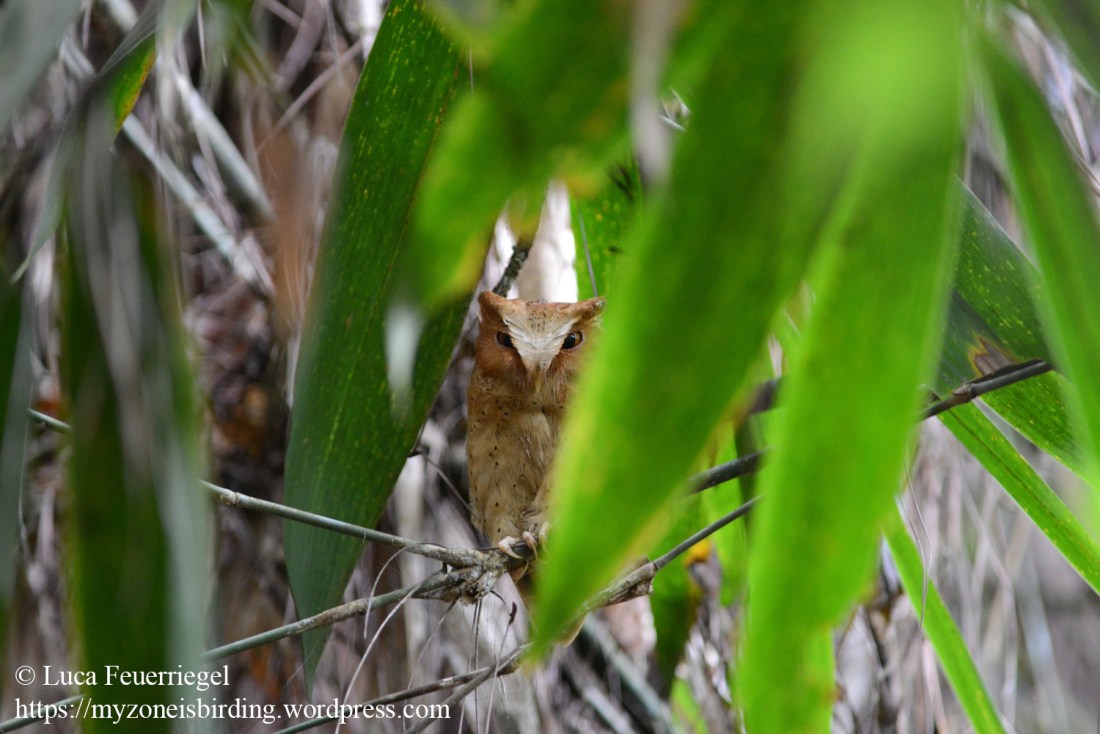
This was another great trip to Sinharaja, and it was rich in both natural history and social experiences. The birds we saw were very special, and the scops owl was the cherry on top, being the island’s most sought-after bird. What was equally memorable was sharing the atmosphere of the forest with all my friends, and seeing that those who usually don’t do these kinds of trips also enjoyed the ambiance of birds and cicadas calling from the lush and tropical forest.
 My Zone Is Birding
This was so awesome! And that Scops Owl made that whole hike in flip-flops so worth it 🙂
LikeLiked by 1 person
Thanks! Yeah it was truly a great trip. The owl was absolutely amazing 🙂
LikeLiked by 1 person