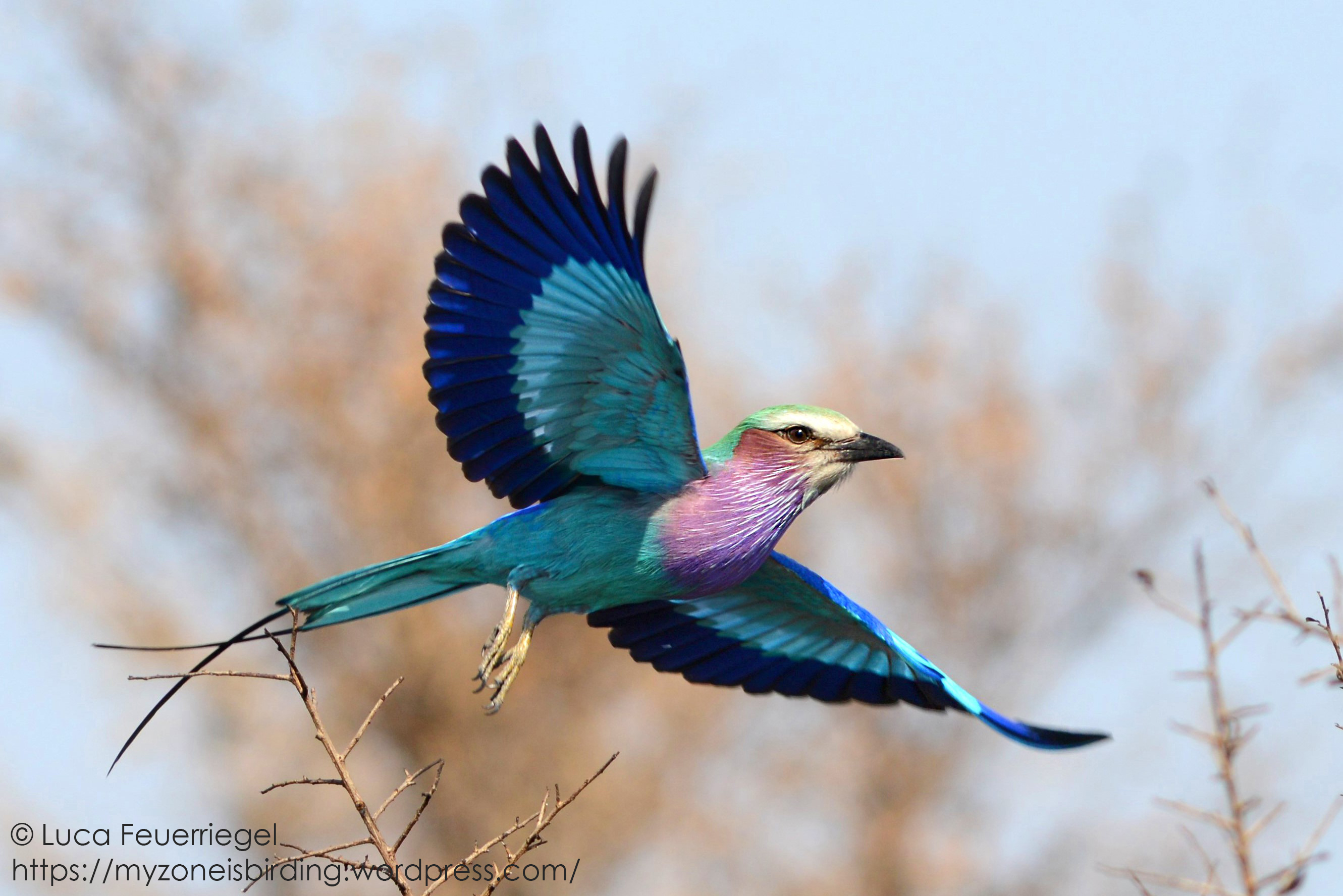

Ever since we left South Africa and moved to Sri Lanka in 2017 I wanted to return to this beautiful country. After one-and-a-half years, I finally made a trip there with my mother to see friends and see some of the familiar places we loved to visit when we lived there. Unfortunately my father and sister couldn’t join us, but we still had a fantastic time and it felt great to be back home. We started the trip in Pretoria were we used to live, before driving to the Kruger National Park, staying in Punda Maria, Letaba and Satara camps before returning to Pretoria. The first and last few days where spent visiting friends, and I celebrated my 18th birthday with my classmates on the second-last day. We stayed at a friend’s house while we were in Pretoria.
Itinerary
17.07. – 20.07. Pretoria
21.07. Drive to Magoebaskloof (staying at Kuhestan Farm Cottages) via Polokwane Game Reserve
22.07. Drive to Punda Maria Camp
23.07. – 25.07. Punda Maria Camp
26.07. Drive to Letaba Camp
27.07. Letaba Camp
28.07. Drive to Satara Camp
29.07. Satara Camp
30.07. Drive to Pretoria via J.G. Strijdom Tunnel and Dullstroom
31.07. – 04.08. Pretoria
Accommodation
As we only planned this trip and hence booked accommodation very late (as usual for us) there was not much availability. We only booked Kuhestan Farm Cottages from Pretoria by phone (0829037593), and luckily there was still a cottage left. We never stayed here before, always having chosen the Magoebaskloof Hotel, but I must say that Kuhestan is much more charming than the latter, and has the advantage of being closer to the Woodbush Forest. The cottage was very comfortable, with heating blankets and a fireplace (this was necessary; there was thick frost on the lawns the next morning) and the gardens very attractive as well, with a nice view and very good birding – we saw a several of the area’s specials in the short time we spent here. Food is supplied for breakfast (fruit, cereal, bread, eggs, etc.) but you prepare it yourself, which we thought was a good concept. We paid R1300 for the night, not cheap but worth it.
In Kruger, there was less availability the further south the camps are, which is usually the case. This suited us however as we wanted to spend most of the time in Punda Maria in the far north, which is the calmest of all of Kruger’s camps we’ve stayed in. We decided to camp here, and booked a campsite without electricity. The campsite was usually fully booked. We have the feeling that visitors to Punda Maria are generally much more relaxed than further south in the park, were there are more people that desperately want to see big game and can therefore become quite annoying (we experienced this especially in Satara). In Letaba there was only a bungalow left, and we had to switch rooms the second night. In Satara we first only booked one campsite, but could get a second night in a bungalow when we asked at the reception in Punda Maria.
Detailed Report
We arrived at O.R. Tambo International Airport (Johannesburg) on the 17.07. after a tiring flight with Emirates and after we got our checked-in baggage, which was a lot due to all the camping equipment that we brought with us, and went to pick up our rental car at First Car Rental. The car we booked (Renault Kwid) was not available so we exchanged the one we received instead with the Kwid in Centurion the following day. The fist few days were mostly spent relaxing, visiting friends and buying food and some other things for Kruger. I visited my previous school the first day and spent some time with my class, which was really fun and I enjoyed talking with them and hearing some of the stories they told me about things that happened during the time I was gone.
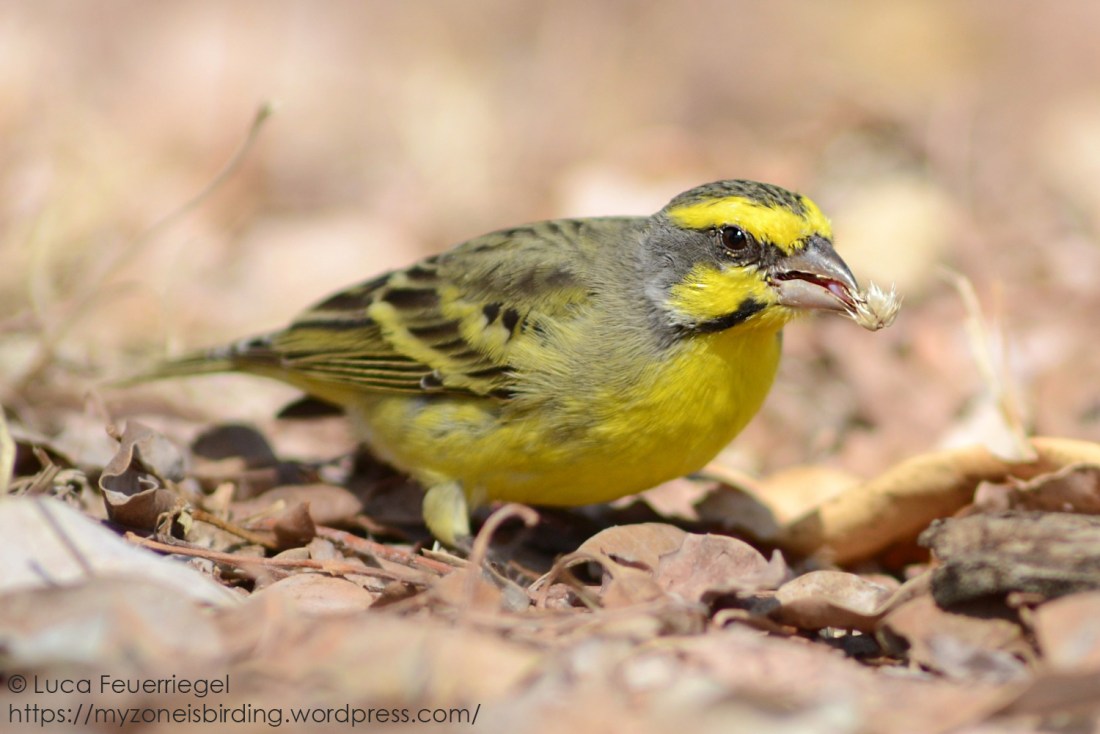
On the 19.07. I paid a short visit to Moreleta Kloof NR while my mother met one of her friends. This reserve is close to were we stayed and has some good birds. The main reason I visited is to see the extremely elusive Red-chested Flufftail, which I only ever saw once. That was from the hide overlooking the reed-bed of the Rademeyer Stream so I spent more than an hour waiting in the cold hide but the flufftail didn’t show. The rest of the reserve only yielded several common species, including several doves, Hadeda Ibis, Crowned, Blacksmith and African Wattled Lapwings, Yellow-fronted Canary, Dark-capped Bulbul, African Hoopoe, Green Woodhoopoe, Common Fiscal and several other. I did get flight views of the difficult-to-see Brown-backed Honeybird. I realised that it often took me some time to remember the names of some of the species because I hadn’t been here fore so long. From the friend’s house we stayed at I saw Grey-headed Bush-Shrike, Rose-ringed Parakeet (funny to see this introduced species here when we have them flying above our house every day in Colombo), Black-collared and Crested Barbet, Amthyst and White-bellied Sunbirds and even Cut-throat Finch, as well as many other common garden birds.
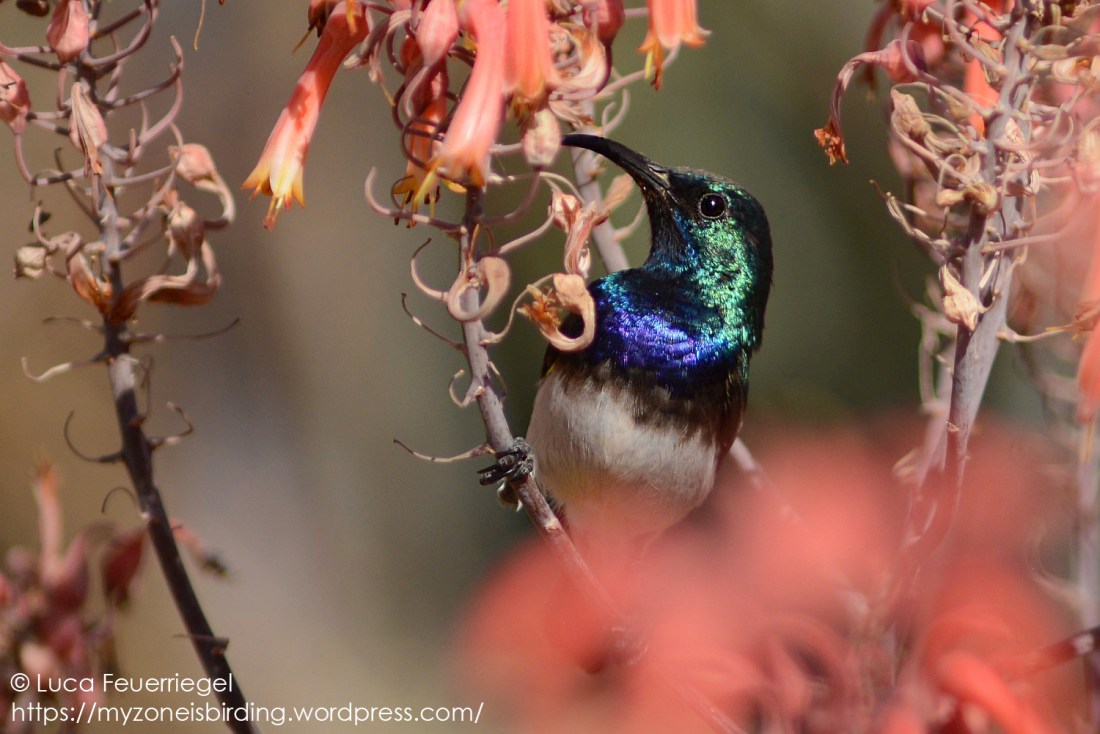
We left Pretoria in the late morning of the 21.07. and headed north to Magoebaskloof, stopping at midday at Polokwane NR. On the N1 highway some of the birds I saw were a melanistic Gabar Goshak, Marico Flycatcher, Magpie Shrike, White-browed Sparrow-Weaver and Black-shouldered Kite. Most South African birders will know that Polokwane NR is probably the most reliable site for the southern African endemic Short-clawed Lark, a would-be lifer for me. I had possible views of this species as two likely-looking larks took flight from the road, but I could not positively identify them. The scenic acacia savanna had some good species nonetheless, including sunbirds, Plain-backed Pipit, Sabota Lark, Red-billed Hornbill, White-fronted Bee-eater, Blue Waxbill, Cardinal Woodpecker, White-throated Robin-Chat, Neddicky and Golden-breasted Bunting along the Main Loop (you get a park map at the entrance, or use the excellent Birding Gauteng guide). We had a break at the Dries Abrahamse Lapa, where we saw Chinspot Batis, Kurrichane Thrush, Arrow-marked Babbler, Brown-hooded Kingfisher, Familiar Chat, Cape White-eye and Bar-tailed Apalis, while the area around the Tom Naude grave site held Violet-eared Waxbill, Acacia Pied Barbet, Crimson-breasted Shrike and Great Sparrow alongside more common birds. Around Polokwane the hills were covered by stunning flowering Aloe marlothi.
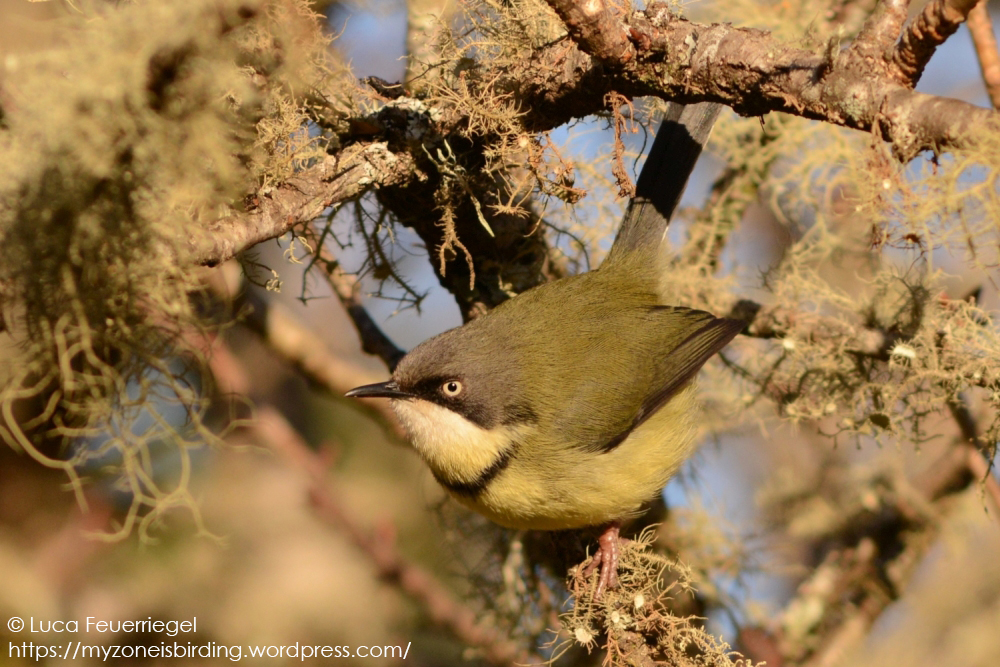
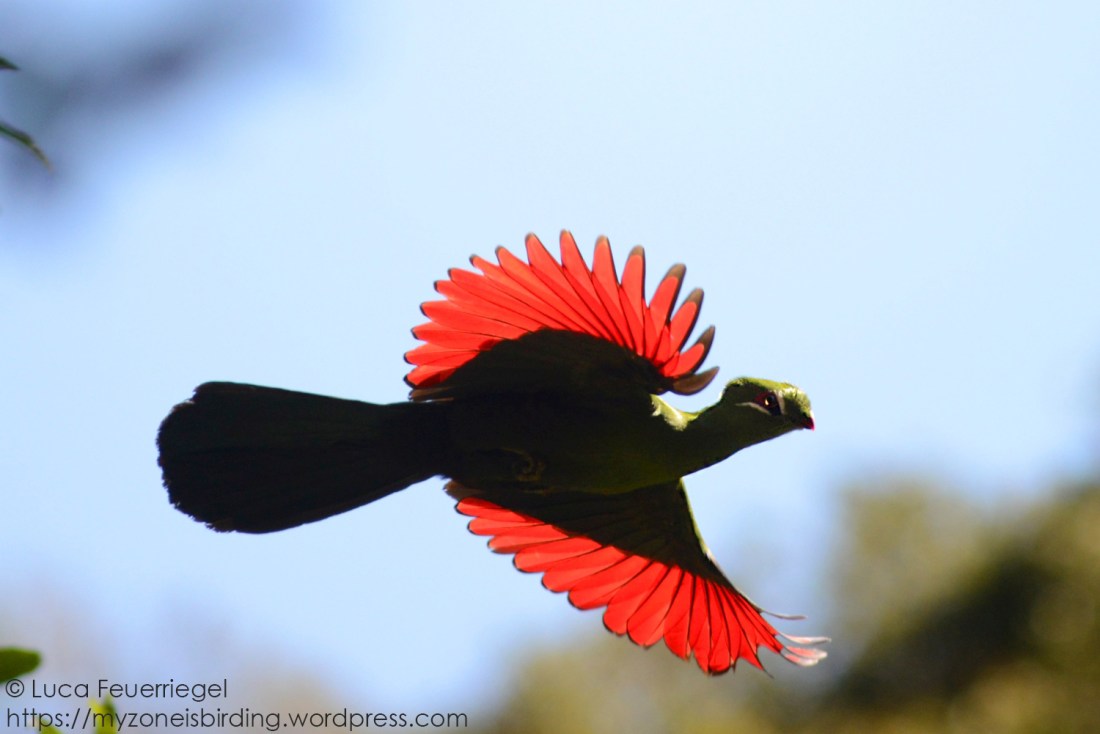
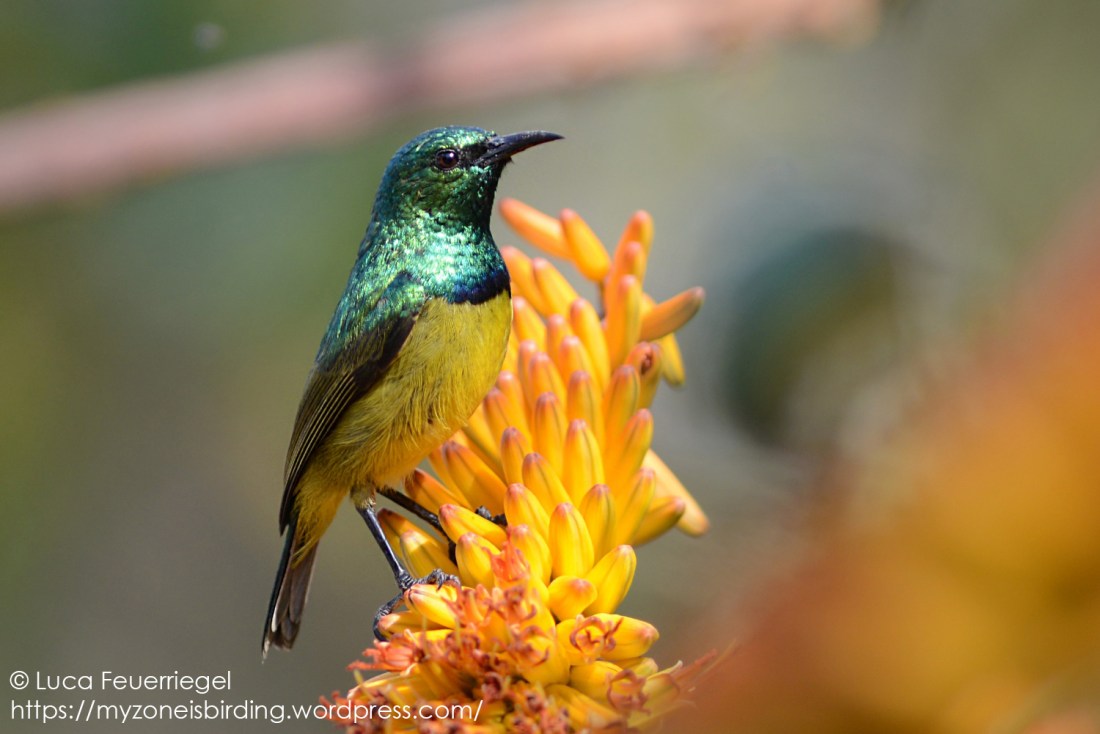
Continuing to Magoebaskloof, we had lunch in Haenertsburg at The Red Plate, which had very good food and a charming atmosphere. We arrived at Kuhestan in the afternoon and only had a bit tie strolling around the the gardens before it got dark. We had some nice birds including Long-crested Eagle, Southern Double-collared Sunbird (breeding in the Yellowwood next to the reception), African Dusky Flycatcher, Chorister Robin-Chat, Forest Canary, Yellow Bishop and Swee Waxbill. The star of the show however was a pair of Cape Parrots that spent some time on the bare Eukalyptus trunk in front of the shop’s verandah (opposite the reception). At night I went outside hoping for Buff-spotted Flufftail, but had to settle with beautifully calling African Wood-Owls in the valley below. We awoke the next morning to thick frost on the lawns and spent some time in the gardens before packing up and continuing to Punda Maria. In addition to yesterday’s species, we had Olive Bush-Shrike (the first time I saw the morph with the salmon-coloured underparts), Crey Cuckooshrike, Knysna Turaco, African Olive Pigeon, Bronze Mannikin, Sombre Greenbul and African Harrier-Hawk, while the biggest surprise was a pair of Bush Blackcaps, only my second sighting of this species and very uncommon in the area. The Cape Parrots spent quite a long time on the same tree as yesterday, which seems to be a very reliable spot for this tricky and endangered species (according to the owners as well). We decided to drive to Punda Maria via the Forest Drive, which starts right behind Kuhestan (continue along the main road and turn right here). In the spots were this road accesses relatively pristine montane forest we had most of the species we saw earlier (including Cape Parrots) and Lemon and Tambourine Doves, Square-tailed Drongo, Blue-mantled Crested Flycatcher and African Firefinch. Unfortunately we did not see many of the great forest birds I hoped to see like Narina Trogon, Black-fronted Bush-Shrike, Orange Ground-Thrush, Barratt’s Warbler and would-be lifers like Green Twinspot and Brown Scrub-Robin. I was very happy though to get a good photo of a Knysna Turaco in flight.
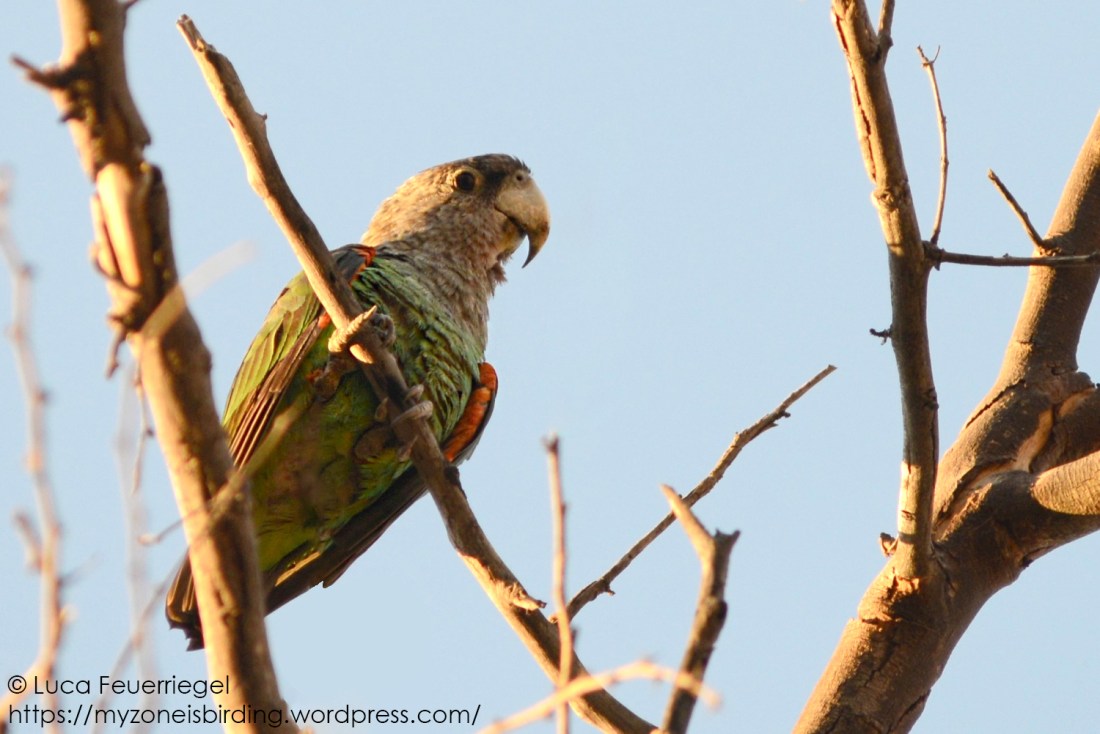
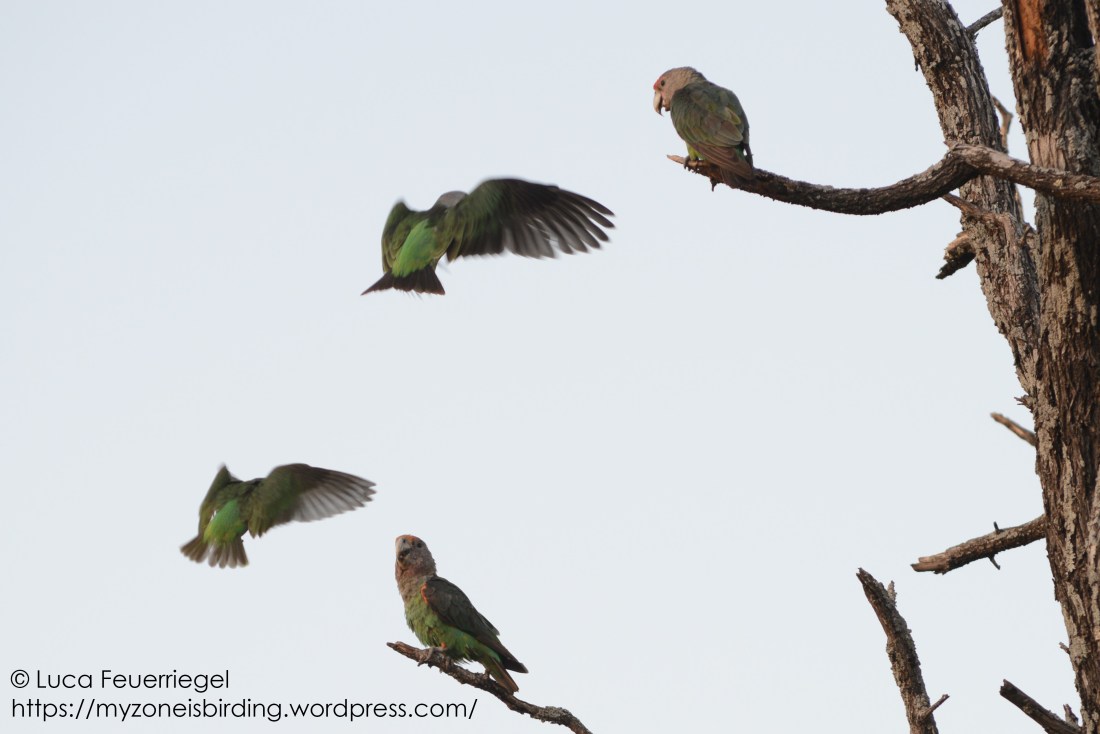
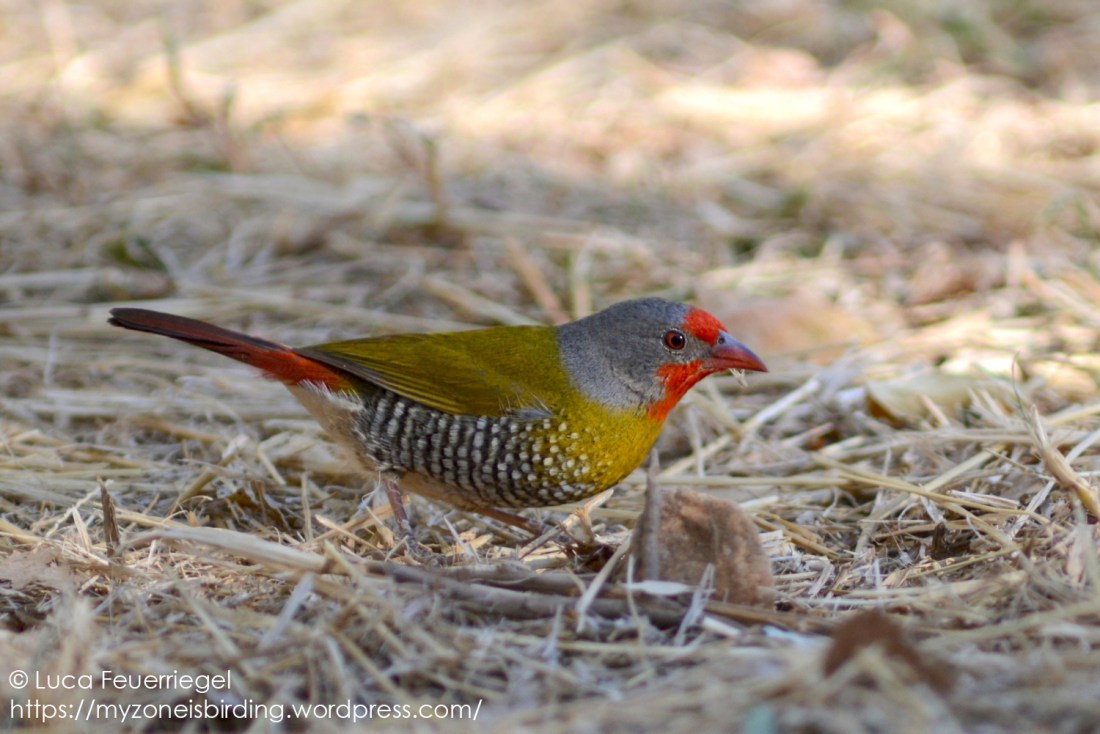
We only arrived at Punda Maria gate at 17:00 and quickly pitched our tent before it got dark. Rather than going on an early game drave we decided to have a relaxing morning at the camp, which revealed many species during our three-day stay. These included Grey-headed and Brown-headed Parrots (both visiting the camp’s waterhole each morning), Brown-crowned Tchagra, Grey Penduline-Tit, Golden-breasted Bunting, Long-billed Crombec, Blue Waxbill, Jameson’s Firefinch, Yellow-bellied Greenbul, Terrestrial Brownbul, Crested Guineafowl, Yellow-breasted Apalis, Kurrichane Thrush, Grey-backed Camaroptera, Emerald-spotted Wood-Dove, Cardinal and Bearded Woodpeckers, Green Wood-Hoopoe, Grey Tit-Flycatcher, Chinspot Batis, Orange-breasted Bush-Shrike, Bearded Scrub-Robin, White-browed and White-throated Robin-Chats, Double-banded Sandgrouse and Square-tailed Nightjar. Freckled Nightjar was calling in the evenings from the small hill above the camp but it never ventured down. Orange-winged Pytilias are occasionally seen here so I got excited when I spotted what unfortunately turned out to be Green-winged Pytilas, but they allowed a very close approach and are equally beautiful birds. The camp was alive with birds and I saw many other more common species than the ones noted above. The only lifer I saw in Kruger was a Mosque Swallow that joined Little Swift and Wire-tailed and Lesser Striped Swallows above the camp.
We saw many common mammals around Punda Maria, including African Buffalo, Impala, Burchell’s Zebra, Crowned Duiker, Nyala, African Elephant and others, but the first great wildlife sighting was of a Leopard watching Impalas (and vice versa) on the main road close to the camp. The Mahonie Loop circling around Punda Maria is one of our favourite in the park and once again produced great sightings, both of birds and mammals. We saw all the birds we had in the camp along this road, plus Southern Yellow-billed, African Grey, Red-billed and Crowned Hornbills, White-crested and Retz’s Helmet-Shrikes, Red-billed and Yellow-billed Oxpeckers, Natal and Swainson’s Spurfowl, Crested Francolin, African Green Pigeon, African Mourning Dove, African Hoopoe, Black-headed Oriole, Little Bee-eater, Brown-hooded Kingfisher, Red-billed Buffalo-Weaver, Red-billed Quelea, and Southern Black Tit. Raptors seen along this drive were White-backed and Lappet-faced Vultures, Brown Snake-Eagle, African Hawk-Eagle, Tawny Eagle, Bateleur, African Harrier-Hawk and Little Sparrowhawk. Two species which I hoped to see here were White-belllied Cuckooshrike and Dickinson’s Kestrel but I was unlucky. The best mammal sighting was of a Leopard that spent over and hour in a tree right beside the road. The most of the time in the beginning all that could be seen was a small part of its back but then it got up and moved around in the tree a bit before jumping down and moving into the bush. While on the tree it even readied itself as a male Nyala passed close to the tree, oblivious of the Leopard, but it was probably not close enough.
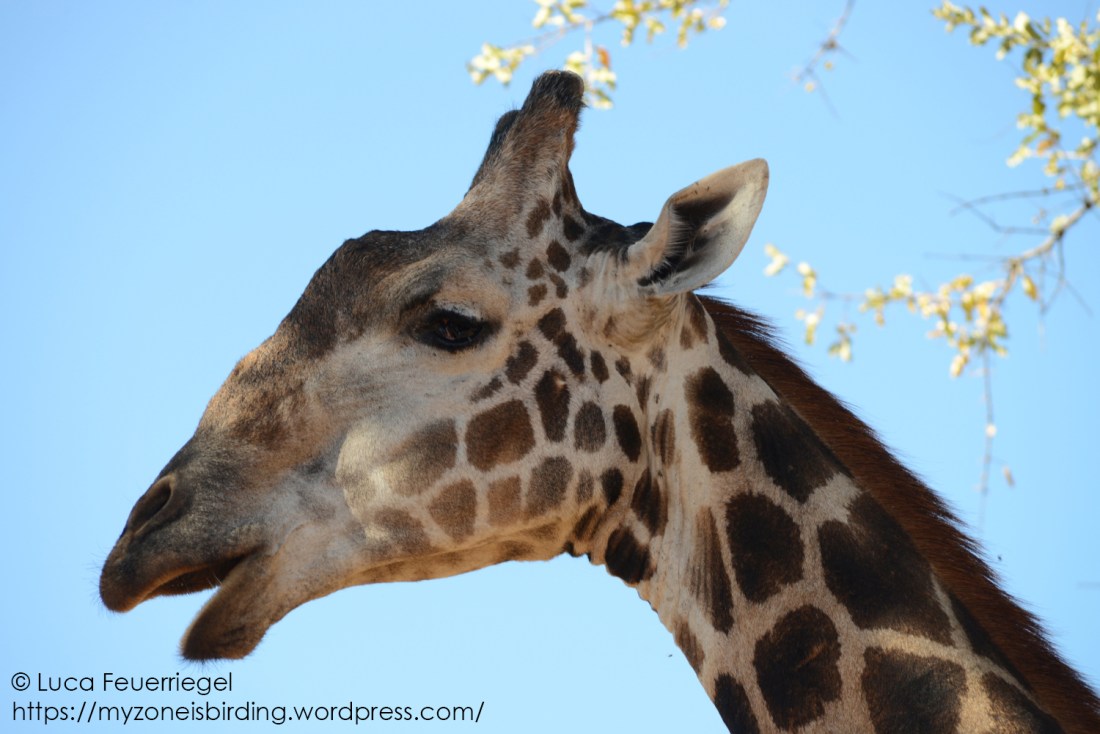
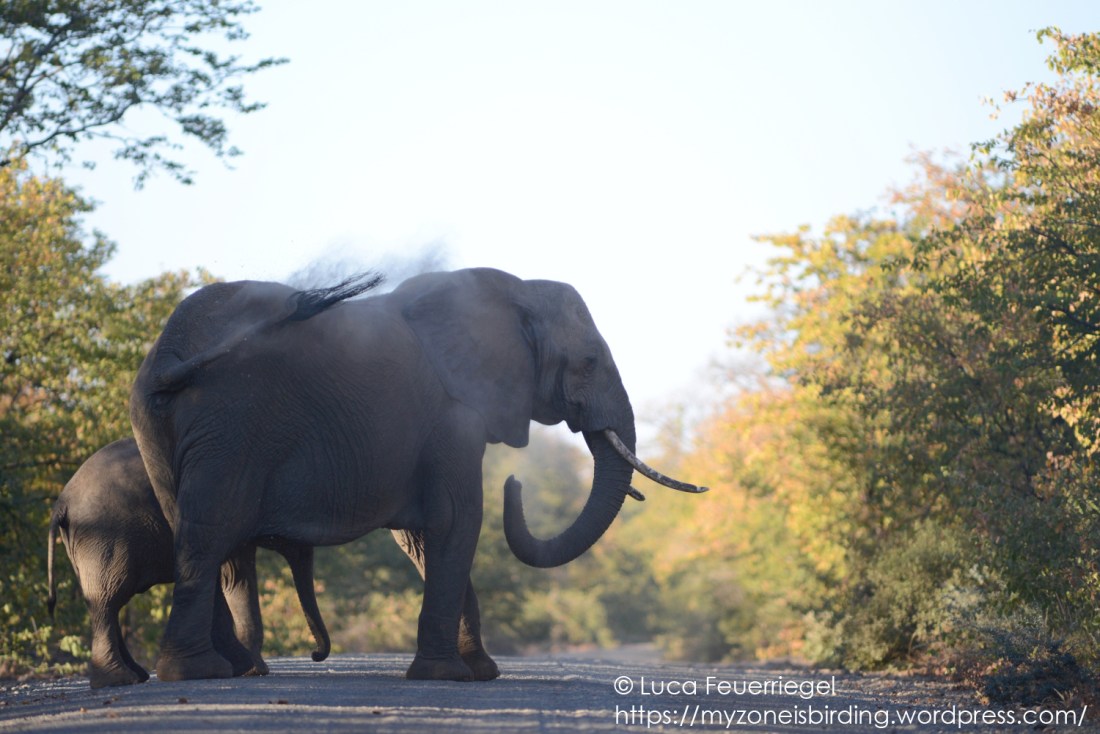
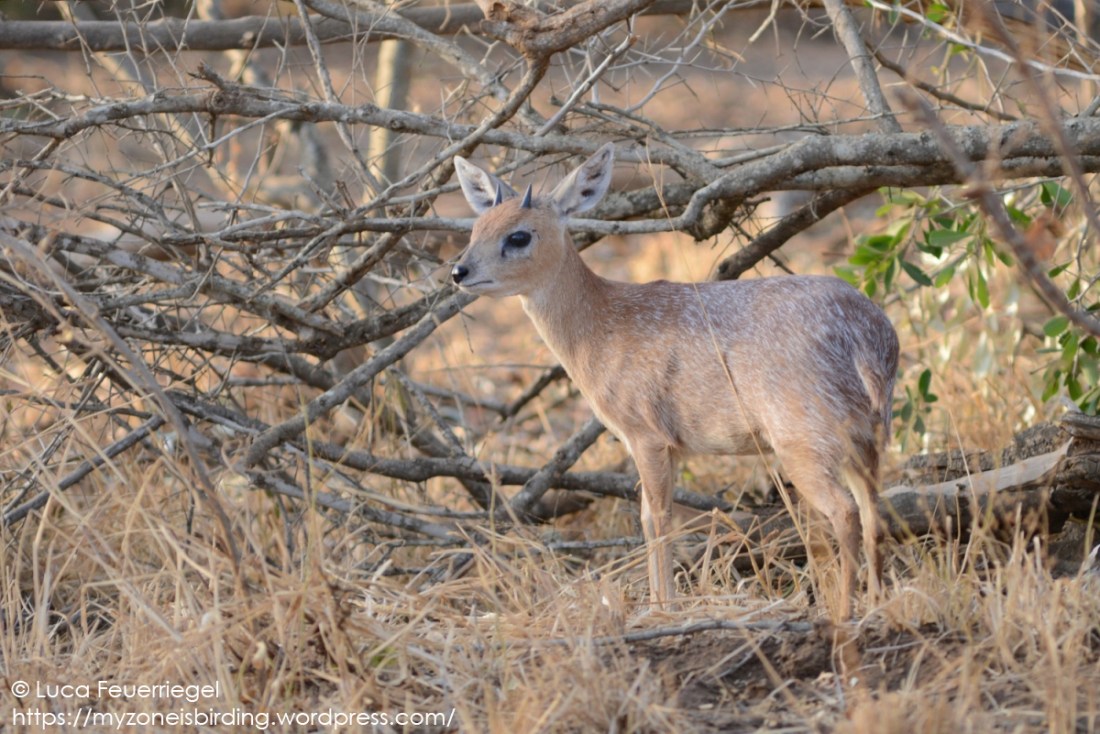
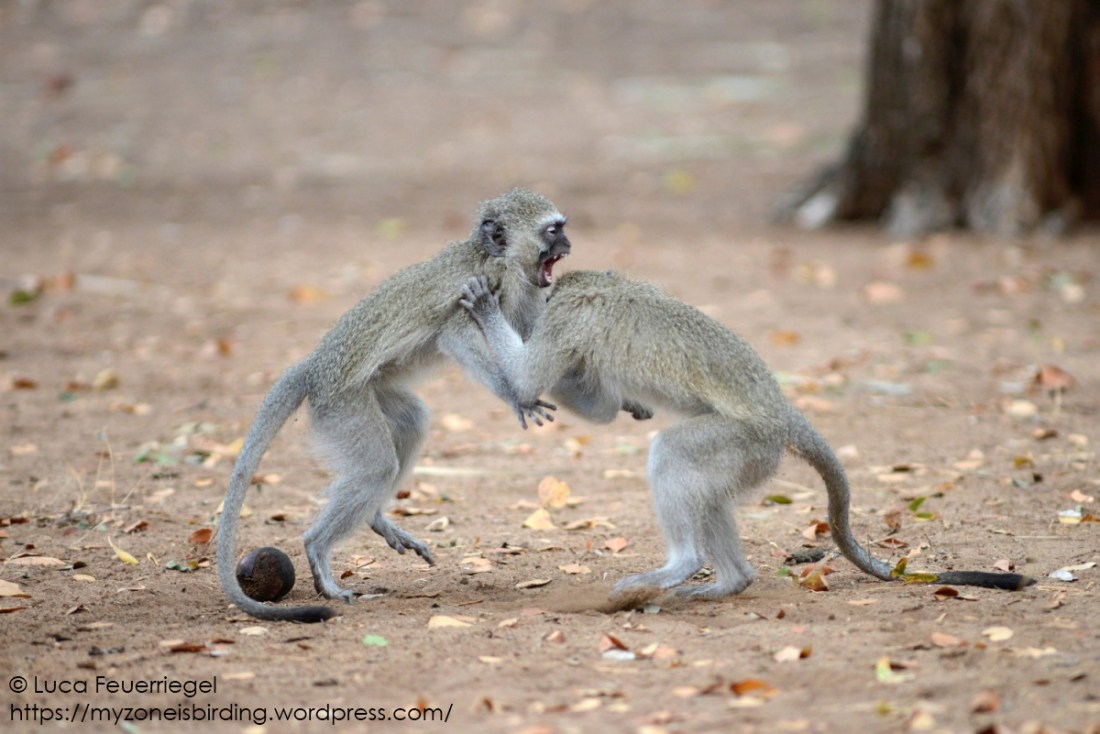
On our second full day we decided to drive up to Pafuri, were great birds and beautiful landscapes are to be found. We took the S60 gravel road, which leads to more mature Mopane woodland than can be had in other parts of the park. The leaves were everything from green to bright orange and it was beautiful to see mammals like Burchell’s Zebra, Kudu and African Elephant amongst the colourful scrubs and trees. The best bird was a female Arnot’s Chat that we watched for some time right at the junction with the S59. At the Klopperfontain waterhole at the northern end of the S60 we saw a Kori Bustard and many mammals coming to drink. This is probably the best area in the park for this species. Several individuals of the uncommon Sarpe’s Grysbok were seen along the tarred road south of the Luvhuvu River. The Pafuri Picnic Site is one of the best birding sites in northern Kruger and good birds we saw Spectacled Weaver, African Yellow White-eye, Black-throated Wattle-eye (inconspicuous high up in the trees), Saddle-billed Stork, White-crowned Lapwing, African Paradise-Flycatcher, Cardinal Woodpecker, White-bellied and Collared Sunbirds, Crowned Hornbill, Bearded Scrub-Robin and White-browed and Red-capped Robin-Chats (the last three species are best seen in the thickets behind the toilet block that is to your right when you enter the picnic site from the road; this is also were I heard a Gorgeous Bush-Shrike). The ranger there can show you many of the specials if you ask him (we saw all birds without him as he was busy showing other people around) and can also help keep the Vervet Monkeys at bay while you’re eating.
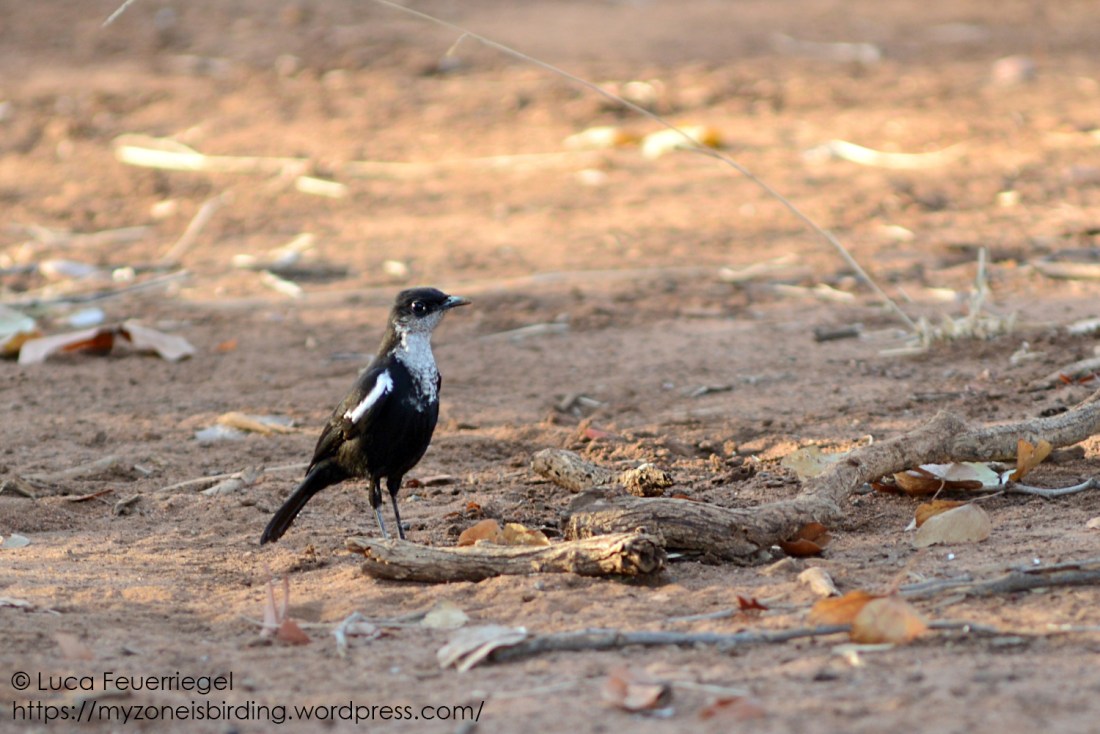
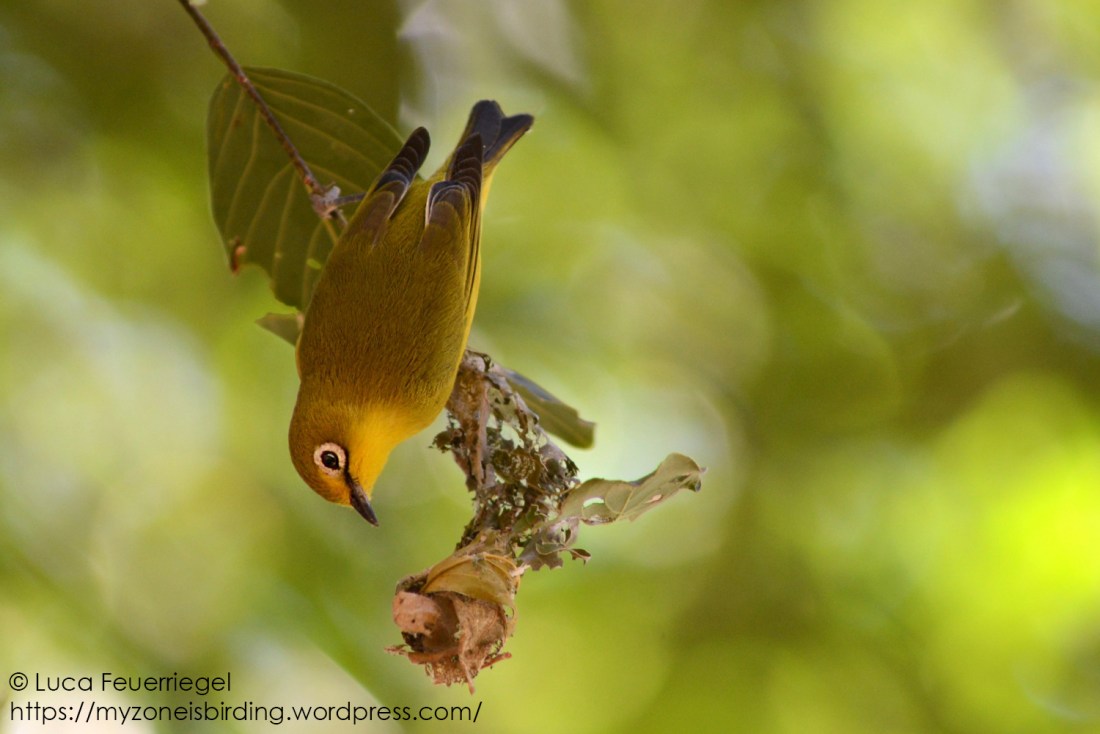
Along the road next to the Luvuvhu River and Crook’s Corner had Dark Chanting Goshawk, Giant Kingfisher, Common Greenshank, African Pied Wagtail, White-fronted and Three-banded Plovers and Brown-throated Martin while the Luvuvhu River Bridge and the surrounding riverine thickets had Meve’s Starling, African Paradise-Flycatcher, Red-billed Firefinch, Emerald-spotted Wood-Dove, White-fronted Bee-eater, Pied Kingfisher and many others.
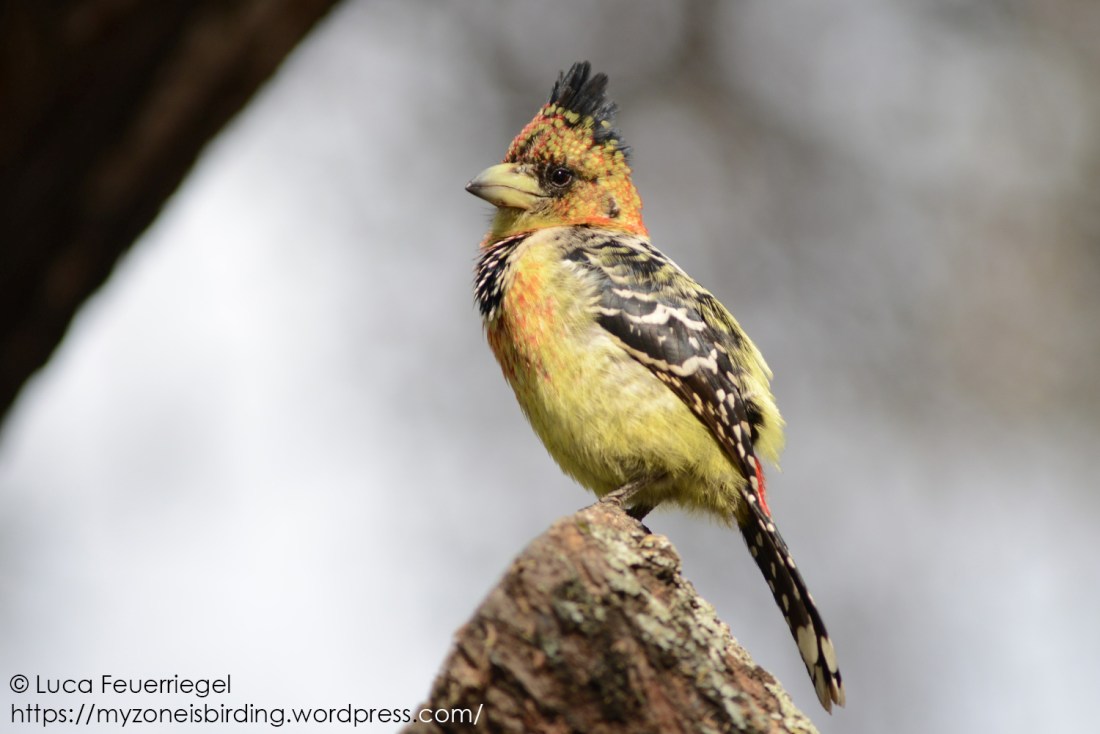
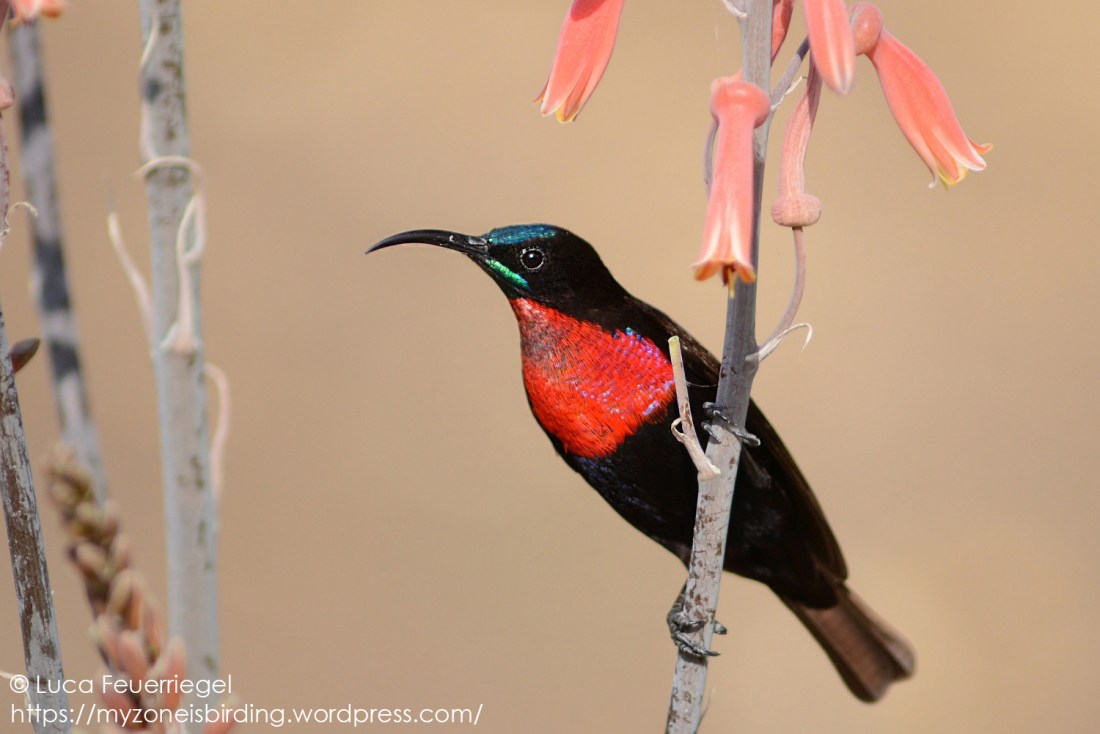
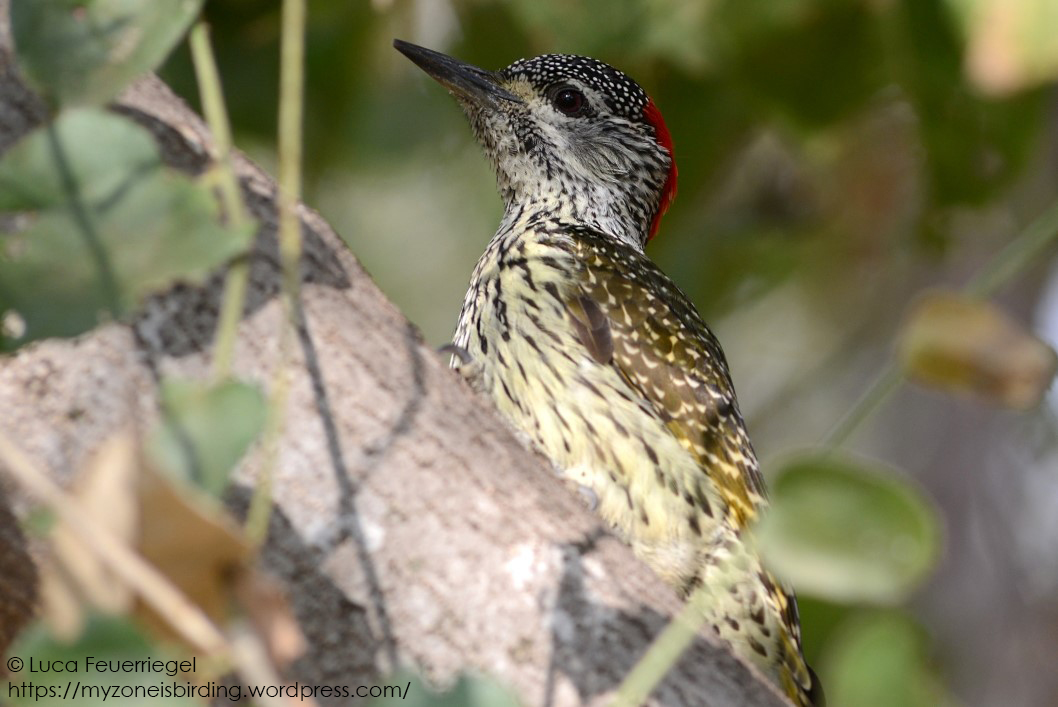
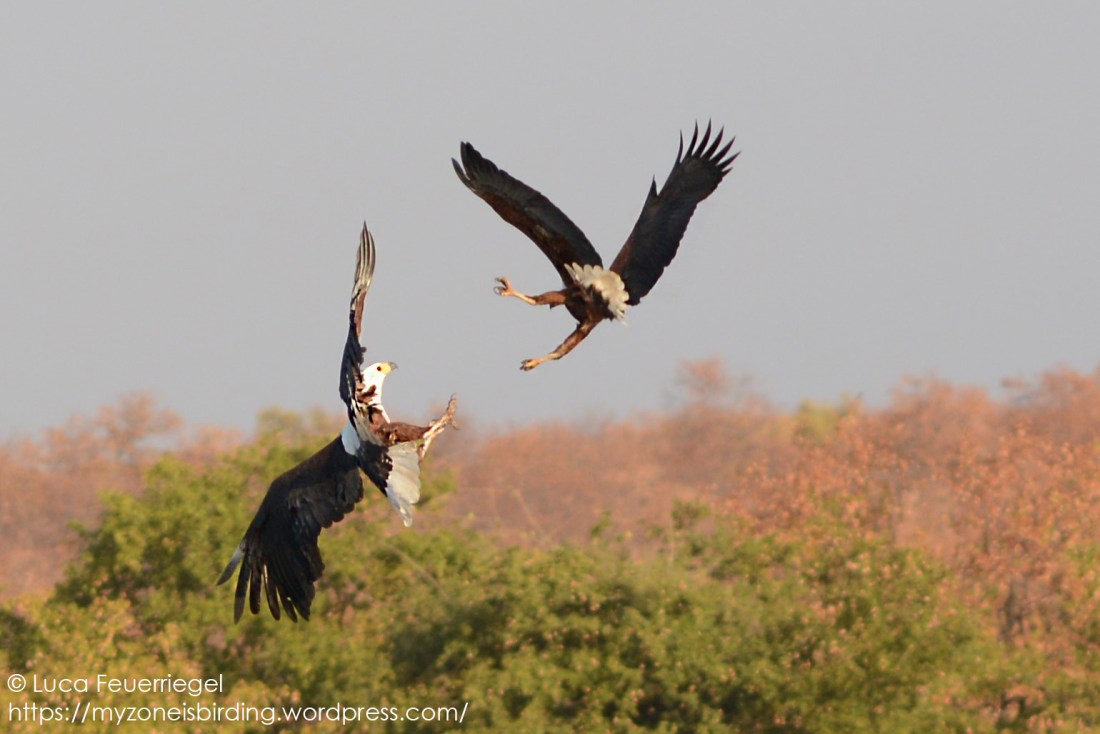
We left Punda Maria on the 26.07. for Letaba Camp, stopping regularly along the way and having a small lunch at Shingwedzi. The drive was long but we saw raptors like African Fish-Eagle, Martial Eagle and Gabar Goshawk close to Babalala Picnic Site were a huge flock of Red-billed Queleas was present. The same spot also revealed a group of Red Hartebeest, very uncommon in Kruger. Other birds seen along the drive included Namaqua Dove, Magpie Shrike, Capped Wheatear, Tawny-flanked Prinia, Yellow-billed Stork, Green-backed Heron, Marico Sunbird, Chestnut-backed Sparrowlark, Red-crested Korhaan, Wolly-necked Stork, Water Thick-knee, Wood Sandpiper and White-fronted Whistling Duck. We stopped briefly at Shipandani Sleepover hide were we saw African Openbill and African Jacana, but were more surprised when I spotted a cute Pearl-spotted Owlet sunning itself in an acacia as we got back into the car. We had another Leopard which was in a roadside tree and was seen throughout our stay at Letaba camp, where we arrived in the late afternoon. The camp itself produced few new birds but provided some close views, particularly of Collared and Scarlet-chested Sunbirds, Red-winged Starling, Crested Barbet and Golden-tailed Woodpecker. On both evenings I walked around the camp at night, hoping for African Barred Owlet, but although I heard this species at the staff accommodation, I had to settle with Verreaux’s Eagle-Owl and African Scops-Owl, while Large Spotted Genet, Greater Galago (Bushbaby) and Spotted Hyena were also seen on these walks. Southern Ground-Hornbill and Cinnamon-breasted Bunting were seen on a drive around Letaba, as were many mammal species. The Matambeni Bird Hide and Letaba River bridge had Reed Cormorant, Spur-winged Goose, Goliath and Grey Herons, African Fish-Eagle, Hamerkop and many previously seen species.
We continued to Satara camp on the 28.07., with a breakfast stop at Olifants camp. The restaurant deck, in addition to incredible views of the Olifants River and surrounding landscapes had Green Wood-Hoopoe, Grey-headed Bush-Shrike and more common species, while the more open habitat closer to Satara revealed species new for the trip like Bateleur, White-headed Vulture, White-browed Scrub-Robin, Sabota Lark, Purple Roller, African Stonechat, Acacia Pied Barbet, Yellow-throated Petronia, Rattling Cisticola and Common Ostrich.
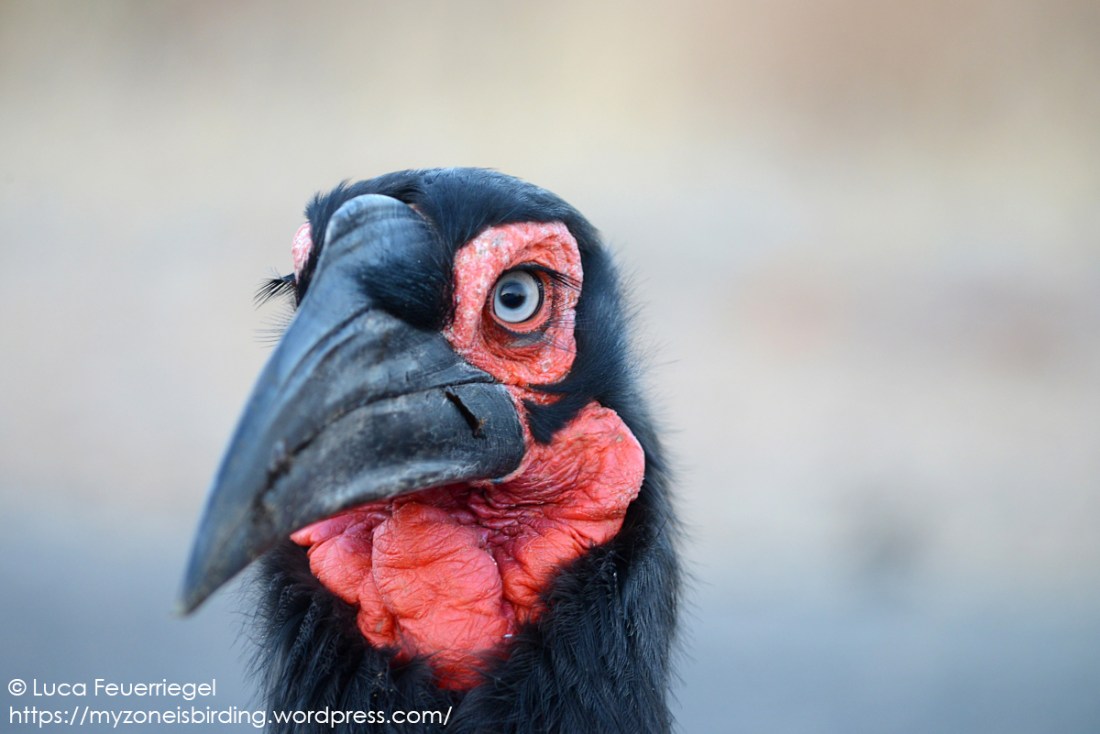
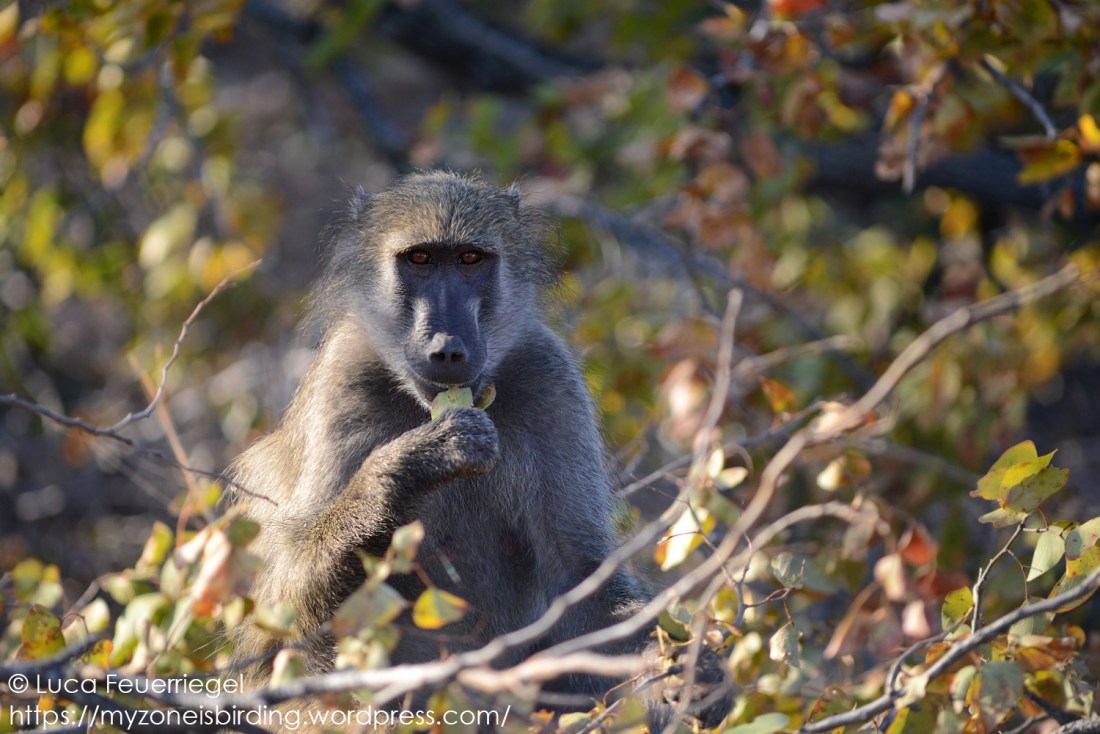
Satara camp was rich in birdlife, with the most common birds being Greater Blue-eared, Cape Glossy and Burchell’s Starlings, Red-billed, Southern Yellow-billed and African Grey Hornbills, African Mourning Dove, Speckled Mousebird, Red-billed Buffalo-Weaver and Crested Barbets. Less obvious birds were White-browed Scrub-Robin, Marico Sunbird and African Hoopoe, while I was surprised to find a Red-faced Cisticola. On the mammal front, we saw Banded Mongoose, Spotted Hyena, Greater Spotted Genet and a Honey Badger that took a liking of the dustbin outside our bungalow.
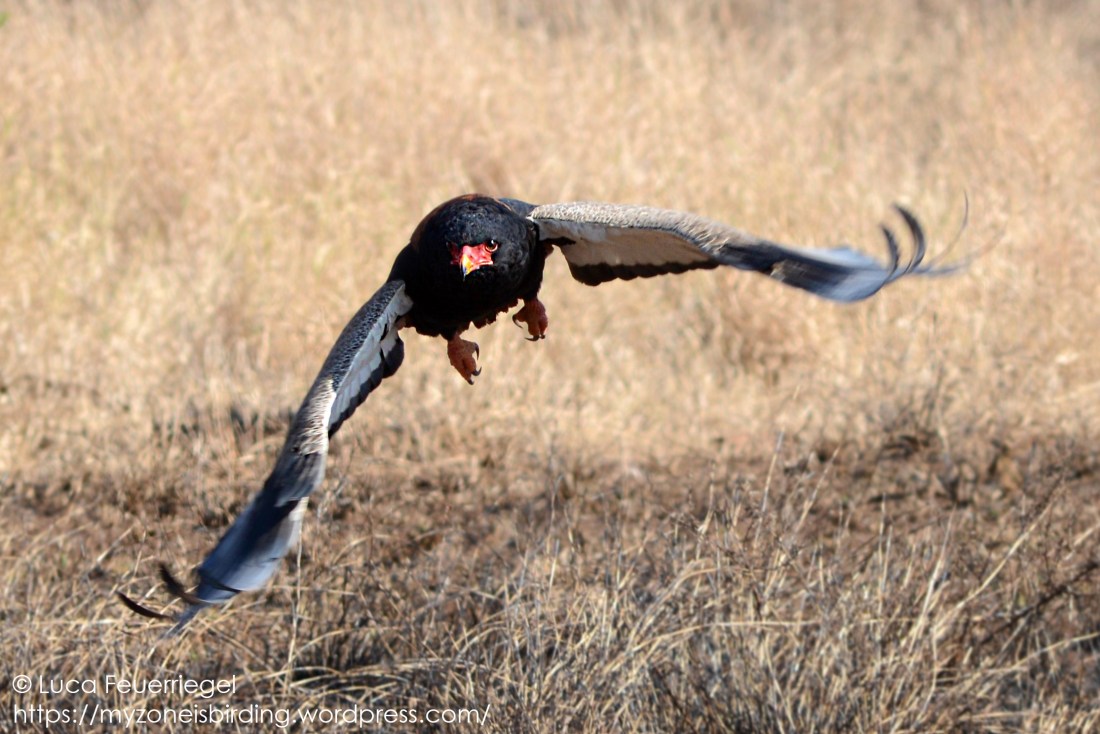
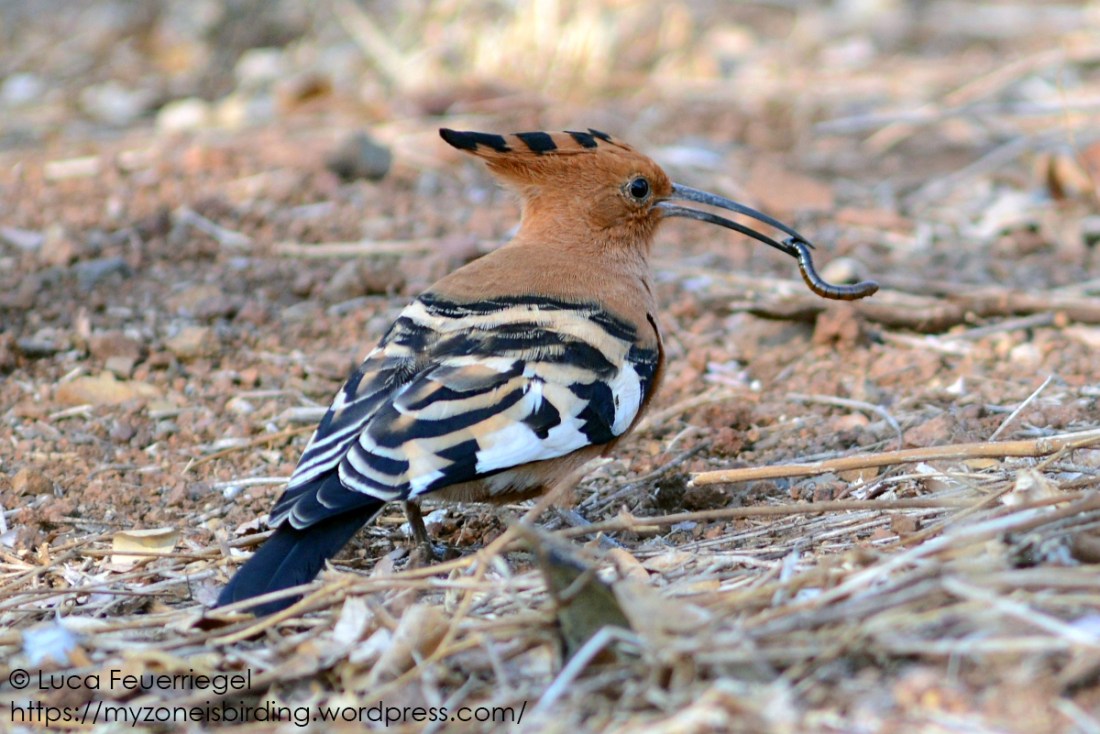
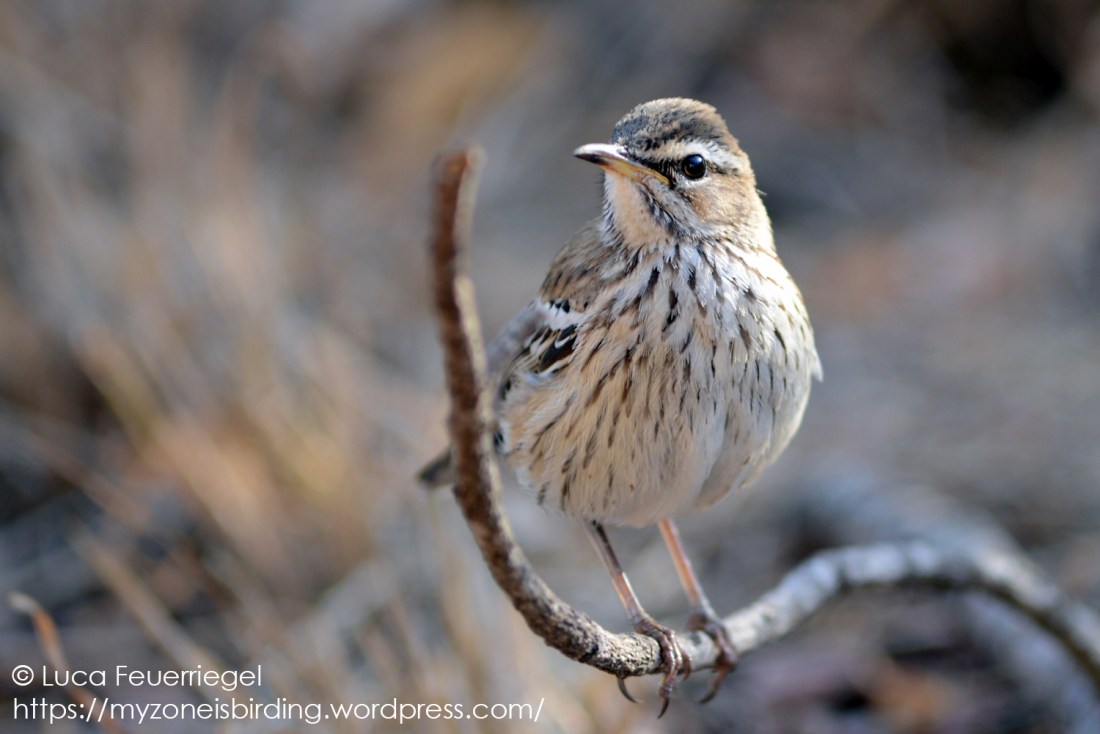
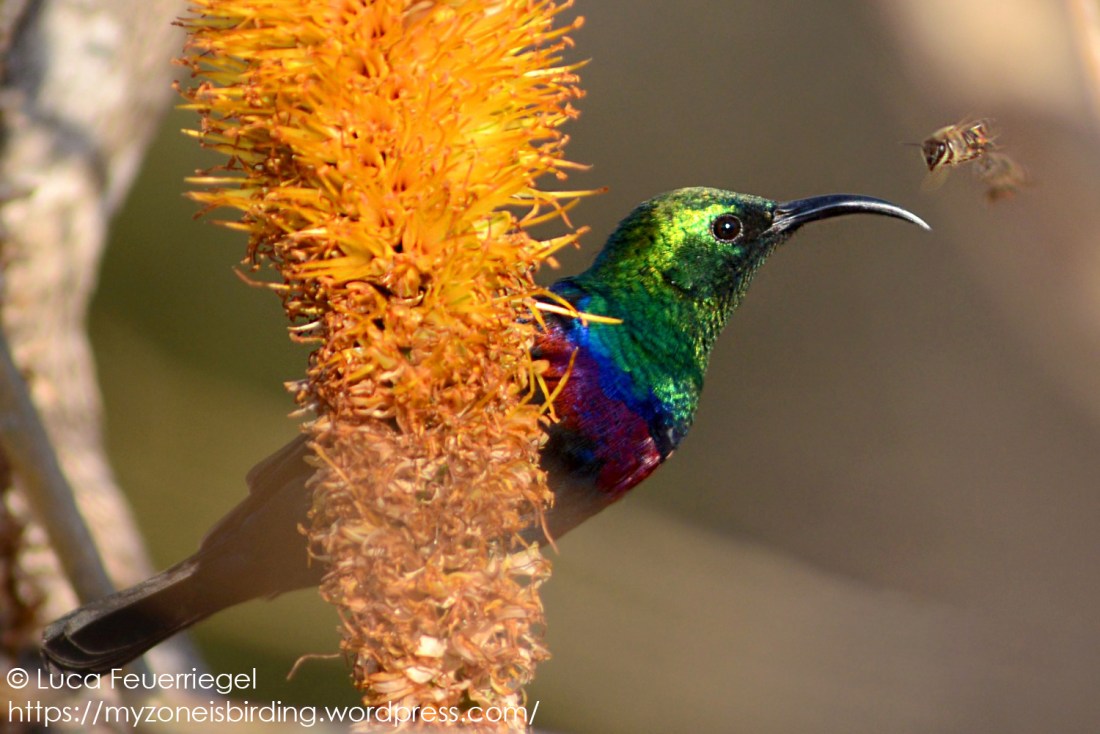
The open savanna around Satara is excellent for game viewing, and in the morning we saw a pride of nine Lions along the H5. The Sweni Bird Hide was alive with birds and we saw several storks, Water Thick-knee, Natal Spurfowl, Burchell’s Coucal and Black Crake. Along the S100 gravel road east of Satara we had another Leopard sighting, while our fourth Leopard sighting while our fifth (!) was of one which I saw briefly as it walked away from the river at the N’wanetsi Picnic Site, a very charming spot.
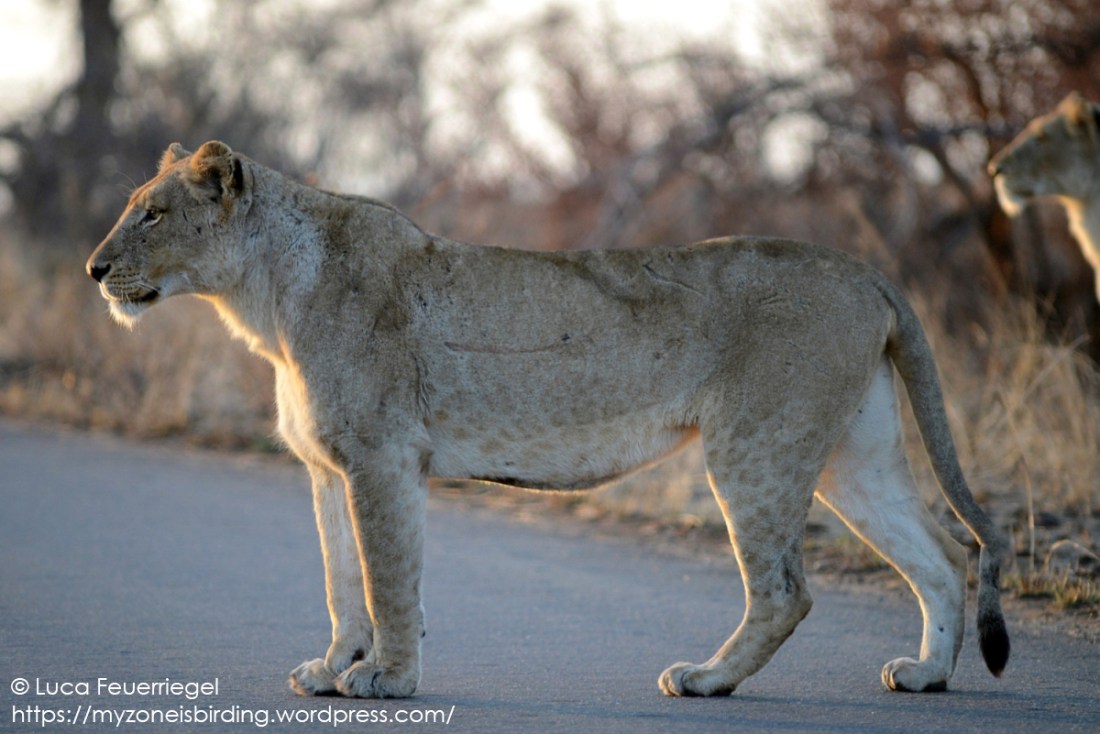
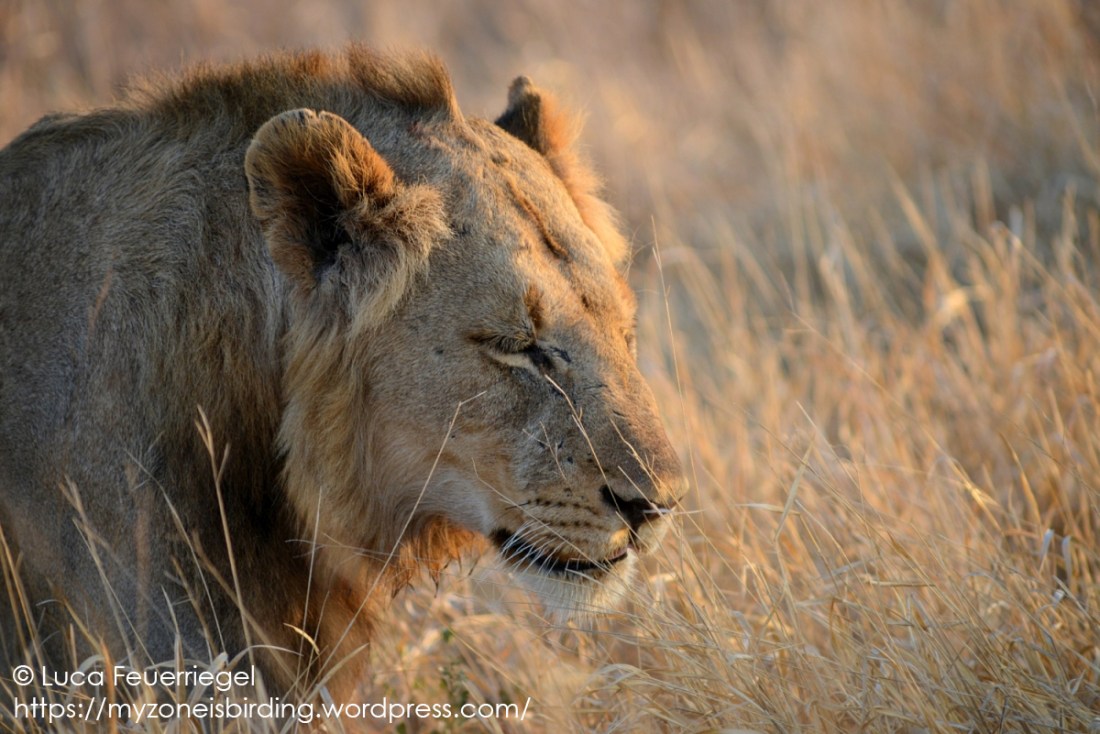
On our drive to Orpen gate from Satara we saw our sixth and final Leopard as it walked away some 100m from the road. As we arrived at the spot a man opened his car window and became really mad at us, saying we’ve chased the Leopard away. This was quite ridiculous considering we’ve seen Leopards close to the road many times and they never seemed to care at all. We also saw a male Lion in a river bed next to the road and another Pearl-spotted Owlet sunning itself, but the best sighting was a pair of Kurrichane Buttonquails that ran across the road and then foraged in the grass next to our car.
We continued on back to Pretoria, passing the Abel Erasmus Pass and Dullstroom. We stopped at the former, which is the best place to see one of Africa’s rarest raptors, the Taita Falcon. With a global population of 500-1000 according to the IUCN, this bird is regarded as Vulnerable, and is very sensitive to disturbance in its specified habitat. The exact spot where this species can be seen is around 500m after the J.G. Strijdom Tunnel. You will see a signboard of the falcon and curio stalls on your left (Google Maps location). Notice that there are two stands of curio stalls before you reach this spot. A guy named Michael is usually around with a scope, and he is willing to show you the birds. When we were there, we were told by the women at the stalls that he was not there that day, and we scanned the cliffs for nearly an hour without spotting the falcon. The birds roost on the cliff face right above the road and on the one across the small valley. They are very hard to find, although a good method is to scan areas that are covered in droppings, which are the places were they probably roost regularly. These are impossible to see with the naked eye (unless you know where to look – two of them are situated high up on the cliff face above the road). The only birds we saw were Rock Martin, Red-winged Starling and White-backed Vulture. After this unsuccessful stop, we continued through Dullstroom. We did not stop here but two highland species seen were Buff-streaked Chat and a lifer in the form of a Black-winged Lapwing.
We arrived late in Pretoria and spent the last few days visiting friends. I celebrated my 18th birthday at Cappuchino’s restaurant in The Grove Mall with my classmates, which was the best ending imaginable to this great trip back home. I know I will be back in the not too far future…
 My Zone Is Birding
Got a nice introduction to the birds of the place. I hope to visit it some day as well
LikeLiked by 1 person
Thanks! Yes, South Africa is really worth a visit. It’s easy to travel and has a huge number of birds, wildlife, and beautiful landscapes.
LikeLike