
Every year in January the Overseas School of Colombo makes one-week trips with its students to various spots around the island, called Week Without Walls, in order for them to get to know the island better. Last year I went to the Jaffna area in the far north of Sri Lanka, and it was a great trip. We visited several temples and learnt lots about the civil war. Apart from the fascinating cultural aspects, I enjoyed seeing some good migrant birds that covered the mudflats on the coast. Great birds included thousands of Northern Pintails, Indian Spot-billed Duck, masses of waders including plovers, Black-tailed Godwit, stints, Eurasian Curlew and even Crab Plover.
So after such a good trip, I looked forward to this year’s Week Without Walls, during which I spent five days in the Sri Lankan highlands with several classmates and three accompanying teachers, one of which is also a birder. We spent the week primarily hiking, birding, frogging and lizard-viewing, so it was a great nature and outdoors-oriented trip.
Accommodation
We stayed in three places during the trip, so that we were closer to the locations we did the activities. The first night was spent in Belihuloya in the southern edge of the highlands, in the Kinchigune campsite. The camp had permanent tents set between a forest and home gardens, with a good view on a lake. After the camp we moved to the dormitory inside Horton Plains National Park. There are two large sleeping rooms, a kitchen and a common area. The beds were fine, and blankets were provided, but everyone used sleeping bags as well because of the cold. The bathrooms are fine, with bucket showers and relatively clean toilets. The dorm is There is a bungalow, just a 2-minute walk from the dorm, which is apparently slightly better and has a nicer view. The last night, we stayed in St Andrew’s Hotel in Nuwara Eliya, which was considerably more comfortable, and the food very good.
The Trip
We arrived at school on Monday at 7:00 in the morning, and were on our way to Belihuloya, situated on the southern edge of the highlands once all the bags were in the two vans. The group consisted of 15 students, seven of which are in my grade, and the rest in grade 10. We ate lunch at a roadside restaurant, from where we walked to nearby stream to try out long-exposure photos of the water. Photography was a big part of the trip, but since my lens and camera got stolen a few months ago, I could use the cameras of others. There was not much activity due to the heat, but I saw Brown-breasted Flycatcher, Grey Wagtail, Purple-rumped Sunbird and Pale-billed Flowerpecker.
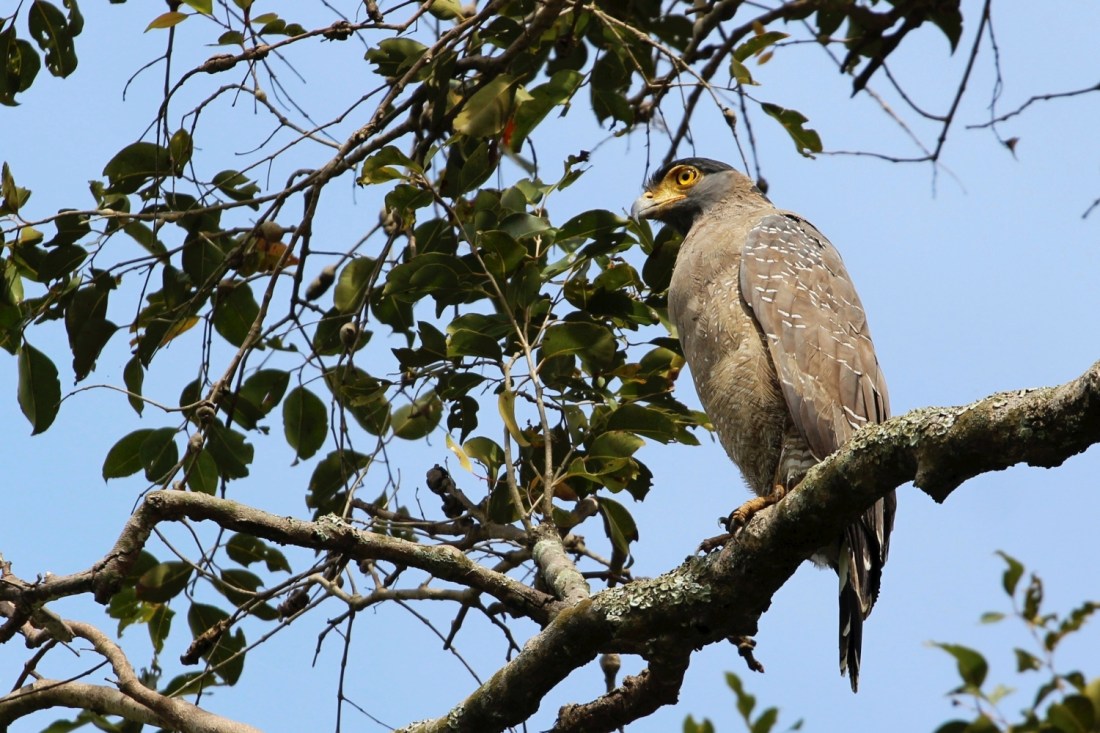
Leach socks were given to us before the hike to the campsite, but I chose not to wear them because it was relatively dry and hot. This was a good choice as I encountered only one leech on the walk. The hike was tiring in the heat of the day, and a long part was through the rice paddies, but it I saw nice birds including Small Minivet, Coppersmith and Brown-headed Barbets, Jerdon’s Leafbird, Indian Robin, Sri Lanka Hanging-Parrot, Layard’s Parakeet, Woolly-necked Stork and a very obliging Crested Serpent Eagle, amongst more common species. The highlight though was a new species for me, a male Indian Blue Robin, which was beautiful even in the dark undergrowth, especially its glowing white supercilium. We arrived in the camp as it got dark, and watched a beautiful sunset over the hills, before eating a good dinner and heading into the tents.
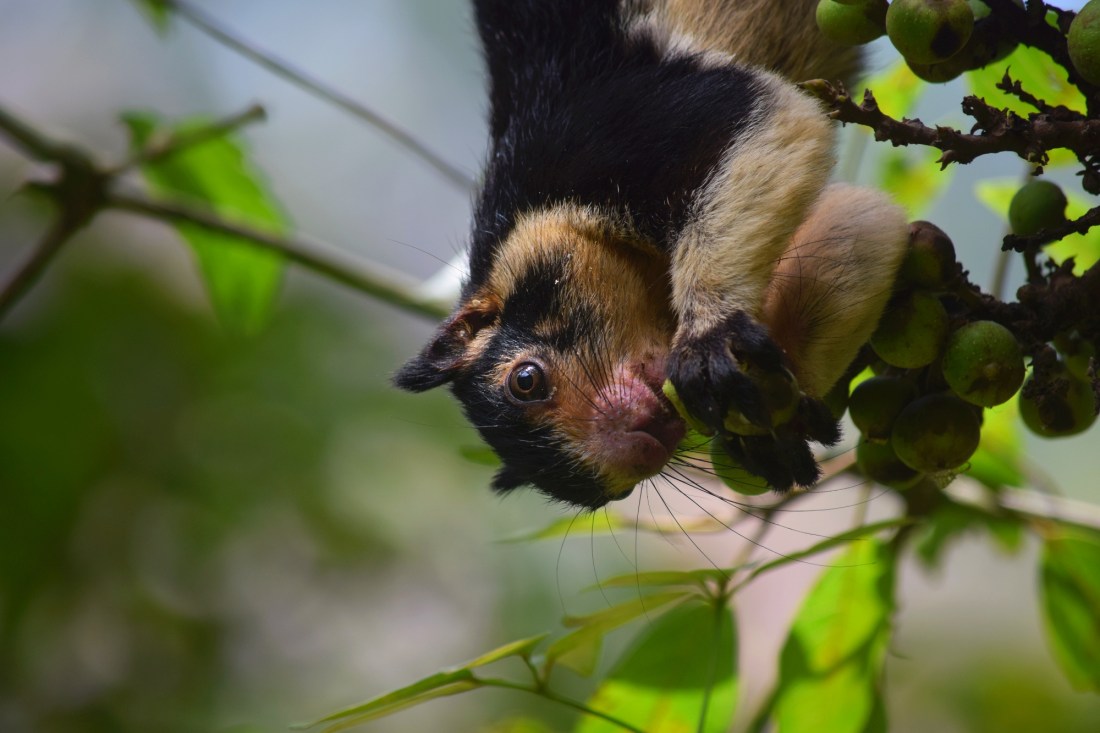
The first full day started with an unsuccessful search for Indian Pitta by Mr Lockwood, the teacher who is a birder, and myself. A pitta was calling nearby, but it was too dark to spot. Surprisingly, we hear a Sri Lanka Spurfowl calling not fare away as well, but we did not look for it. After breakfast, we packed up and headed to the start of the hiking trail to Lanka Ella Falls by van. The hike was very nice as the trail went through scenic grasslands and forest. Some good birds were seen on the walk, including a Black Eagle flying past at eye level, Yellow-fronted Barbet, Bar-winged Flycatcher-Shrike and Tickell’s Blue Flycatcher. An interesting find was an Indian Swiftlet on the ground, it probably tried to land on a rock but fell down. Due to their weak legs, swifts can rarely get back into the air once on the ground. Once I picked it up though, it shot away. On the mammal front, we had all three Sri Lankan monkeys (Grey Langur, Purple-faced Langur and Toque Macaque) and Grizzled Giant Squirrels. As some of us photographed the squirrels, I spotted a 1.5m long Rat Snake in a nearby tree, and we watched amazed as it disappeared into the thicket. The waterfall itself was very beautiful, and the water incredibly cold.
From there we headed to Horton Plains NP, on the way stopping to buy supplies for the next two days. Arriving at the park, there turned out to be no gas or cook for us, so we wondered how we were going to make food, but luckily all could be sorted out and a cook accompanied us to the dormitory. We came through the southern entrance, where we spent some time looking for Rhino-horned and Pygmy Lizards, which can be found in the mossy trees there. After some time I found a female Rhino-horned, but we could not locate the Pygmy Lizard. On the way to the dormitory, one van got lucky with a brief Leopard sighting. The drive turned up most of the expected birds, such as Pied Bushchat, Pacific Swallow and Paddyfield Pipit, while a walk around the dorms after unpacking revealed Yellow-eared Bulbul, Indian Blackbird, Common Tailorbird and Sri Lanka White-eye. By far the best find was as Mr Lockwood and I stood in front of the building a Sri Lanka Bush Warbler hopped around on the ground where the kitchen’s waste water goes into the thicket. We had superb views of this normally elusive bird at this spot, which also turned up other birds throughout this and the next day, including Indian Blue Robin, Velvet-fronted Nuthatch, Grey-headed Canary-Flycatcher and Spot-winged Thrush.

On Wednesday, I got up before the others to look at the stars outside, something I’ve been looking froward to on the trip. The early morning was clear so the sky was full of stars, and it was impressive watching the sky turn from dark to light blue and the clouds from grey to burning orange. Mr Lockwood and I walked along the road, seeing many Sri Lanka Jungefowl, a common but exceptionally beautiful bird, and Sri Lanka Wood Pigeon, the second new species for me on this trip. After breakfast, we drove to the starting point of the hiking trail to Kirigalpotta, Sri Lanka’s second highest peak at nearly 2390m. The trail was 14km in total and quite tiring, mainly because of the heat, the high altitude and some steep parts in the end. Aditionally, the vegetation often grew over the trail making it a bit annoying to walk. However, a big advantage was the low number of visitors compared to the World’s End hike – we only met one other small group. The view in the end was absolutely breathtaking, we could see most of the highlands, including Sri Pada, Nuwara Eliya and many other peaks. From the view point a very steep cliff face disappears into the forest some 100m below. This is were the name of the mountain comes from, as Kirigalpotta literally means “milk rock mountain” since when the cliff is wet it looks like milk in the sun from a distance.
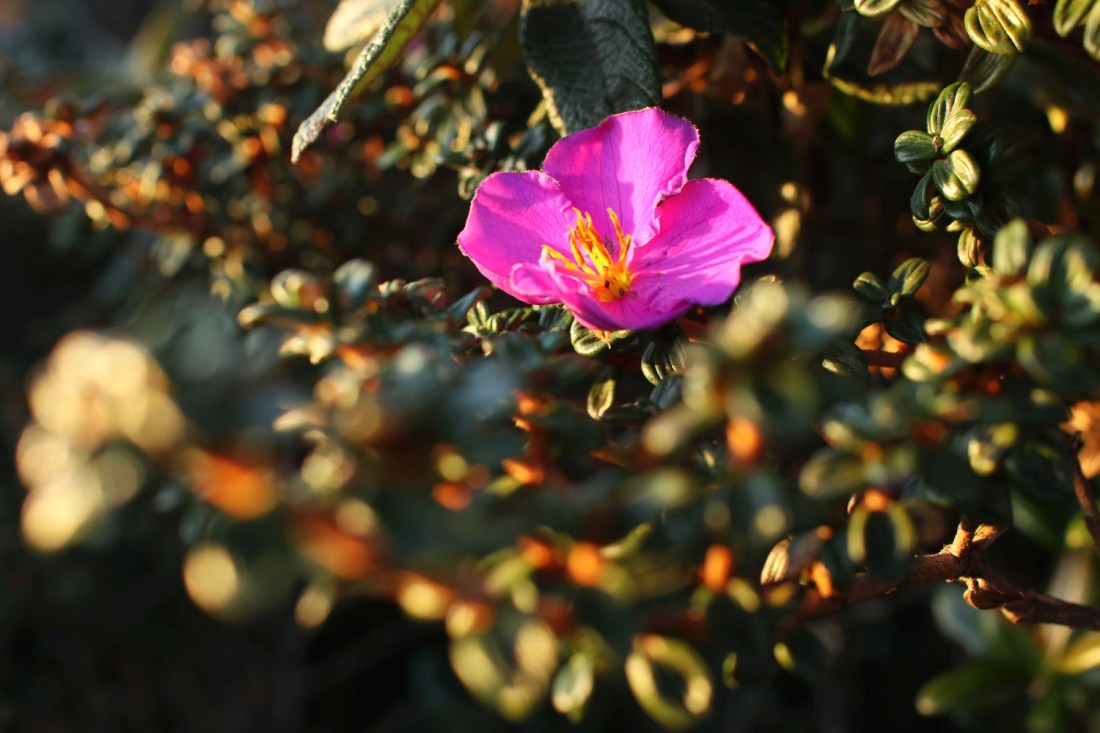
We added some good birds to the trip list, including Dull-blue Flycatcher (the third new species for me), Black-fronted Babbler, Sri Lanka Scimitar-Babbler and Common Kestrel, which were seen around the peak from the viewpoint. The flycatcher was quite shy unfortunately, so I only got brief views of two birds, once about half-way on the trail, and the second time just before the last steep part up to the peak. We also stopped to look at flowering rhododendrons, and Mr Lockwood pointed out some other interesting things during the hike, including Leopard scat and the tree die-back in some areas, which is a common phenomenon in the highlands.
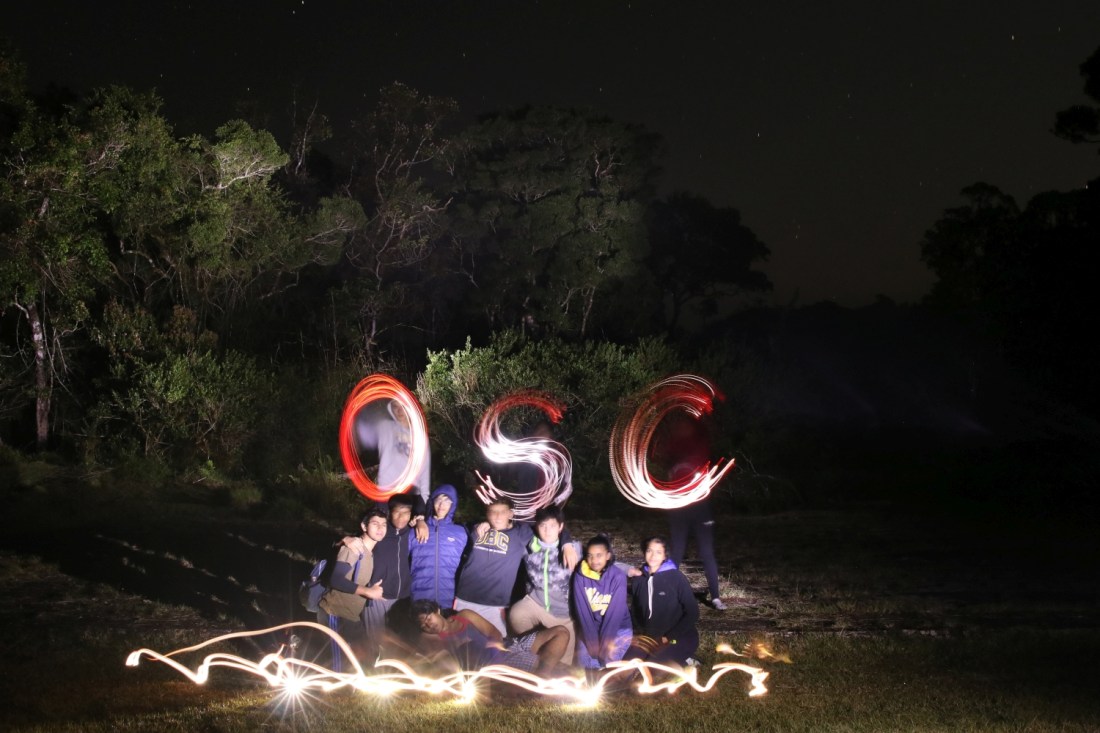
After the hike everyone was tired, but in the afternoon we returned to the southern entrance of the park to look for lizards again. We found the same female Rhino-horned again but none of its pygmy cousins. The highlight however was an ridiculously cooperative pair of Sri Lanka Bush Warblers. We were photographing them, but at one point I just lowered my camera and watched one hopping along a branch at arm’s length! I don’t know if it is pre-breeding season or if we were just lucky, but this was the second of four sightings we had of this species. At night we did some fun long-exposure photography, which gave excellent results.
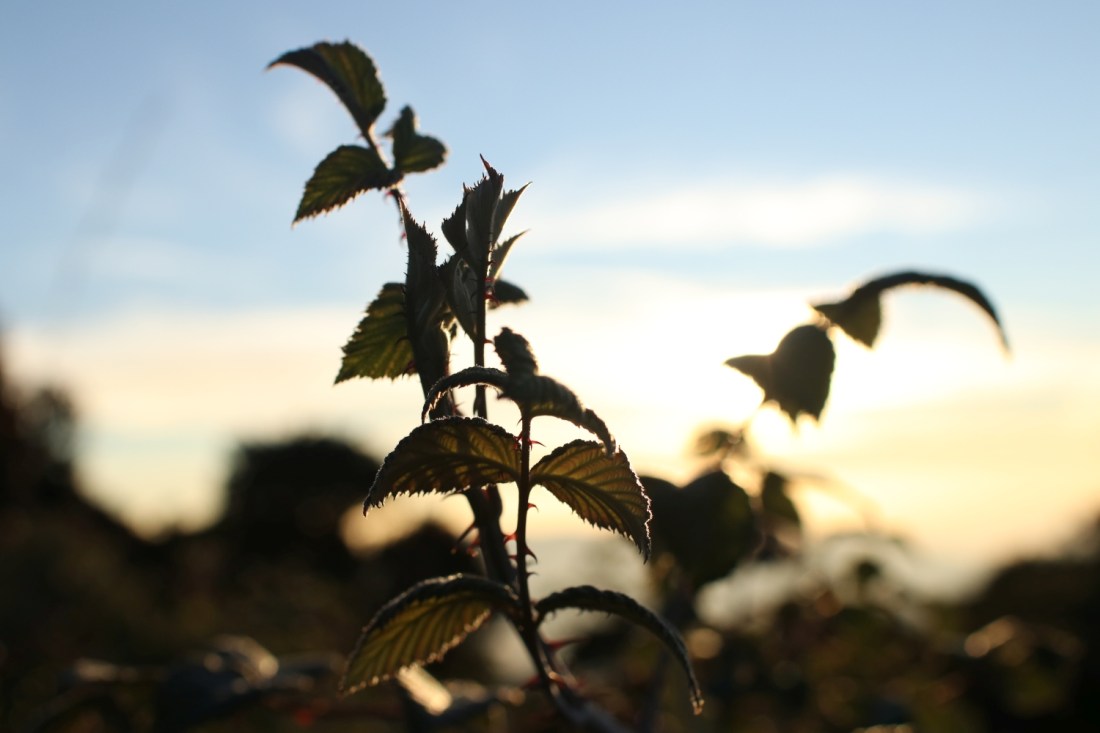
Another early rise on Thursday, but this time for all; we got up at 5:15 to hike Totupola Kanda, at nearly 2360m Sri Lanka’s third highest mountain, before breakfast. Mr Lockwood got up before us and saw a Black-naped Hare close to the dormitory, making it the 10th identified mammal of the trip. This hike was much easier than yesterday’s one, one-way it took us just over 30 minutes. On the top we did some nice photography, playing with the early morning light. One teacher saw a probable Sri Lanka Whistling-Thrush, but it was too dark to have a definite ID. I did not see anything good apart from another Indian Blue Robin and Sri Lanka Scimitar-Babbler. On the way back to the dorms we stopped at the Arranga Pool, a classic site for the Whistling-Thush, but we were unsuccessful, probably because it was too late in the day. Arriving at the dormitory, we packed up our bags and ate breakfast, before getting in the vans and heading to Nuwara Eliya, stopping at Ambewela Milk farms to enjoy some warm milk on the way.
We arrived at the posh St Andrew’s Hotel at noon, and first enjoyed a nice lunch before settling into our rooms. Many of us slept in the free hour we had before setting out again, realising that the last few days had been very packed. At 16:00, we were in the vans though, excited to go to Victoria Park in the search for Pied Thrush and Kashmir Flycatcher. The search for Pied Thrush lasted about an hour-and-a-half, walking along the stream and exchanging news with other birders, including a friendly guy from a Birding Ecotours group we met earlier at the Arranga Pool. Finally, I spotted a female in flight, which could not be relocated in the tree it landed in. We then checked the stream area where the female was and soon got two males, one feeding next to the stream. The Birding Ecotours guide gave me the location of a male Kashmir Flycatcher they saw earlier, but we could not locate it. Other birds we found in the park were Forest and Grey Wagtails, Green Sandpiper, Blyth’s Reed-Warbler, and common birds we saw earlier.
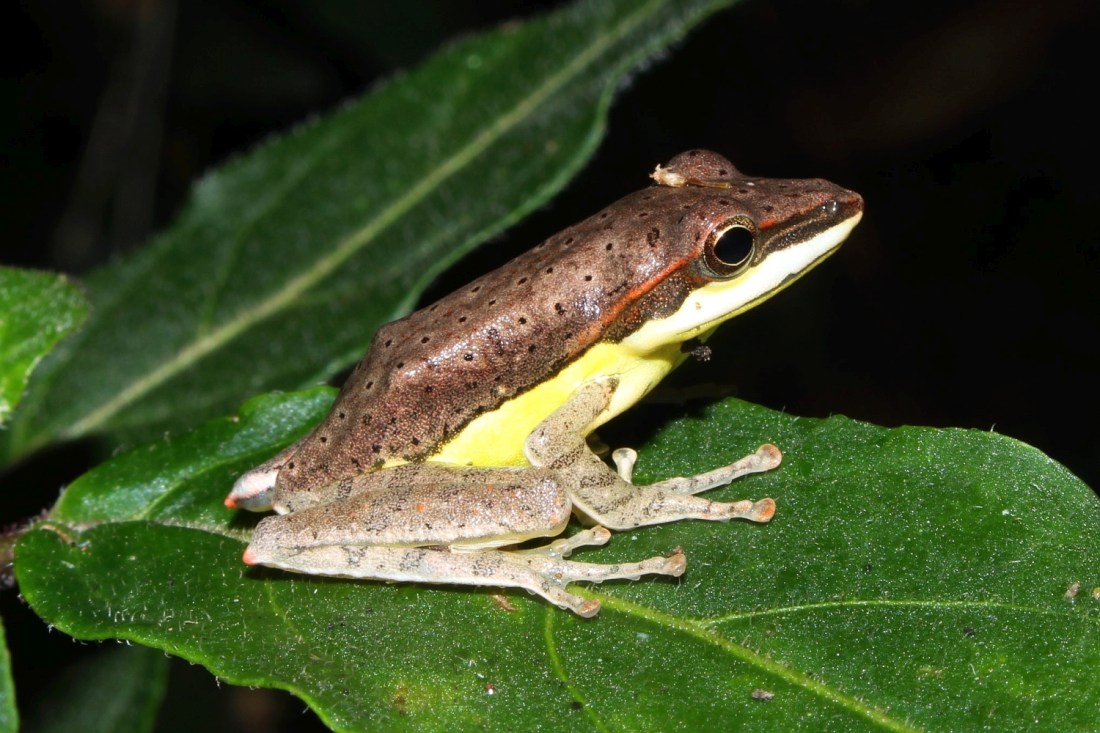
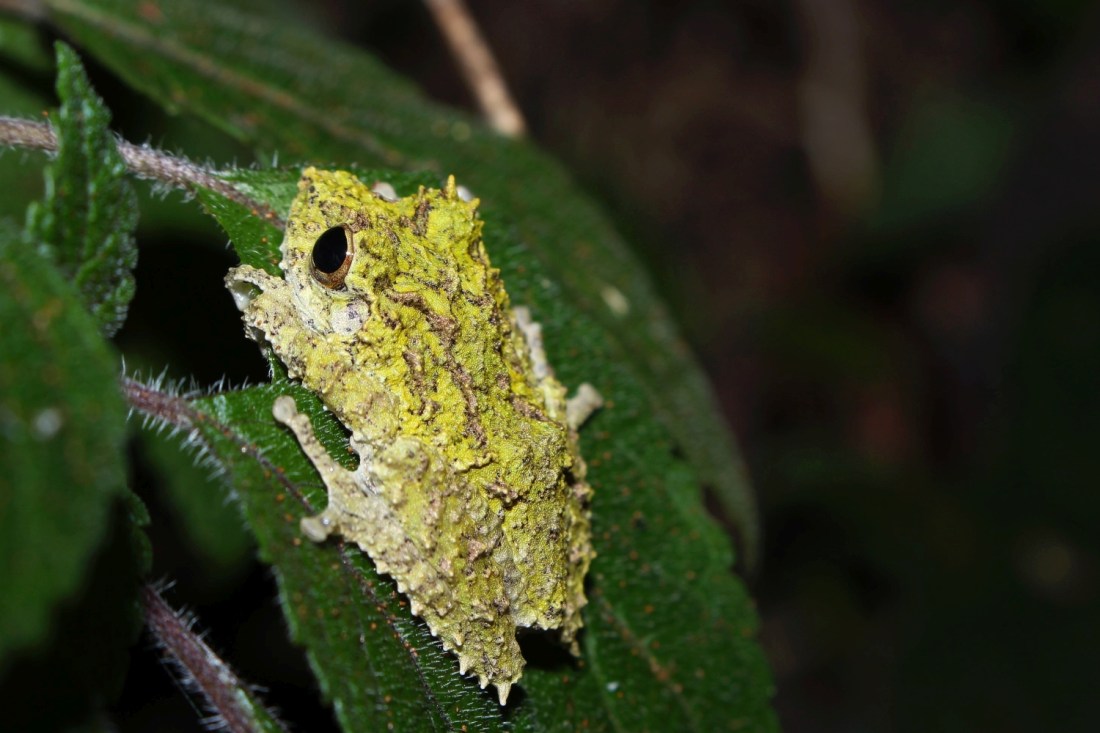
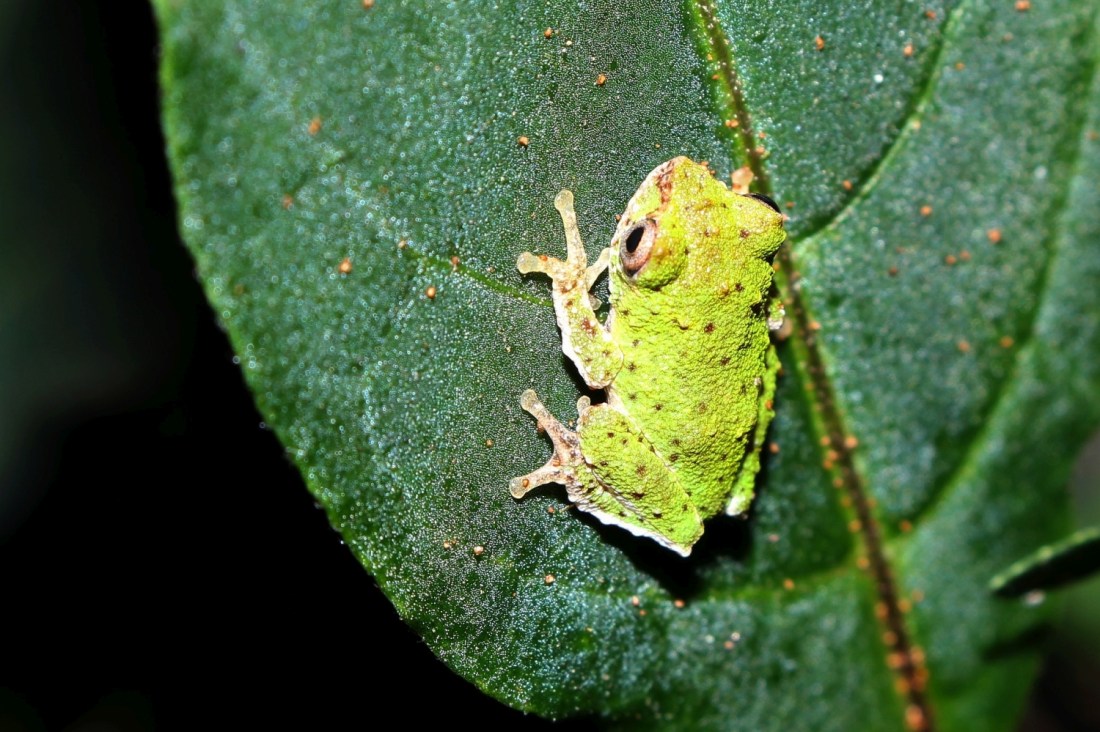
We returned, happy about the thrush sighting, back to the hotel. We had about half an hour of free time before we departed on our final activity for the day, a frog walk in the hotel gardens and adjacent forest. The walk was longer than anticipated as we took a steep trail, including climbing a ladder, all the way up to a waterfall. Some of the group turned back to the hotel about halfway, but it was definitely worth it staying to the end, as we saw all 8 frog species known from the area. We saw Common House Toad and Montane Frog in the gardens, along with Montane Hour-glass Tree-Frog and Horton Plains Shrub Frog at the ponds. The size of some of the frogs was amazing, with some being as small as a fingernail. I was amazed how the guide could find them, even with a spotlight as they were so small, but after some time, I think my eyes got more trained and I found several myself, including some Leaf-nesting Shrub-Frogs and even the endangered Schmarda’s Shrub-Frog, which was very impressive with its rough skin as it sat flat on a leaf. I was amazed to see how a fascinating whole world remained unknown by be, even though I have been outside at night looking for other animals many times. This was definitely one of the trip highlights. We returned to the hotel and enjoyed a tasty buffet dinner, before going to bed.
On the last full day we had a later start (6:00) to head up to Pidurutalagala peak, Sri Lanka’s highest mountain at over 2520m. An army camp is situated at the top, so one can unfortunately not get out of the vehicle on the way up and some areas at the top are restricted. The views were good however, and again, we could see most of the highlands, including the Knuckles range, Sri Pada and both of the other peaks we climbed. Another highlight was photographing the trip’s third lizard species – Black-lipped Lizard, which was common in the grass next to a path. We headed down again after taking a group picture and back at the hotel we packed our bags and headed back to Colombo, where we arrived at around 19:00. On the way we stopped for a late lunch at the Kithulgala Rest House, where I added the last few species for the trip – Black Bulbul, White-browed Fantail, Alexandrine Parakeet (perched right next to a Layard’s Parakeet, showing off it’s comparatively huge size) and Sri Lanka Grey Hornbill.
We were very lucky to have excellent weather in the highlands – it is not uncommon to have rain and mist for most of the day, and freezing temperatures at night. We had sun for nearly all of the day and the lowest temperature was around 4°C early in the morning. Over the week, we recorded nearly 80 species of birds, 10 identified species of mammals (plus unidentified bats, rats and mice), 3 lizards and 8 species of frog. Pretty good for a school trip.
 My Zone Is Birding
Certainly not bad for a school trip
LikeLike
Yes, really good actually. It’s a real advantage when you have teachers who are birders as well! I’ll be meeting Mr Lockwood in Mannar (in the north of Sri Lanka) next week as well, doing some wader and waterfowl-watching.
LikeLike
Reminded me of my family holiday to Sri Lanka last year and how I managed to squeeze in some birding :-). Definitely got to do another one soon.
LikeLike
Yes, It’s quite significant that Sri Lanka, despite its small size, has lots of different birding habitats and a great number of good birds! I also recommend visiting the dry zone in the north, not only because of different birds but also the atmosphere and landscape are very different.
LikeLike