
Because we wanted to see some of the places we remember from living in this great country eleven years ago, as well as finding the near-endemics it has to offer, my mother and I made a nearly three week long trip to Namibia. We entered Namibia through Mata-Mata in the Kgalagadi Transfrontier Park and headed to Swakopmund via Windhoek. From there we proceeded north to the Spitzkoppe, then Etosha NP and Kunene River Lodge via the Hobatere Concession. From Kunene we headed back via Palmwag Lodge, Brandberg and Windhoek, crossing the border at Buitepos.
Preparation
The guide Southern African Birdfinder by C. Cohen, C. Spottiswoode and J. Rossouw proved very helpful in choosing what places to visit and where to look for the specific species. Trip reports were also good to help knowing how to find the birds. We booked some of the accommodations, but as it was off season, it wasn’t really necessary to book in advance. When crossing the border at Mata-Mata it is necessary to stay in the Kgalagadi TP for at least two nights, they don’t allow you through when you just stay for one night.
Accommodation and infrastructure
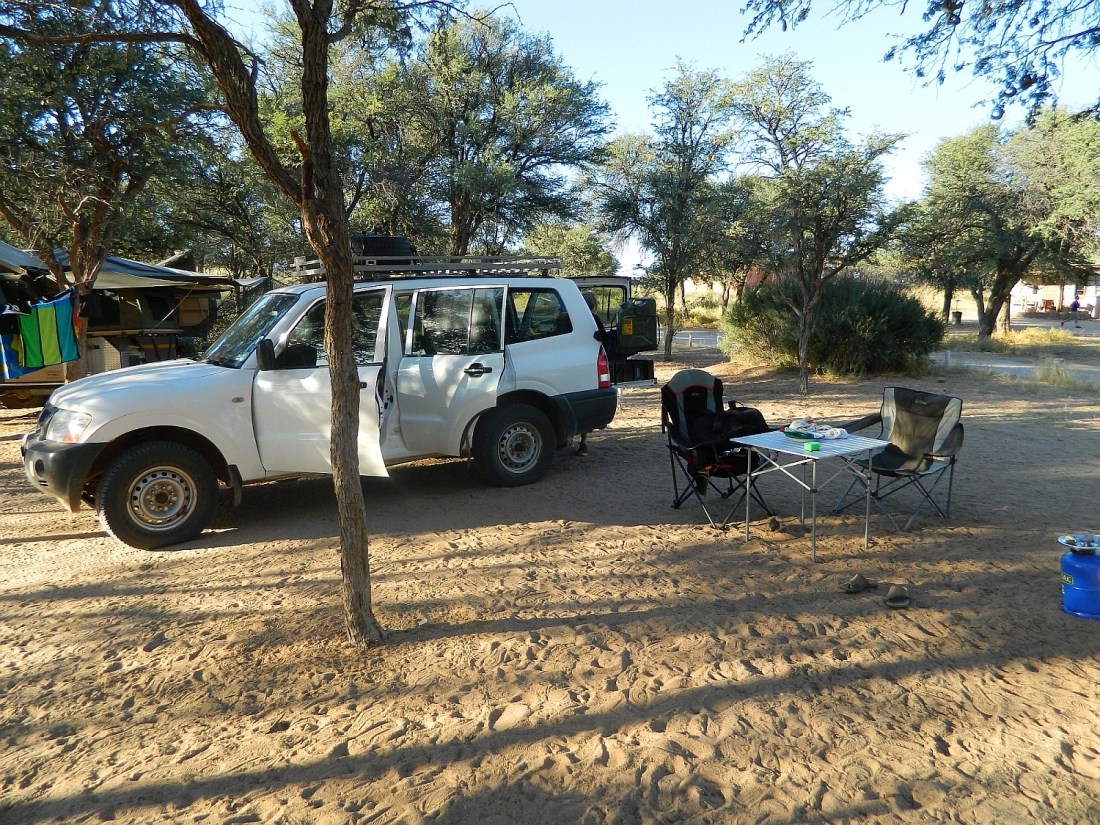
Most of the places we stayed in where very clean and well looked-after. We chose B&B’s when we only stayed for one night, otherwise we always chose to camp, except in Swakopmund and at the Brandberg White Lady Lodge. The B&B’s mostly cost approx. R1000 for the both of us, which was good value for money. Namibia’s infrastructure is very advanced, with an extensive road network and both tar and gravel roads being very good. However, careful driving is recommended between Ruacana and the Kunene River Lodge, as the road passes over many small but steep hills and you can’t see approaching traffic.
Trip report
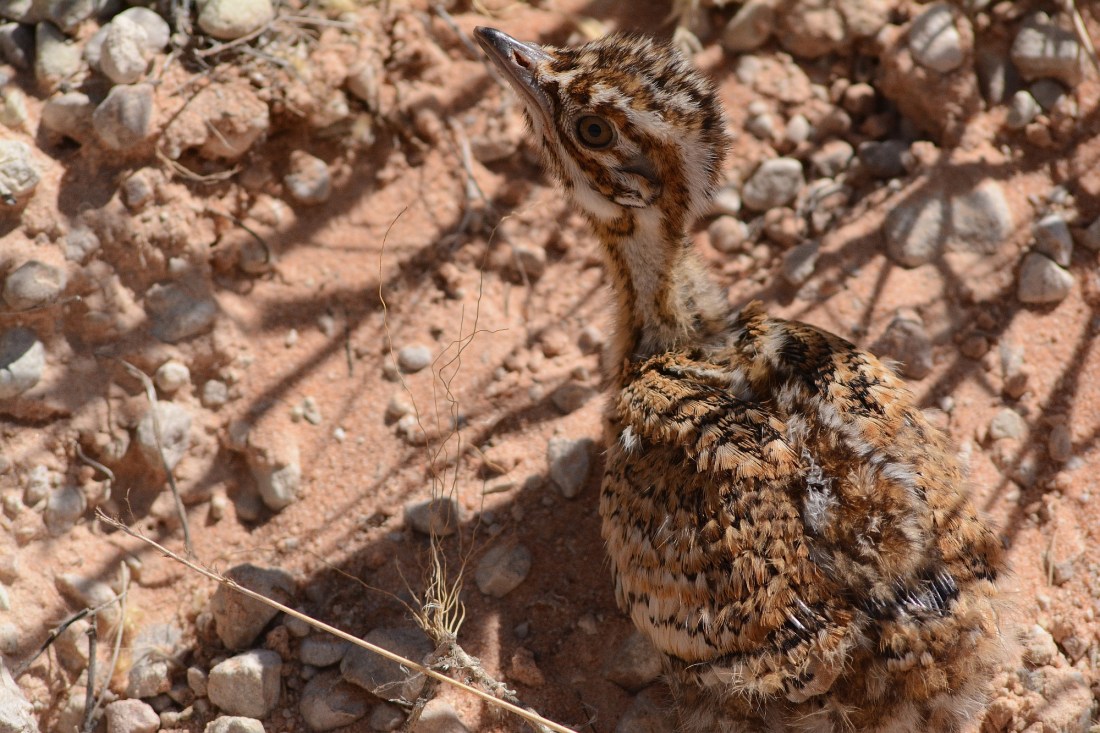
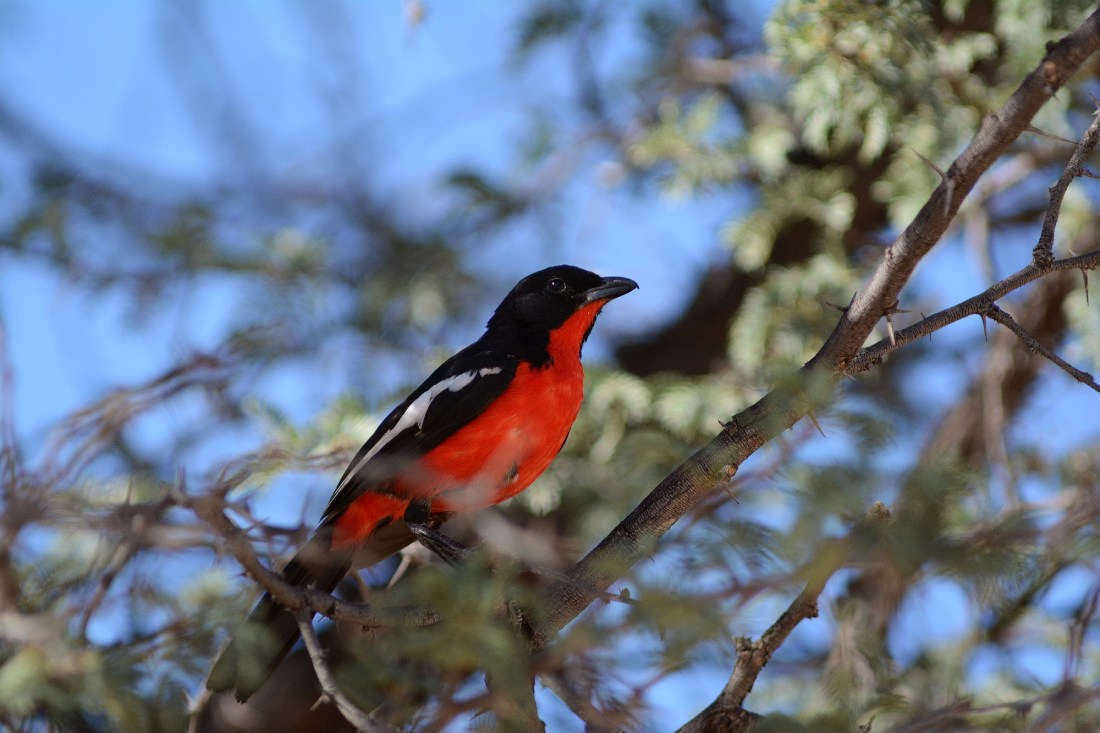
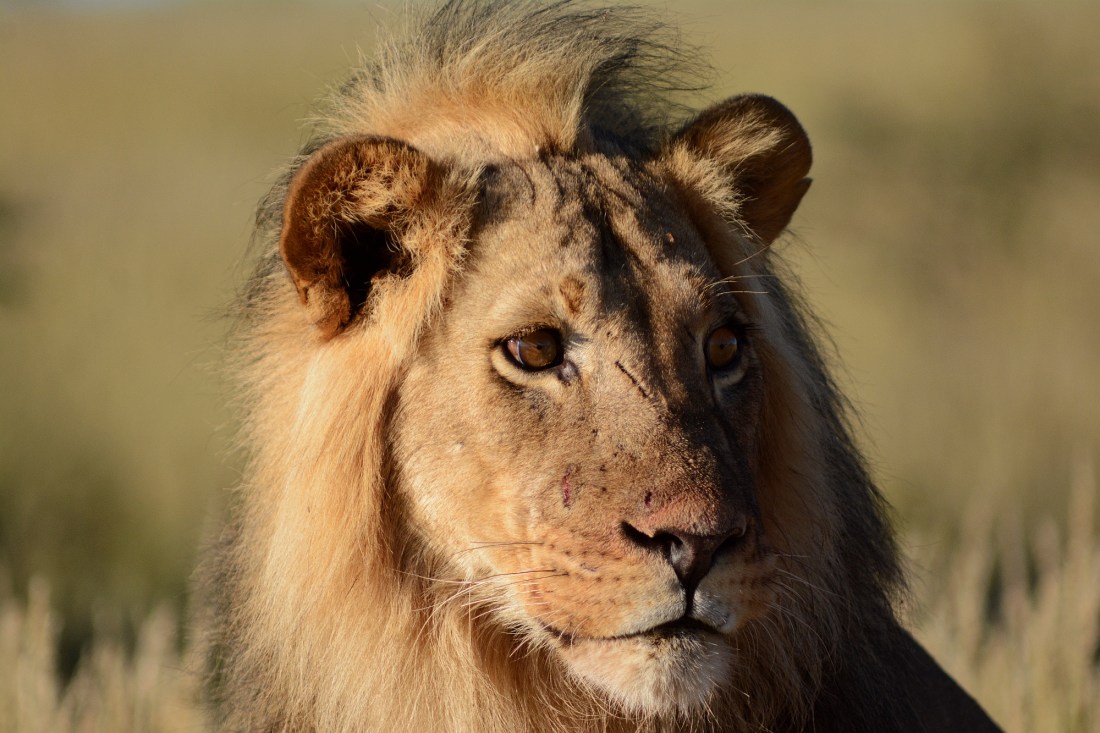
We started the tour at our home in Pretoria and made our way to Upington, where we arrived in the afternoon and chose to stay in the Riverside Lodge, which has a nice lawn and comfortable rooms right on the banks of the Orange River. As we prepared to leave the next morning, a group of the aptly-named Orange River White-eyes foraged right next to the river. The road from Upington to the Kgalagadi TP provided excellent birding, the best birds were Karoo Korhaan, Namaqua Sandgrouse, Pygmy Falcon and Black-eared Sparrowlark, the latter two being new species for me. Once in the park, we made our way to Mata-Mata, where we stayed for two nights. The park delivered Southern White-faced Scops-Owl, Barred Wren-Babbler, Swallow-tailed Bee-eater and Black-faced and Violet-eared Waxbills, amongst many more. The best mammal sighting was the two cheetahs hunting springbok in the dry riverbed along the road.
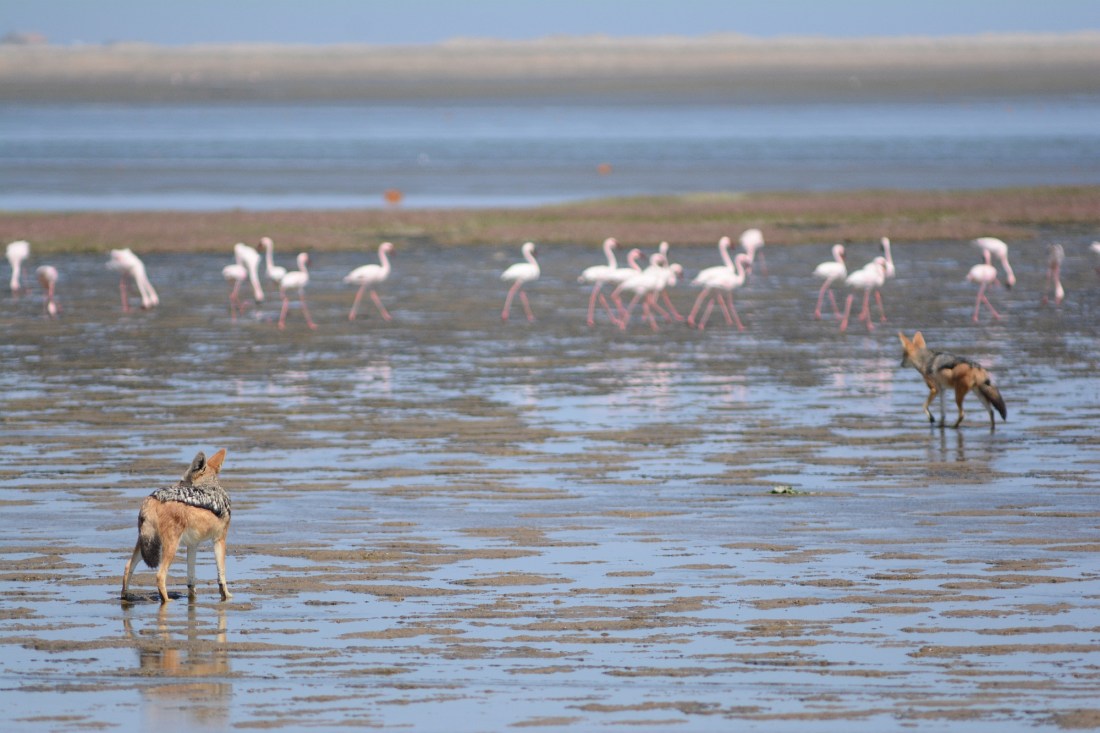
We crossed the small border at Mata-Mata the following morning and continued all the way to Windhoek. On the way we had a small lunch near Kalkrand and the owners of the restaurant recommended Maison Ambre as an accommodation in Windhoek. The B&B was excellent, and we had a delicious breakfast the next morning, before we left for Swakopmund. The roadside birding was very good, as the road passes through many different habitats. Two new species for my southern African list were Bradfiled’s Swift and Chestnut Weaver. We had one full day at Swakopmund, which gave us enough time to visit the saltworks and lagoon at Walvis Bay. The saltworks were not very productive, but we saw Chestnut-banded Plover here. The lagoon had many birds, including four tern species, the two flamingo species, Great White Pelican, Eurasian Curlew and Bar-tailed Godwit. Another great sighting was of two Black-backed Jackals stalking a group of Lesser Flamingos.
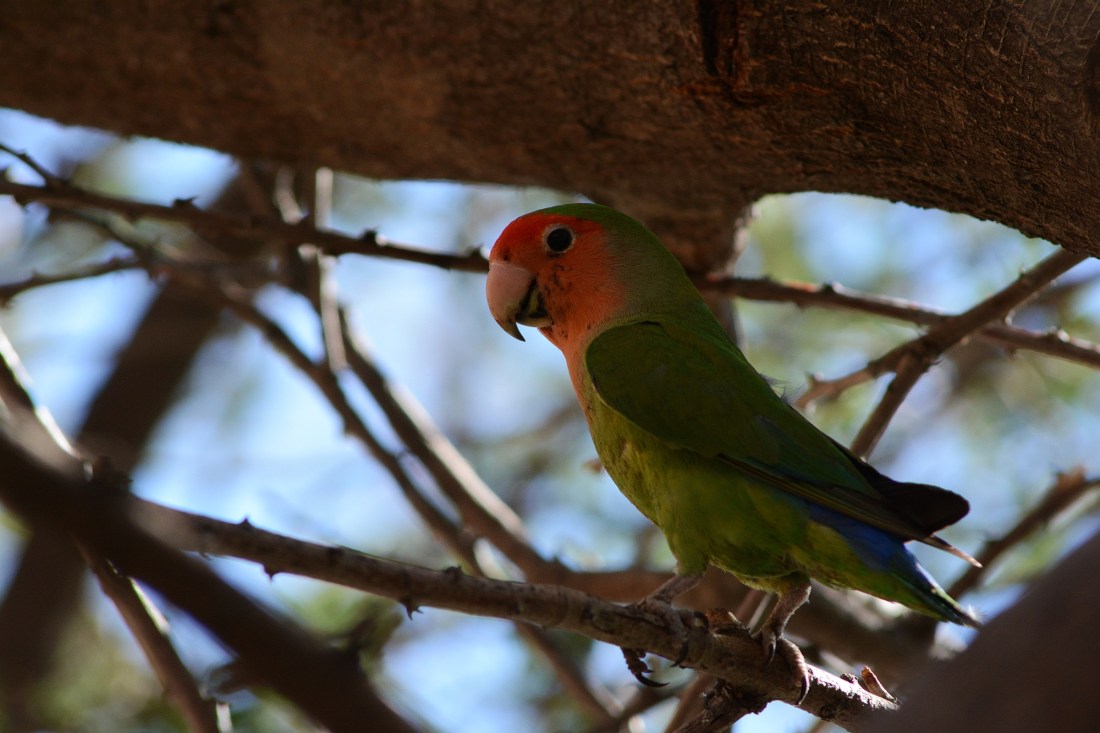
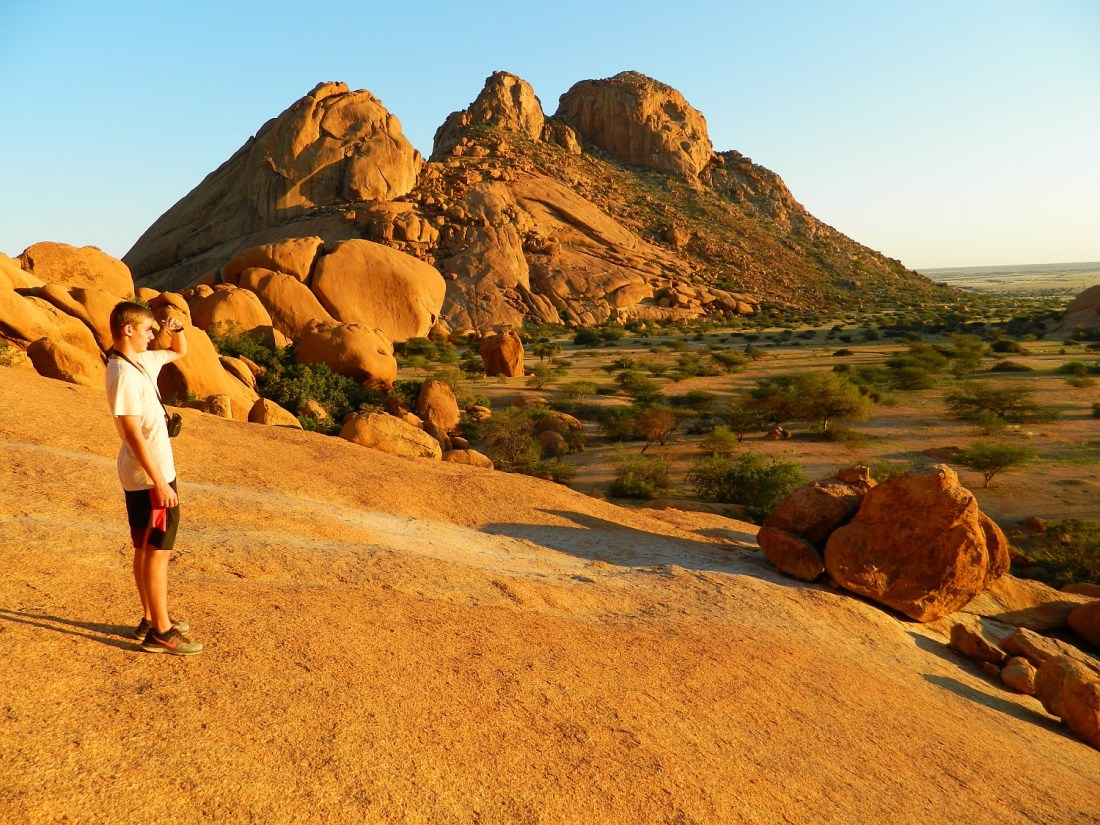
From Swakopmund we drove to Spitzkoppe via Hentjie’s Bay. I hoped to see Gray’s Lark, but unfortunately we weren’t rewarded. However, we saw Stark’s Lark and Grey-backed Sparrowlark. At Spitzkoppe we stayed at the beautiful community campsite. The birding at Spitzkoppe was excellent and, with the exception of Herero Chat, I saw all the species I hoped for, notably Dusky Sunbird, Rosy-faced Lovebird, White-tailed Shrike and Monteiro’s Hornbill. Other nice birds were Alpine Swift, Verreauxs’ Eagle, Pririt Batis, Pale-winged Starling, Lark-like Bunting and Acacia Pied Barbet. The entrance road delivered the hoped-for Rüppell’s Korhaan as we left for Etosha NP. Great mammals seen at the Spitzkoppe included Western Rock Elephent-Shrew and Dassie Rat.
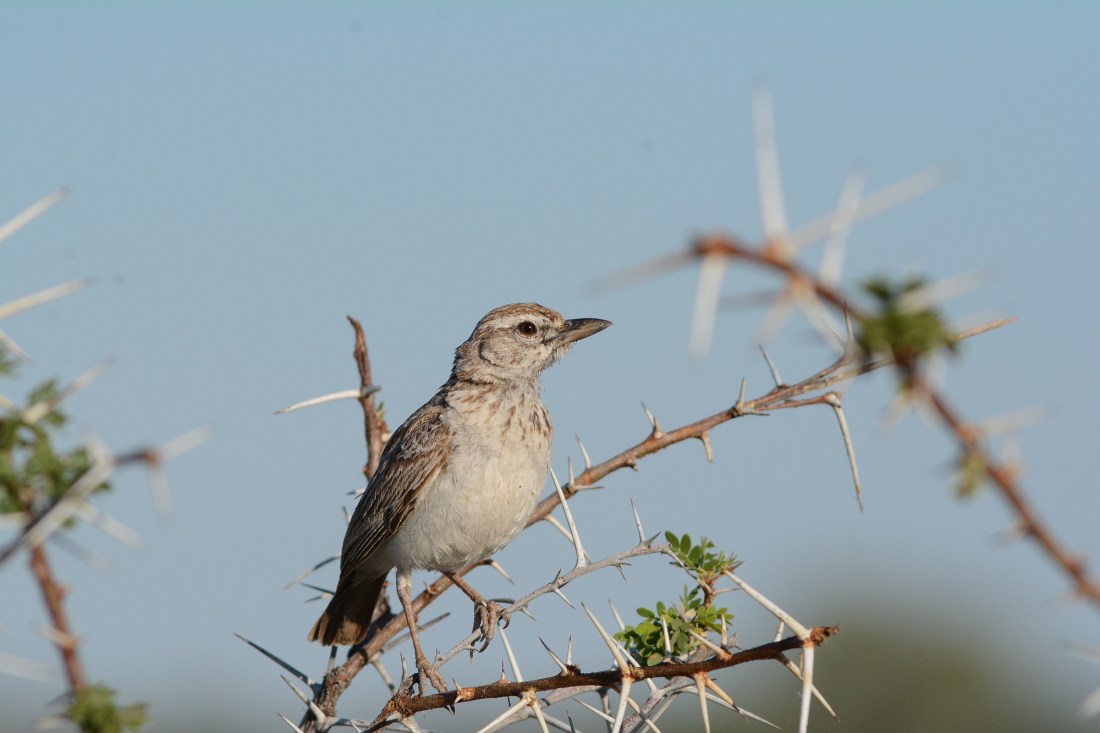
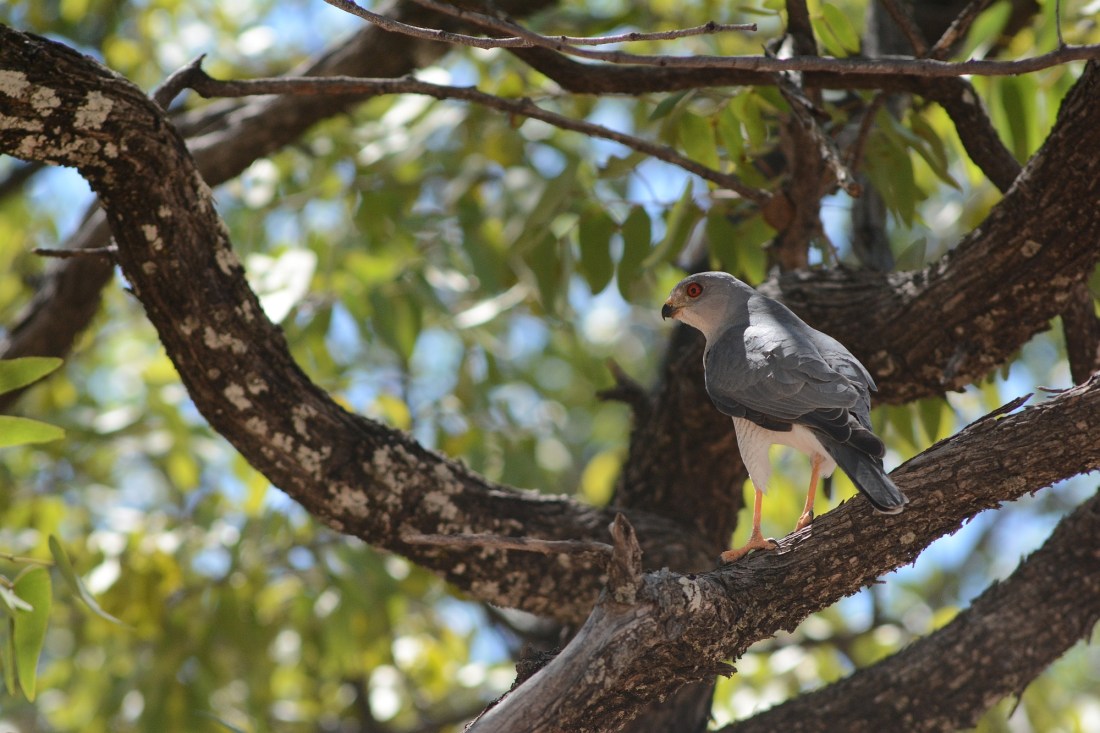
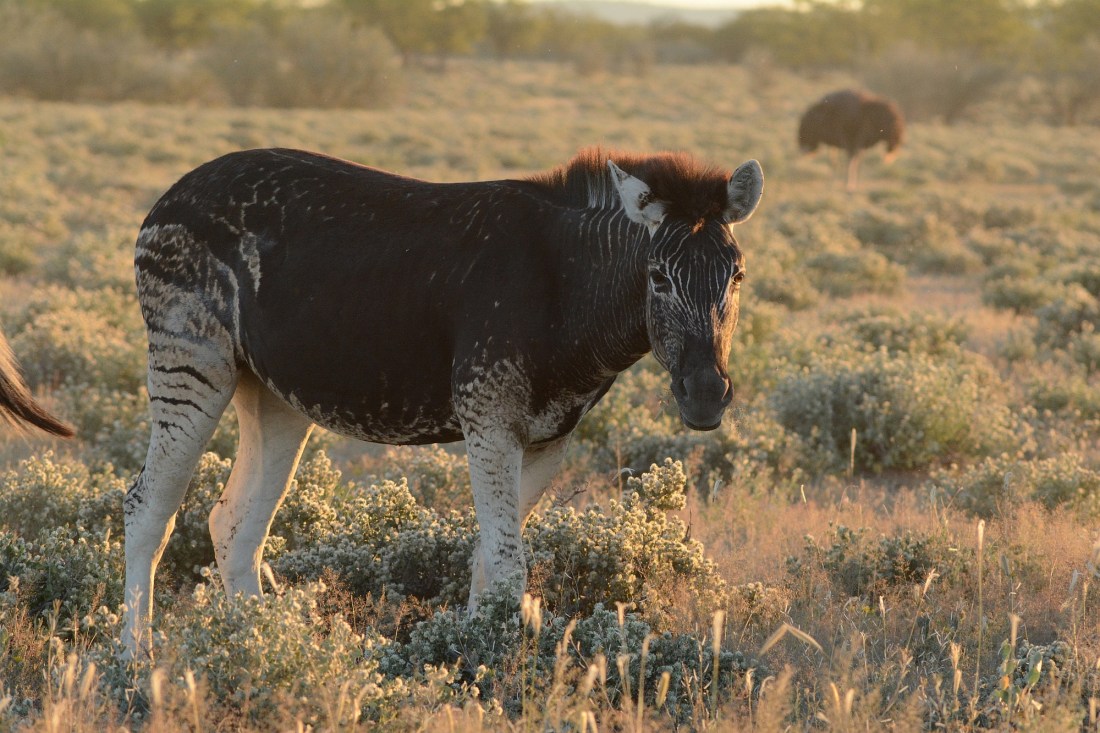
We entered Etosha NP through Andersson Gate and inquired the Okaukuejo Camp about availability in their camps. We where told that there is space available in Halali and we spent two nights there. The last night was spent in Okaukuejo Camp. The drive from Okaukuejo to Halali delivered grassland birds including Cape Crow, Kori Bustard, Blue Crane and Double-banded Courser. The birding in Halali Camp was excellent, with Red-billed Spurfowl, Shikra, African Scops-Owl, African Golden Oriole and another lifer in the form of Violet Wood-Hoopoe, which is reliably seen in Halali. At Halali a few Black Rhinoceros and Spotted Hyena came to drink at the waterhole. The area around Okaukuejo delivered Lanner Falcon, Great Sparrow, Red-capped, Spike-heeled and Pink-billed Larks and Chat Flycatcher, amongst others.
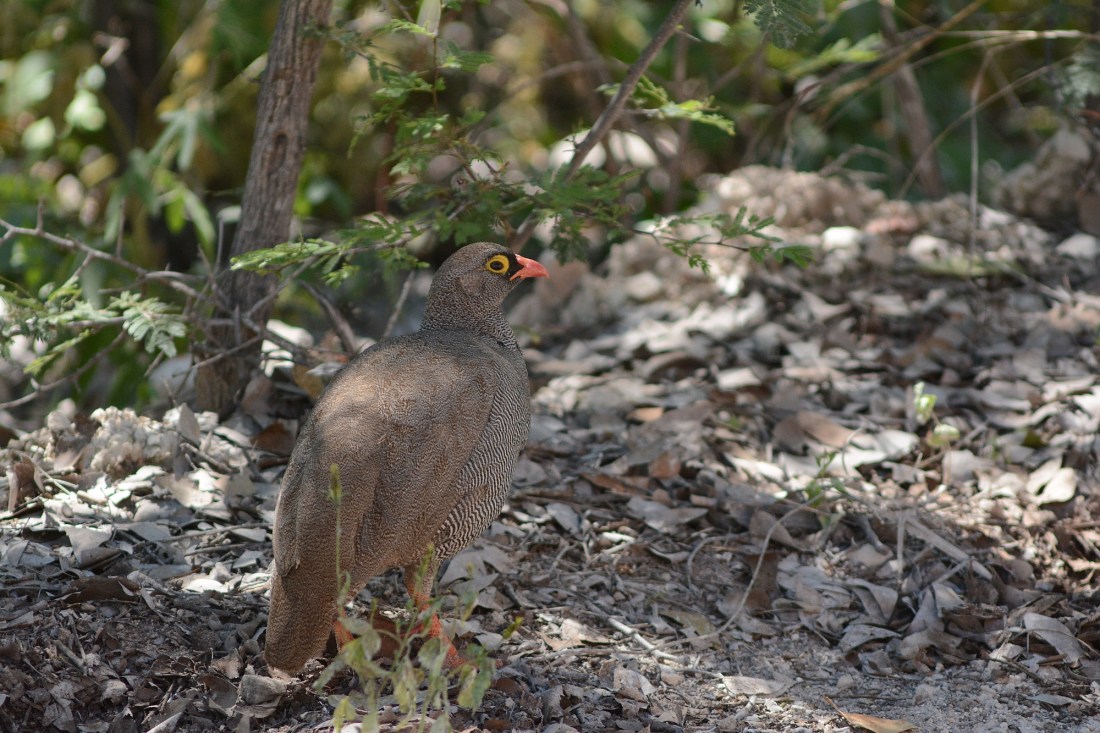
We left through Andersson Gate and made our way to the beautiful and quiet Etosha Roadside Camp, which is part of the Hobatere Lodge. The camp is set amongst extremely scenic koppies – perfect habitat for Hartlaub’s Spurfowl, the most sought-after bird for me on this trip. Sure enough, the next dawn we spotted a pair of Hartlaub’s Spurfowl on a very small koppie right next to the camp! Another bird was seen calling on a larger koppie close to the small one. Another great sighting was that of Carp’s Tit at the campsite. We had one full day here so we drove along the dirt road to Hobatere Lodge, where we had a delicious lunch and also saw Damara Red-billed Hornbill – another lifer. The road to the lodge passes through good habitat and we saw nice birds including Madagascar Bee-eater, Meve’s Starling, Booted Eagle and Levaillant’s Cuckoo.
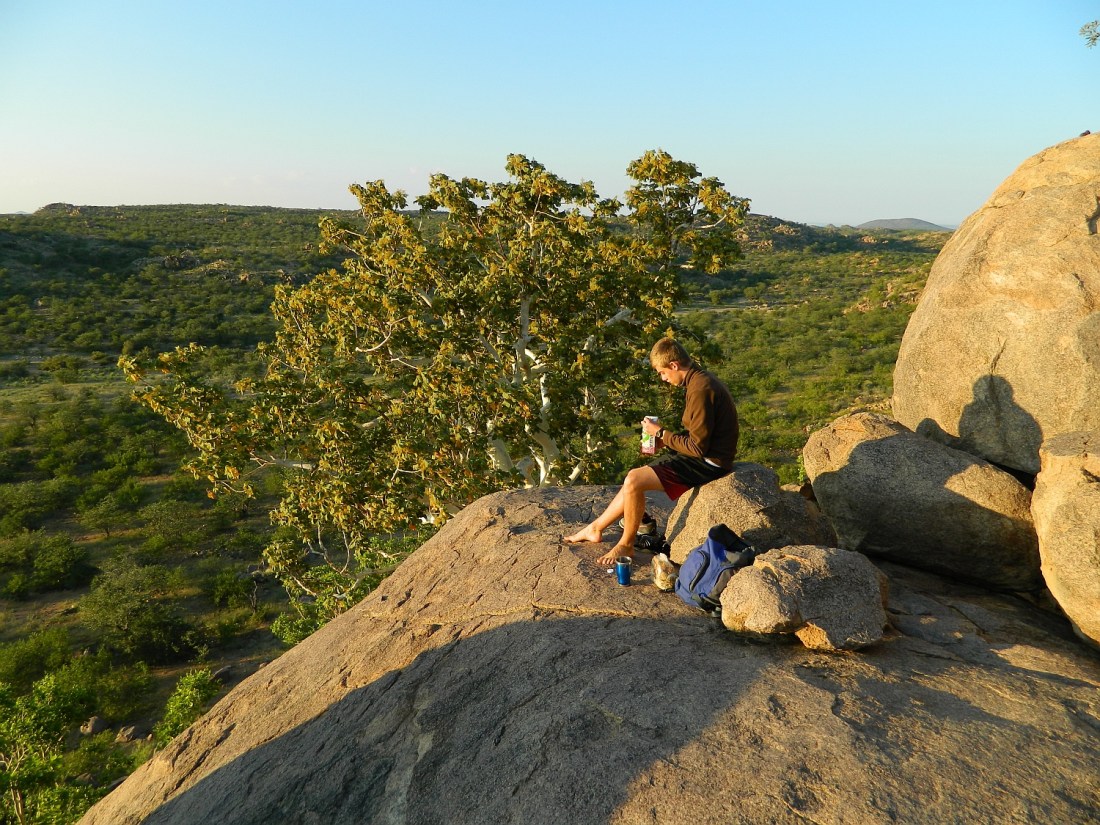
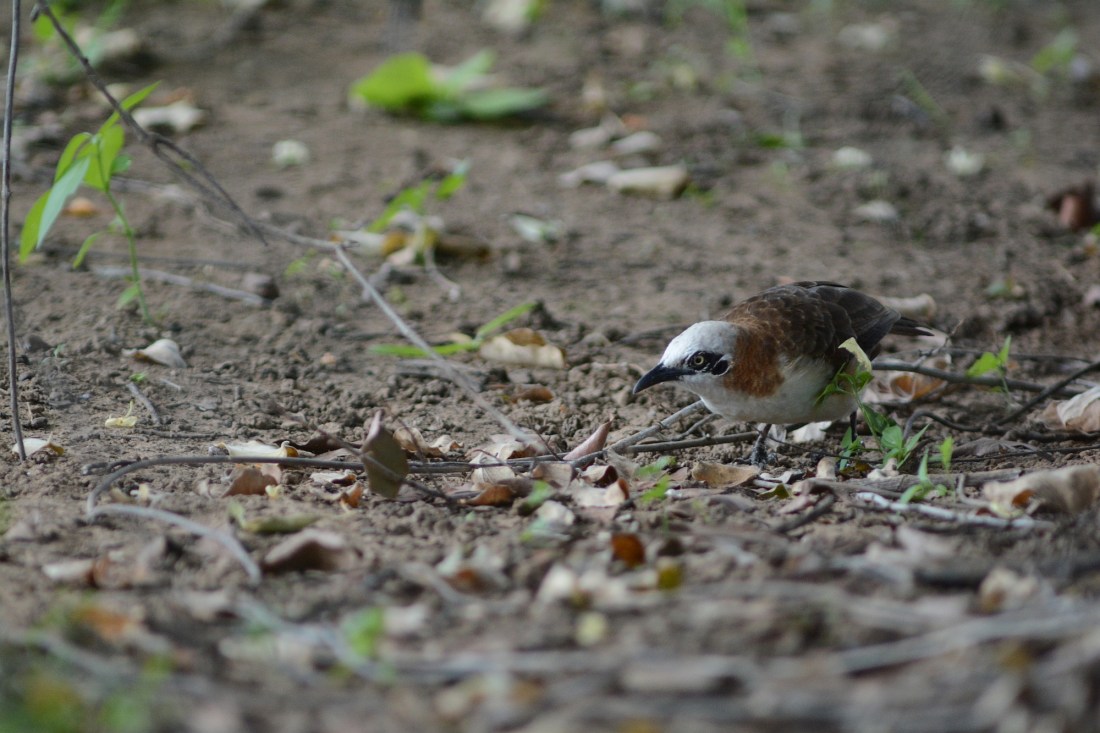
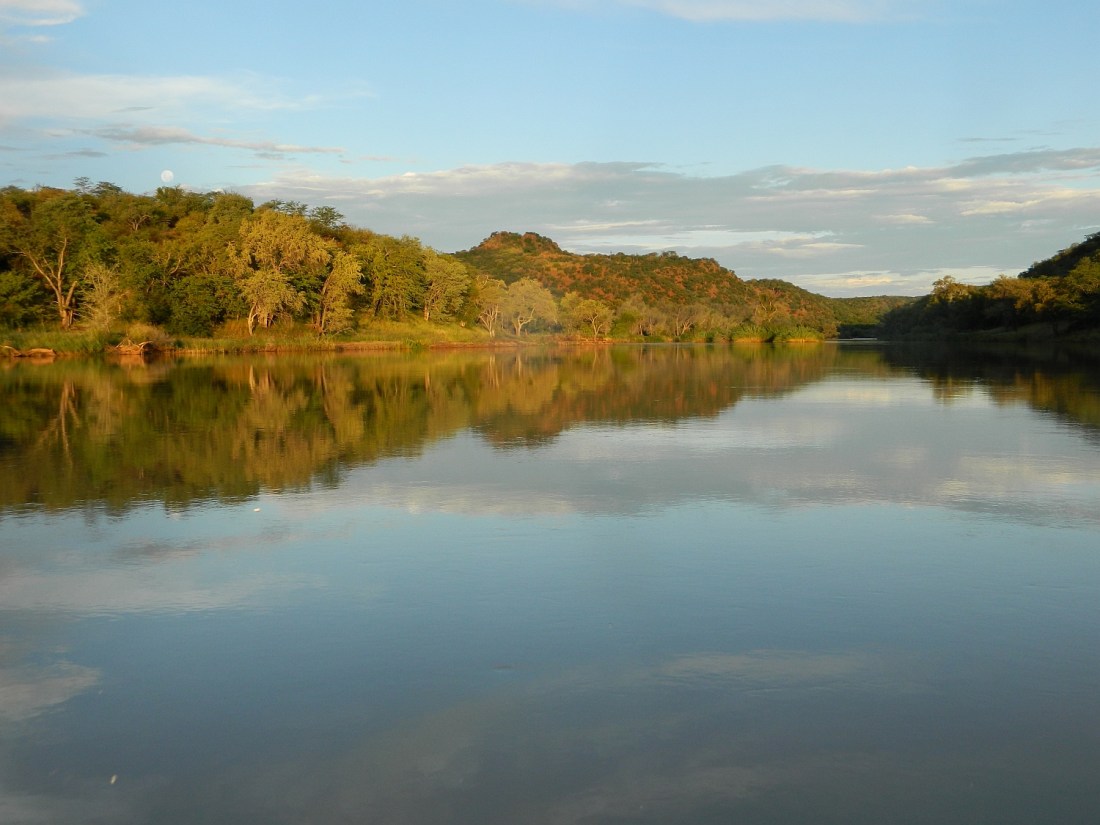
The next morning we drove to the Kunene River Lodge via Ruacana. We had a small break at the campsite at Hippo Pools near Ruacana Falls, and finally arrived at the lodge in the afternoon. The lodge is situated beautifully under large riverine trees on the banks of the Kunene River, and although we had two full days here, we definitely could’ve stayed longer. The birding in the lodge grounds was superb, and we saw Swamp Boubou, Rufous-tailed Palm-Thrush, White-browed Coucal, Red-necked Spurfowl, White-backed Night-Heron flying over the river and finally Bare-cheeked Babbler, amongst many others. We asked about the possibility of doing a Cinderella Waxbill or Angola Cave-Chat tour, but we were told that it is hard to find them at this time of the year, although they’re virtually guaranteed in the dry season. Grey Kestrel was seen by another birder in Swartbooisdrift near the lodge when we were there, but we failed to connect with it. The birding aside, the lodge is a real jewel, not only because the atmosphere is very relaxing and the surroundings beautiful, but also because of the owners, Peter and Hillary, who who are very nice and calm people.
From Kunene River Lodge we made our way to the Palmwag Lodge. Near Opuwo, the road crosses beautiful woodland where we saw Rüppell’s Parrots sitting in the trees. I was really happy to see this bird, and we saw another group further south. The area around the Palmwag Lodge wasn’t very productive for birding, but we saw more Rüppell’s Korhaans. The next morning we continued to the White Lady Lodge, which has very nice scenery, including excellent views of the Brandberg. We saw long-billed larks on the plains near the lodge, but they were too far away, so we dont’t know if they were Benguela Long-billed Larks. From there we continued to Daan Viljoen Game Park outside Windhoek, where stayed for the night before driving home via Botswana. I desperately wanted to see Rockrunner here and I listened to the call on xeno-canto in the evening. At dawn I walked towards the small dam, where I heard a Rockrunner calling from the other side, but couldn’t spot it. Suddenly, I heard the call directly above me on the slope to the left, so I scrambled up as quickly as possible, tripping a few times because of rocks hidden in the grass. When I got to the top, a Rockrunner flushed from the rocks and flew downhill. When I reconnected with it, it flushed again, although it alighted on a rock quite close to me, and I could finally watch it for a long time. Given the circumstances under which I found this bird, it is undoubtedly one of the top species of the trip for me.
We arrived home after two-and-a-half memorable weeks of enjoying what this incredible country has to offer, not only the birds, but also the distinctive and beautiful scenery and friendly people. Except for Herero Chat and Gray’s Lark, we found all the specials and near-endemics we searched for, and many other great birds and mammals. It is definitely worth birding in this developed country, as travelling is easy and many birds can more reliably be found here than anywhere else.
 My Zone Is Birding
Excellent photos and well-written, detailed reports (all of them). Thank you for sharing your experiences and keep up the good work! Es ist auch echt ein tolles Hobby! Makes me want to plan my next trip and I really need to plan a trip to Namibia, as I have not been there. Greetings from South Africa. Dirk-C.
LikeLike
Thanks so much! It’s cool that you know German;). Namibia is definitely worth visiting, I really recommend it.
LikeLike