
I first read about the famous miombo woodlands of Mutinondo Wilderness in the Southern African Birdfinder years ago while living in South Africa. The site retained a somewhat mythical appeal to me, having only birded in miombo once before, in Zimbabwe. Miombo, and the many special birds to be found within it, always had a near-magical appeal to me. Bar-winged Weaver, Anchieta’s Barbet or Laura’s Woodland Warbler were some of the exotic-sounding species to be found here. Add some granite inselbergs and mushitus – another term that added to the sense of exoticism of the site – and there appeared to be no good reason not to visit Mutinondo if I would ever find myself in Zambia.
These thoughts were among the first that came up when I sketched out the route of a tour from Botswana to Kenya via Zambia and Tanzania. In my previous post I already covered the first section of that tour, in which I travelled by car through Botswana with a friend. The plan had been to continue travelling to Dar-es-Saalam solo partly by bicycle. There, I would meet Sami, with whom I had already cycled in southeast Europe, to continue cycling to Kenya together. Being unable to cycle after I injured my knee the day before crossing into Zambia from Botswana, the mode of transport morphed entirely into using the bus during this segment of solo traveling. After stops in Livingstone and Lusaka, I had stayed at Bayama’s Lodge in Mpika for a few days to allow my knee to recover. Andreas, the German owner, was very friendly and helpful and was always eager to chat about his perspective on living in the area. Andreas gave me the contact of an excellent doctor at the Michael Chilufya Sata Hospital outside town, where I got the stitches on my knee removed. Eventually however, I needed a change of scenery and so I hitched a ride on a truck to the entrance road to Mutinondo. To avoid the cost of being picked up on the main road, I decided to try cycling given that it was mostly downhill towards the camp. This was a mixed blessing as the deep sand often made cycling challenging, but it also gave me a first taste of the birds, including several I did not see in the slightly different miombo woodland in Mutinondo itself.
I stayed at the campsite for five nights. The site is very well taken care of, with warm water, long drop toilets with a beautiful view into the woodland, and basins for washing dishes. The water is not officially drinking water but the staff and management drink it. So did I, without any problems. Kyla and David, the couple managing Mutinondo, were extremely welcoming hosts. They made my stay – which would’ve been thoroughly enjoyable simply because of the site’s beautiful scenery and birds – very memorable as we spent some time birding and I really enjoying chatting to them. This also provided a distraction from my knee, which was still limiting my ability to explore.
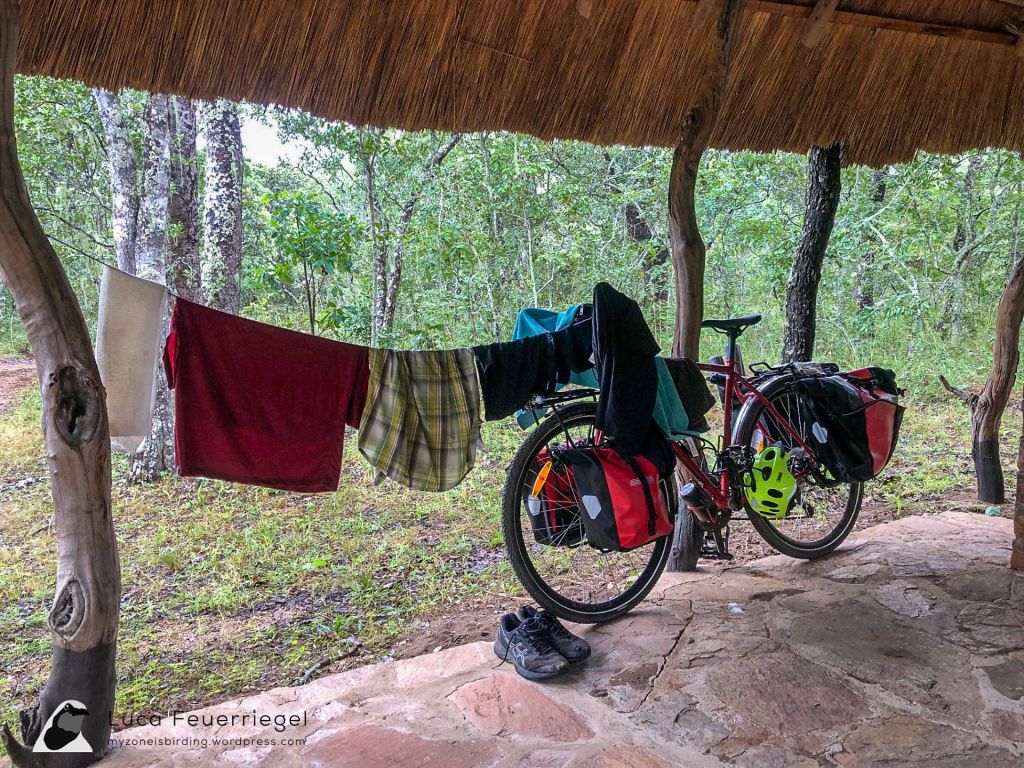
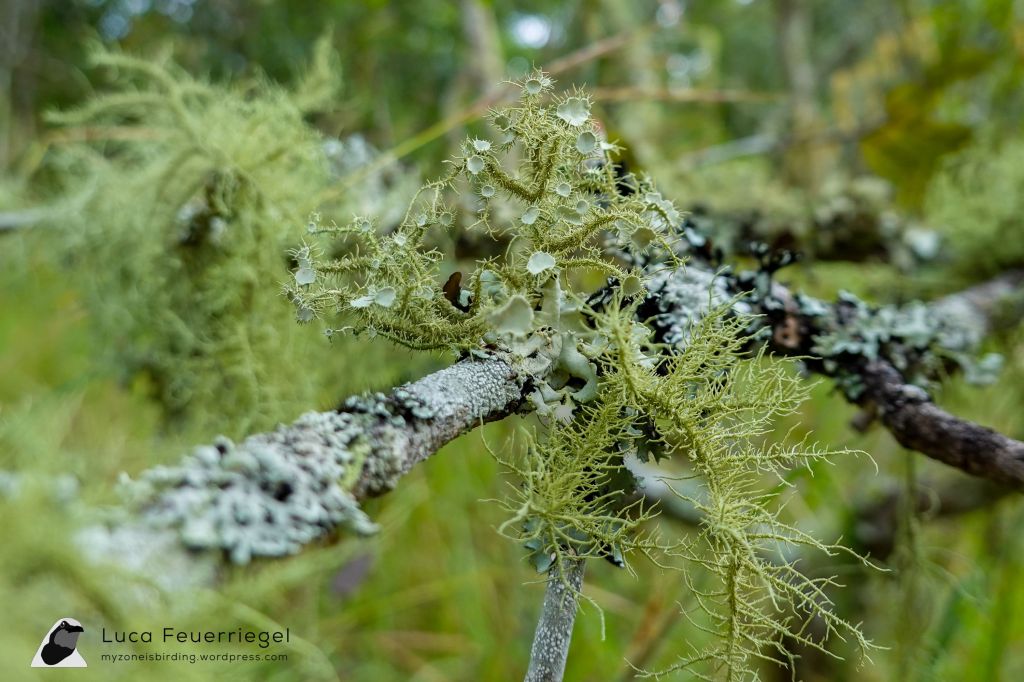
The sun had been beating down during my arrival at Mutinondo, and I had wondered how the beautiful old-man’s-beard lichens on the trees can survive in such conditions. As if the miombo gods had noticed my confusion, the following three days were largely overcast and rainy, with dense clouds of fog pushing their way through the woodland and shedding their load on the foliage. Case closed. These bouts of rain and fog continued until noon each day. While I was glad to have the presence of the lichen explained, the half-day of wet weather hampered my plans for early morning birding outings. Fortunately, the sky cleared later in the day, giving me enough time to explore (and forcing me to rest my knee in the mornings, also a good thing). I’ll structure the following report of sightings by location to give a rough overview of what can be expected in the different areas of Mutinondo.
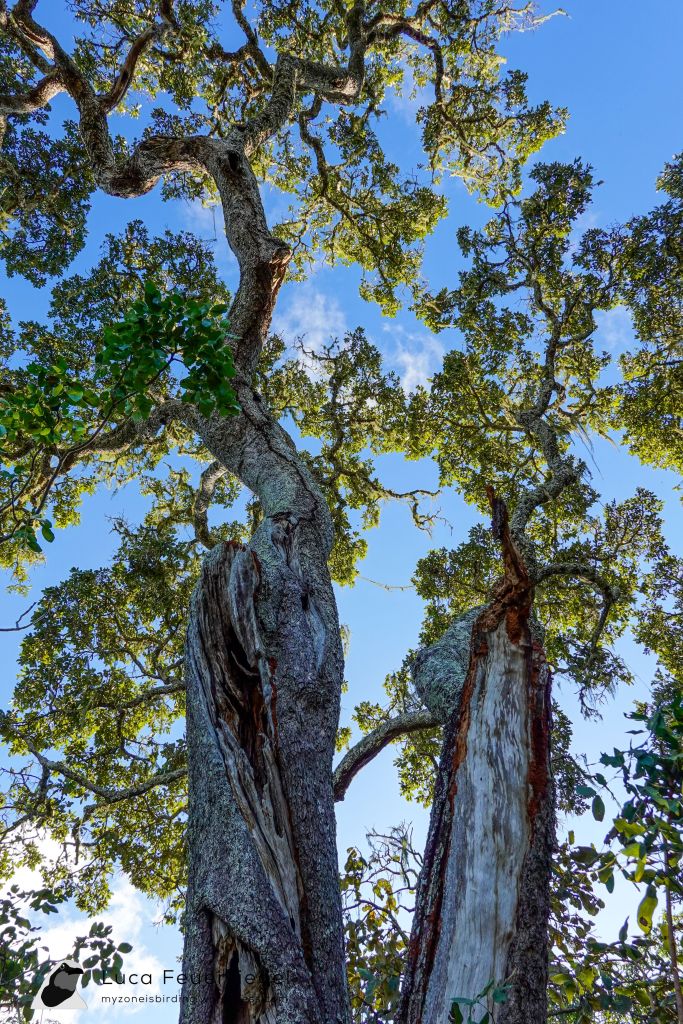
It seems to be worth it to spend some time in the miombo woodland before entering the Mutinondo property. Despite only passing through this area at midday, I saw several species that appear to be more difficult in Mutinondo itself. These were Miombo Tit, Rufous-bellied Tit, and Böhm’s Flycatcher (the latter apparently unusual at this time of year). Retz’s and White-crested Helmetshrikes, Stierling’s Wren-Warbler, Black Cuckooshrike, Red-capped Crombec and Wood Pipit were present both here and in most areas in Mutinondo.
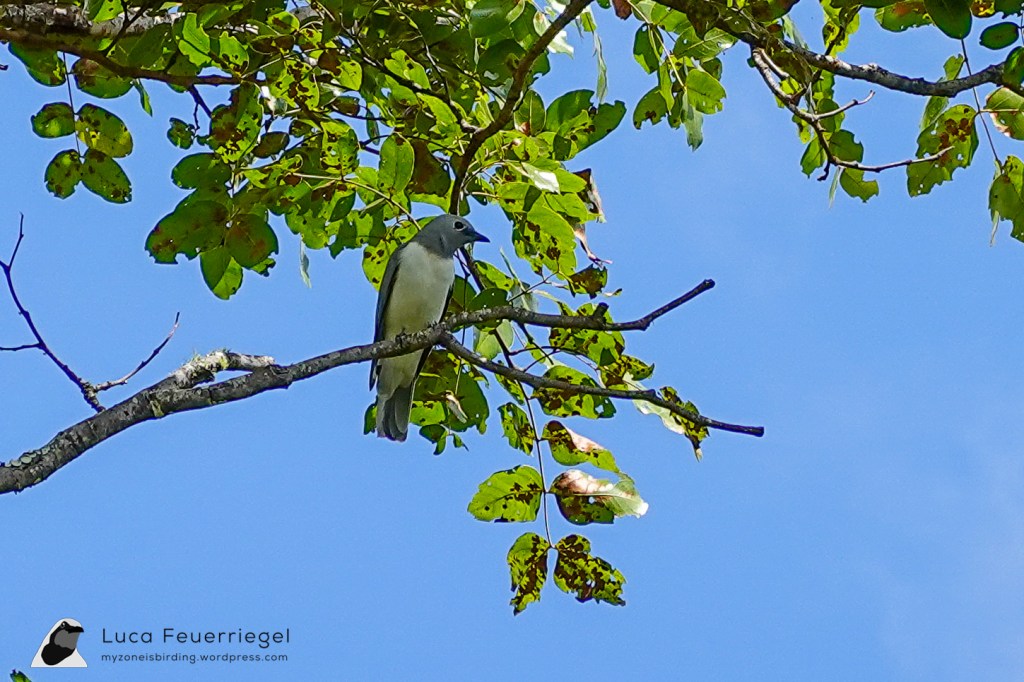
The campsite and lodge rock themselves were quite productive. White-necked Ravens have taken up the niche typically occupied by vervet monkeys on campsites, raiding any foodstuffs not locked away when the site’s occupants are out and about. A confiding Miombo Scrub-Robin serenaded me with its beautiful song, and Familiar Chats and African Dusky Flycatchers were also around. Bird parties moved through at a regular interval, containing White-breasted Cuckooshrike, several flycatchers and sunbirds, and Yellow-fronted Tinkerbird. Whyte’s Francolins called from the slope around the bungalows of lodge rock, but I failed to locate them. Aside from the excellent views and refreshing drinks, the bar should be an excellent raptor-watching spot.
The new airstrip held many Groundscraper Thrushes during the day and Spotted Eagle-Owl at night. Pennant-winged Nightjar can also be seen here during the breeding season. A track leads away from the airstrip at its far side when seen from the camp. Meandering through miombo and other vegetation on the edge of the Kabasano dambo, this is supposedly good for Bar-winged Weaver (the most recent sighting at Mutinondo had been three months earlier, along this track). I remained weaver-less, but the area was still worth it with a confiding Anchieta’s Barbet (around here), Ross’s and Schalow’s Turacos, White-crested and Retz’s Helmetshrikes and Yellow-fronted Tinkerbird. The dambo itself produced African Stonechat, Croaking Cisticola, Marsh Widowbird, Fülleborn’s Longclaw, Fawn-breasted Waxbill, Black-backed Barbet (in a clump of trees in the centre), and Reichard’s Seedeater and Long-crested Eagle at the margins. Swamp Nightjars were also easily seen in the evening.
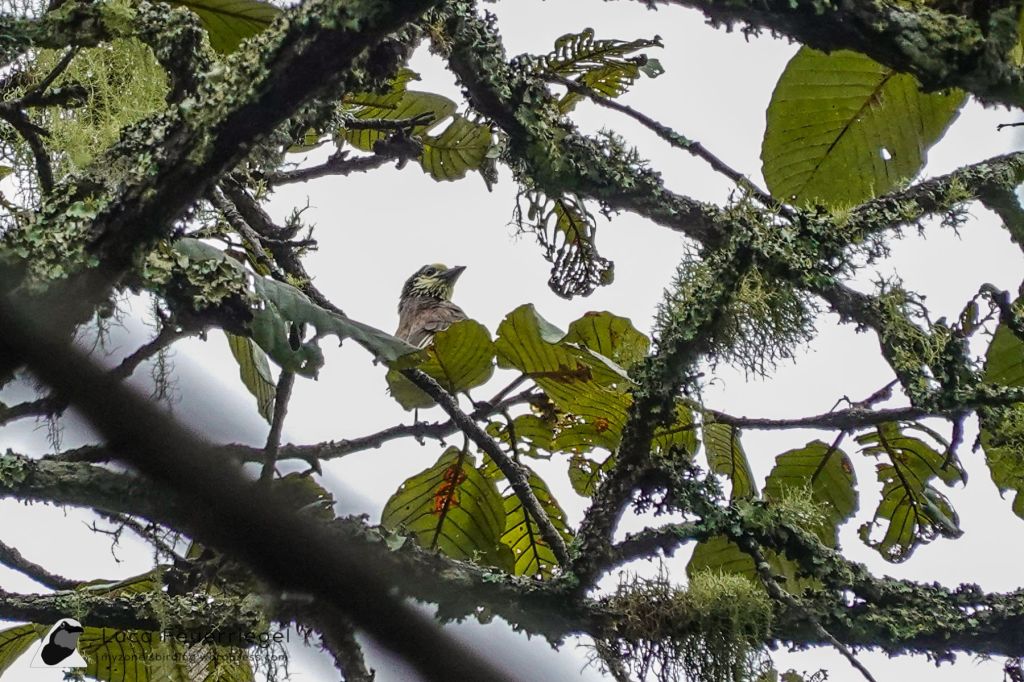
The Big Chipundu dambo is apparently the best place for Chestnut-headed Flufftail, but unsurprisingly there was absolutely no trace of this phantom. Surrounding woodland produced a large bird party around here that held Pale-billed Hornbills and a family of Whyte’s Barbets. At the nearby Charlie’s Rock, I saw Verreaux’s Eagle and Striped Pipit. Another bird party on the track from Big Chipundu to Kabasano contained Anchieta’s Sunbird, Reichard’s Seedeater, White-breasted Cuckooshrike, and my only Yellow-bellied Hyliota and Spotted Creeper. Here, I also saw markings for the annual Ten Peaks challenge, an intense running competition that, as the name suggests, requires participants to race over ten inselbergs under the burning sun.
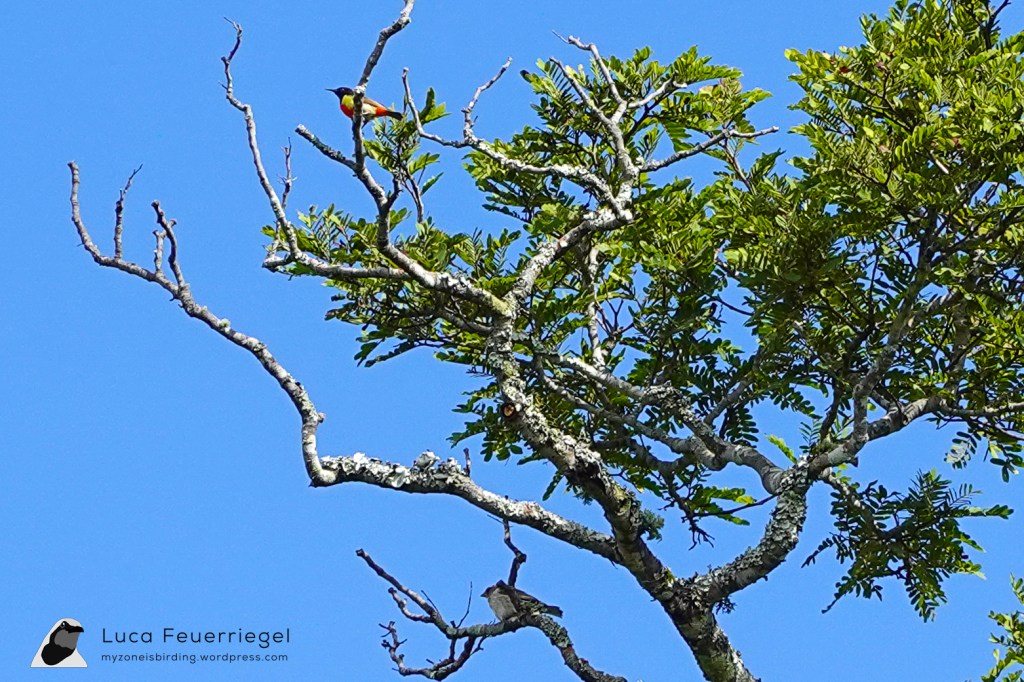
A trail starting at the Big Chipundu dambo leads into denser riverine woodland around here. This produced Schalow’s Turaco, African Broadbill, Cabanis’s Greenbul, Grey-olive Greenbul, Brown-headed Apalis, Black-throated Wattle-eye, and Laura’s Woodland Warbler. This is a spot to see Bocage’s Acalat, but I was unsuccessful. Similar (but smaller) patches of habitat are encountered on the path from the campsite to Ndubaluba Falls. I saw Black-backed Barbet, Black-throated Wattle-eye, and the greenbuls in these, as well as a checkered sengi. This path also produced Black-eared Seedeater (in the open area at the start of the trail), White-headed Saw-wing (in an open area between Choso and Ndubaluba Falls), Bateleur, and Lizard Buzzard. Mountain Wagtail and Half-collared Kingfisher were present at the Choso waterfall, which is supposedly also a good spot for African Finfoot.
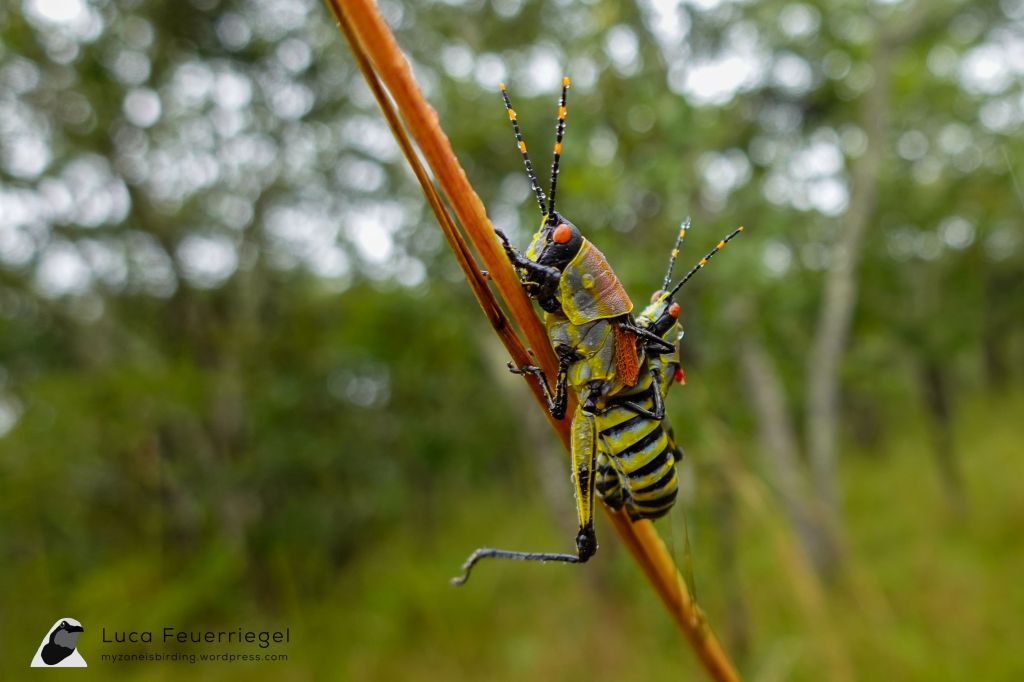
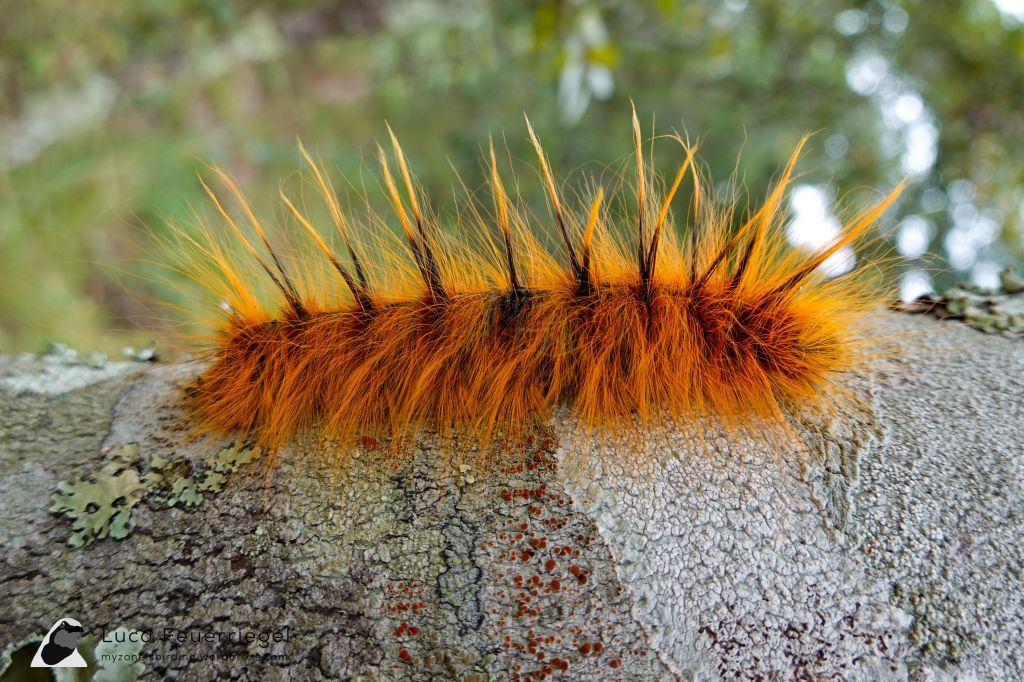
Quite a few other critters also grabbed my attention. There were several colourful grasshoppers including what I believe is Zonocerus elegans, and a number of large orange fluffy caterpillars were slowly creeping over the lichen-covered branches. I would like to know which moth or butterfly they metamorphose into. Scorpions were also present on the campsite, so shoes should be worn at night (which should go without saying).
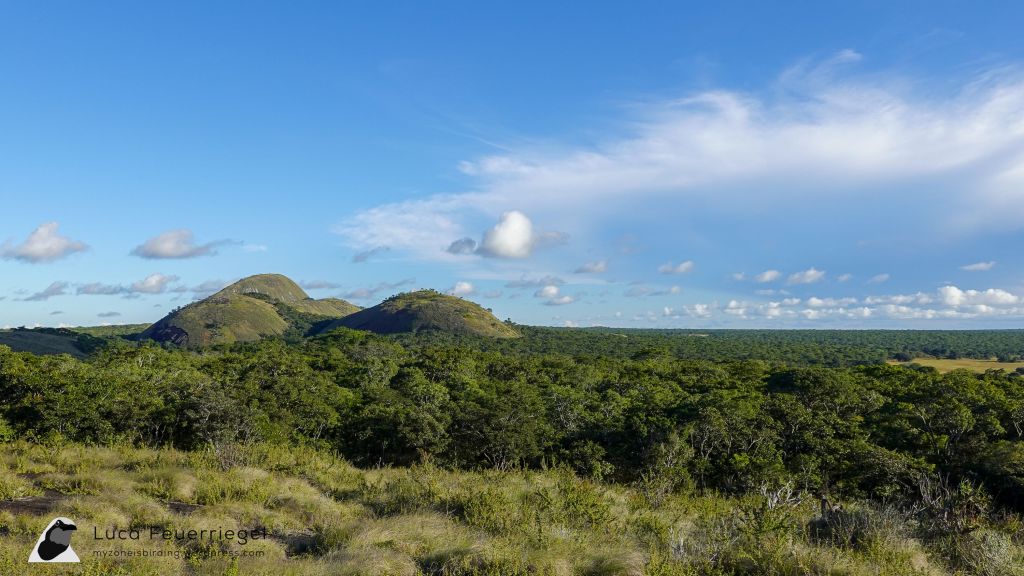
There are many more areas to explore in Mutinondo that would have been easily reachable by car. Four full days are a good duration to both do a good amount of birding and soak up the beauty of the place without being rushed. There are still several birds – Bar-winged Weaver in particular – that tempt me to return to Mutinondo one day. Aside from the scenery and animals, the people are very friendly. Staff, management, and the other guests, many of whom are Zambian residents and regular visitors to the place, contributed to a laid-back atmosphere.
 My Zone Is Birding
What an amazing adventure and very interesting birds my friend, a great accomplishment all round.
LikeLike
very beautifull pic 👌
LikeLike