
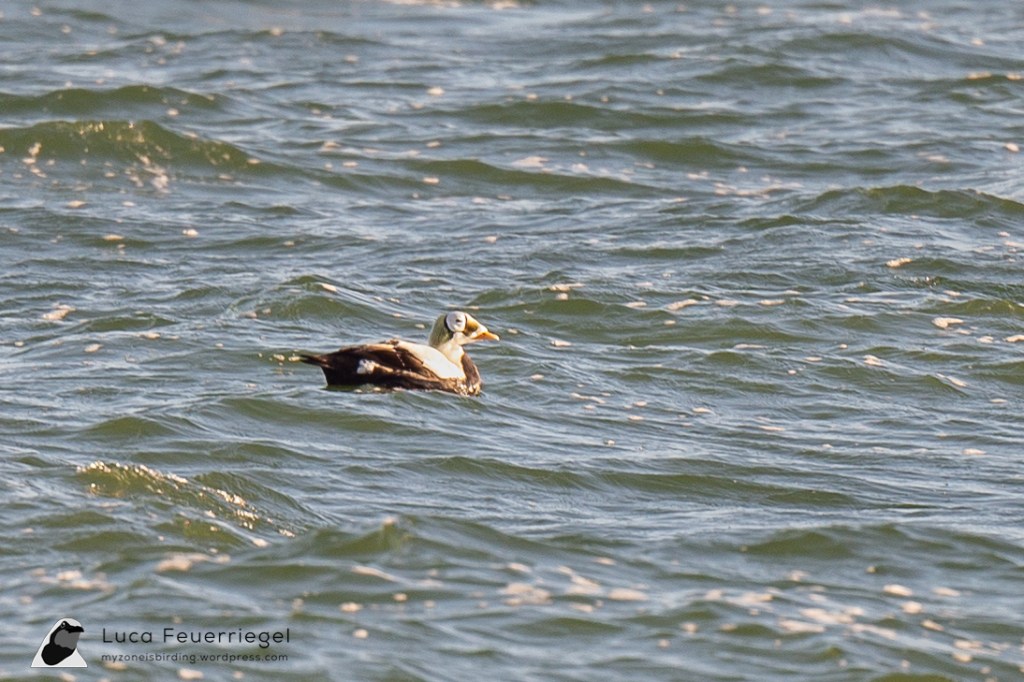
What is likely to remain one of The Netherlands’ biggest birding events in 2025 occurred in already early January, when a Spectacled Eider was found on the island of Texel. Pandemonium ensued: rightly so, as no birder would have expected this species to ever appear in the country in their wildest dreams. As the species is normally found in the Bering Sea and north of the Arctic Circle all year round, the fact that this bird showed up in The Netherlands is completely insane. There were many who understandably wondered whether this was truly a wild bird. But, with no ring and few other reasons pointing to an escapee, it appears that the eider did indeed travel all this distance. The bird attracted many hundreds of twitchers to the spot within the next 48 hours, with Dutch birders being complemented by those from many other European countries. What is more, the bird stayed for several weeks, without a significant decrease in crowd size. Especially on weekends, the dyke from where the bird could be seen was populated with a dense conglomeration of birders and their optical equipment.
After not making the trip for a few weeks, I eventually decided that this is an experience (and a species) I would love to have under my belt. Taking the train to Cologne early in the morning and then continuing to Den Helder via Amsterdam to take the ferry to Texel, I arrived at the Stayokay Hostel in Den Burg in the early afternoon. I tossed some of my stuff into the dormitory room, grabbed my rental bike, and started cycling to the coast. Earlier on the train, I noticed that I had forgotted my tripod head at home, really a critical mistake when looking for a seabird. However, I hoped that I could make do with balancing the scope on the tripod and using other birders’ scopes.
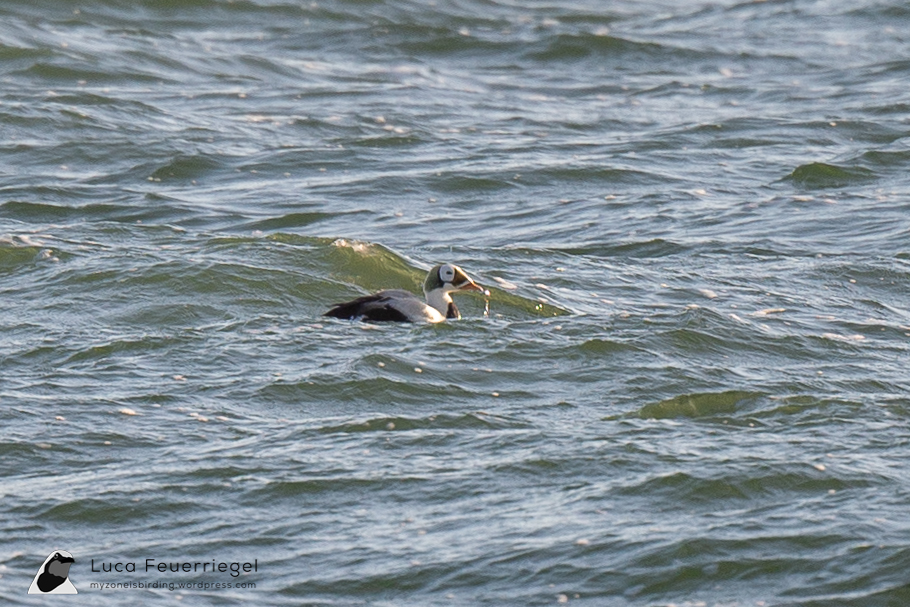
I knew that I had arrived at the spot when I saw around 30 people who were still standing on the track along the dyke in the waning light, scopes pointed in the same direction. This was assuring, but after some effort at maneuvering my scope detatched from the tripod ended unfruitfully, a birder from Norway offered me to look through his, giving me okayish views of the Spectacled Eider as it floated far out at sea in a large group of Common Eiders. After I had picked up enough details like the orange bill, green nape and white spectacles, I happily proceeded in watching other birds that were a bit closer to shore. A Red-breasted Merganser was fun to see, only ever staying at the surface for a few seconds before vanishing. Some close-up Common Eiders were more obliging, and were as fun to watch as their Spectacled cousin, given that the latter was simply too far to view decently in the low light.
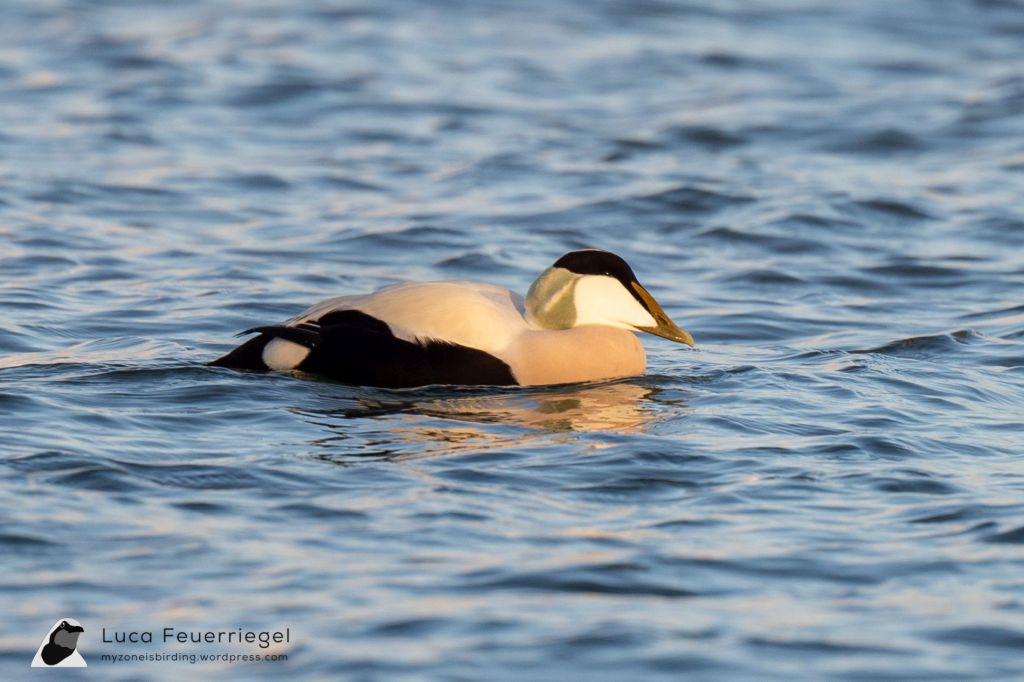
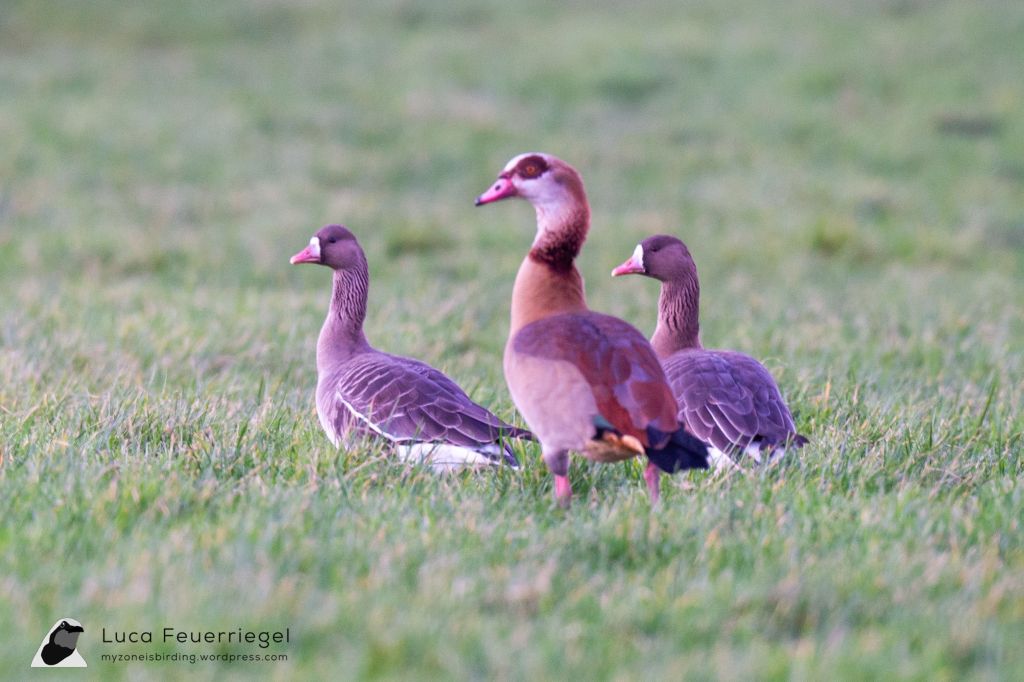
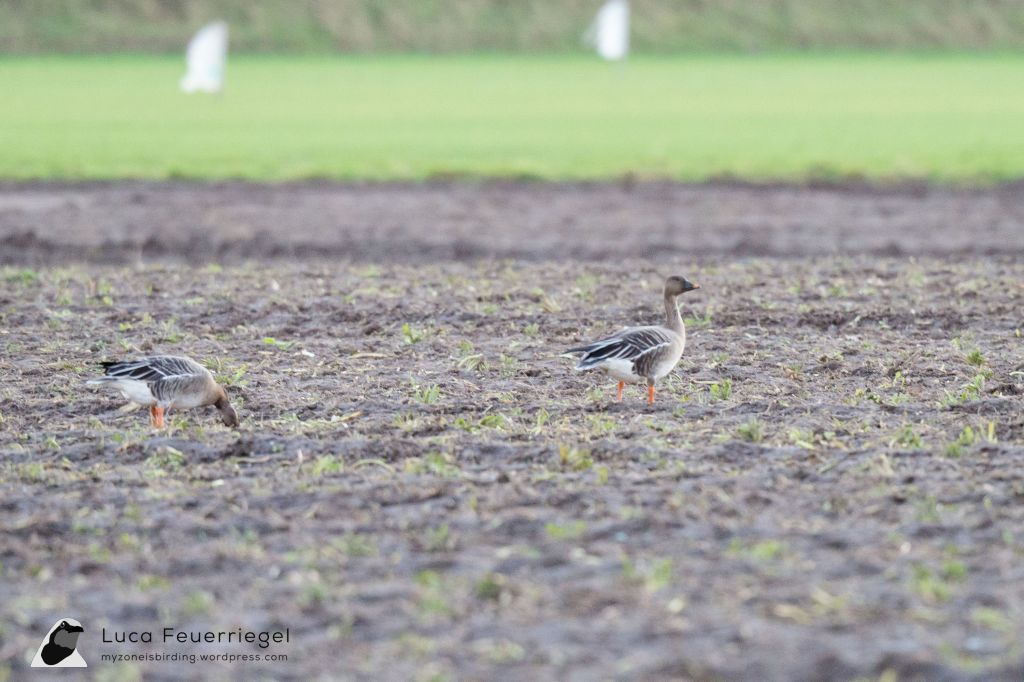
Cycling back to the hostel very satiated by the thought of not having undertaken the long trip from Bonn in vain, I enjoyed watching some common birds. In comparison to the eider everything appeared abundant now, but I gladly realised that observing them is just as engaging. Greylag, Greater White-fronted, Barnacle, Brent, Egyptian, and Tundra Bean Geese were lazing on the tilled fields, while some clumps of trees held Eurasian Collared Dove, Redwing, Fieldfare, and other typical species.
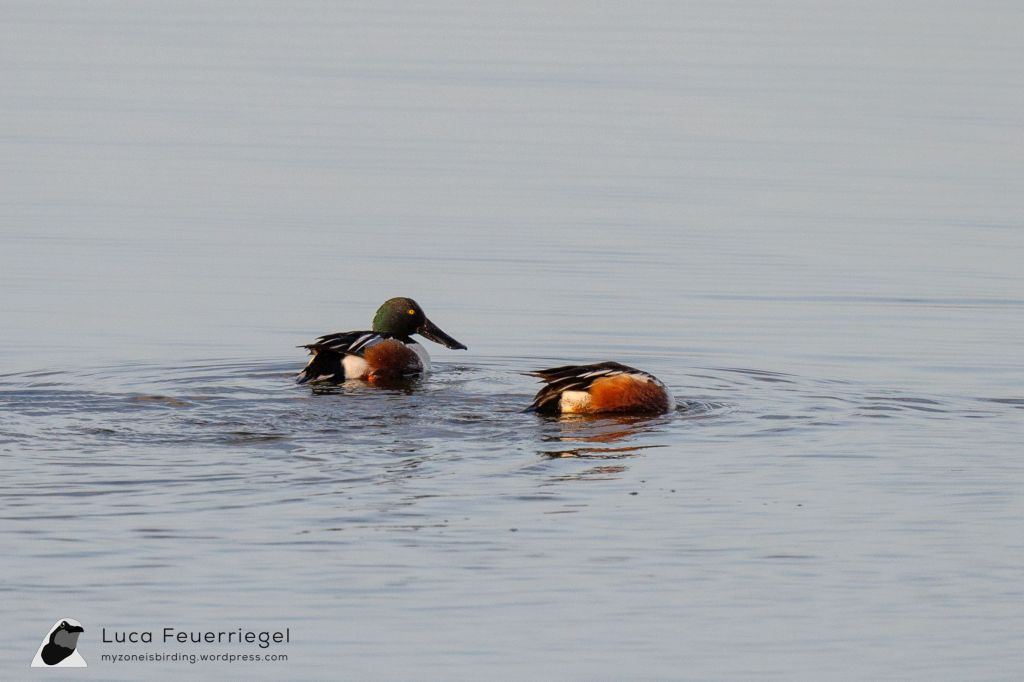
I cycled back to the eider spot the next morning, hoping to get a closer view of the bird before heading back to Germany. It was a sunny day and there were probably nearly 100 people at some point, the biggest twitch I’ve experienced (though still nothing compared to the first days after the bird was found). The Spectacled Eider showed pretty well and I even got some decent photos. I could also see the unusual plumage pattering, texture, and colouration for the first time in detail, really something I’ve never seen before. Black-headed Grebe and Great Crested Grebe were also actively hunting out at sea. The wetlands right behind the dyke produced Northern Shoveler, Gadwall, Common Shelduck, Little Grebe, and Eurasian Spoonbill amongst others.
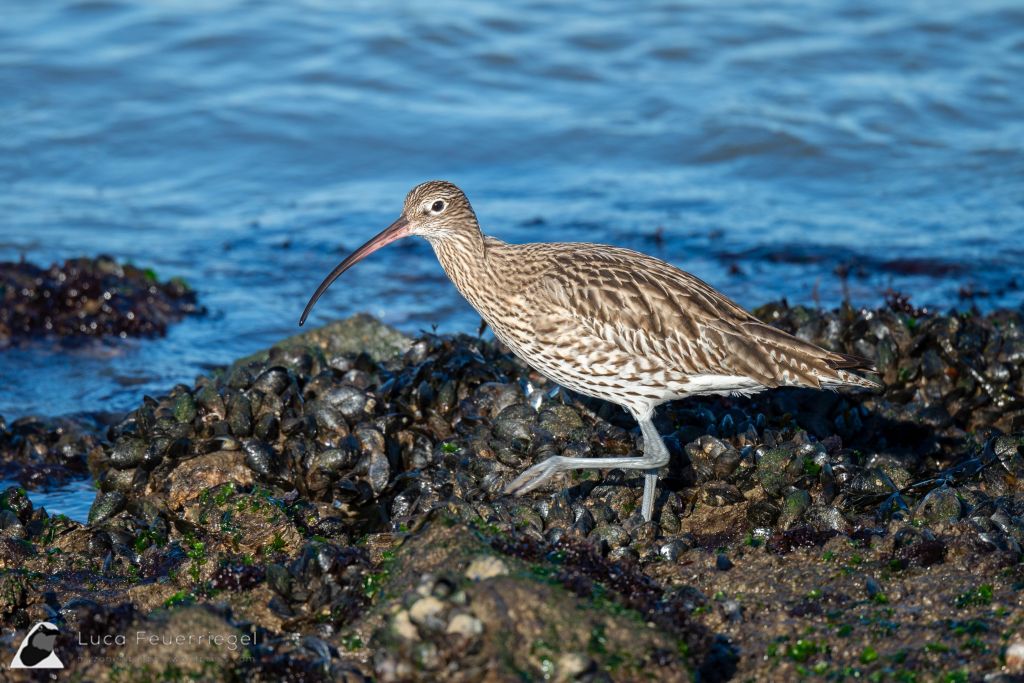
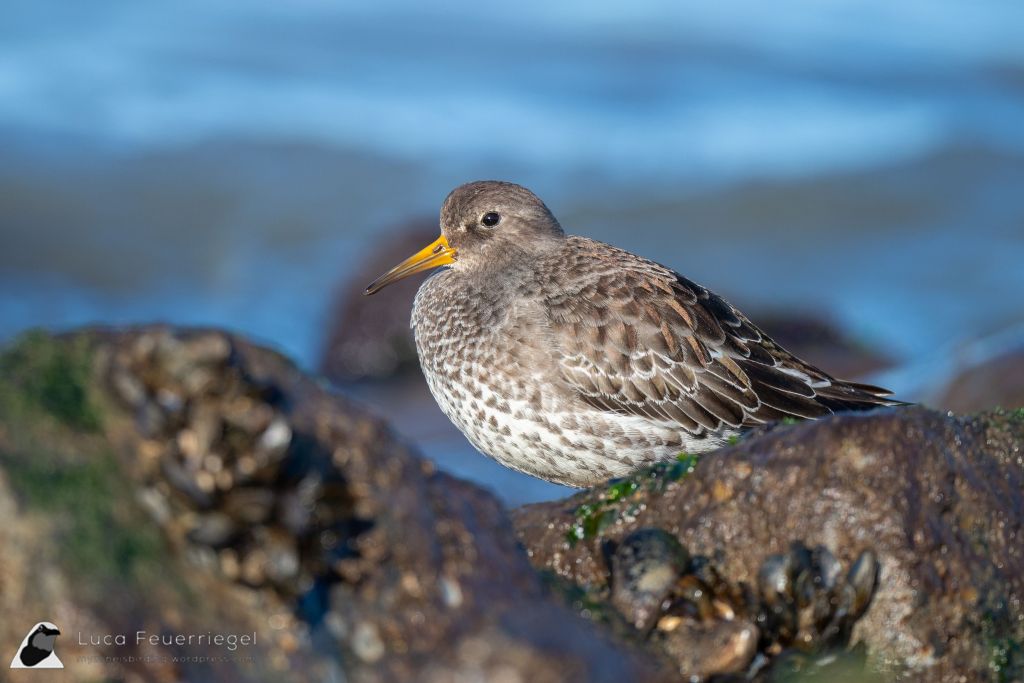
I rushed back to the hostel to grab my bags and arrived just in time to catch the ferry to Den Helder. Eurasian Curlew and Purple Sandpiper entertained me while I waited for the bus to take me to the Den Helder train station, from where the return journey went smoothly.
I would not usually undertake such efforts to see a single bird, but because the timing allowed for it, the chances being very high that I would see it, and being eager to participate in such a big twitching event, I decided to give it a shot. I’m a big fan of eiders and this is obviously a special member of this unique group of birds. At the same time, I realised again that the satisfaction of looking for birds in places where they normally occur, and coming across them in a less predictable manner along with the surrounding experiences of other birds, wildlife, and the natural environment in general is greater. This is not the first time I have thought that and I am aware that come another crazy bird, my desires to see it might just pale this realisation and I’ll be off again…
 My Zone Is Birding