
Resuming the daily life in Bonn was quite a change from the recent bird-rich summer in the Alps and southern France. Not that I don’t enjoy it, but the standard set of birds like Blue Tits and Eurasian Green Woodpeckers does not compare to that including Iberian Grey Shrikes and Eurasian Hoopoes. My assumption of the rather stale local avifauna was blown into pieces when my father saw a Eurasian Hoopoe while taking a stroll in the vineyards across the river Rhine from our house. The Eurasian Hoopoe is very rare this far North, and this was likely only a bird moving through during passage. The small vineyard where my father found the bird seemed to provide adequate open space of sparsely vegetated soil baked hard by the sun, seemingly the preferred feeding conditions for the hoopoe.
The next day was very rainy so when I headed to the spot two days later, I had little hope that the bird had stayed put. Fortunately, the bird was still there, busily feeding along a path on some freshly mowed grass. My satisfaction quickly turned into annoyance however, when a group of hikers flushed the bird, which proceeded to fly all the way to the bottom of the hill.
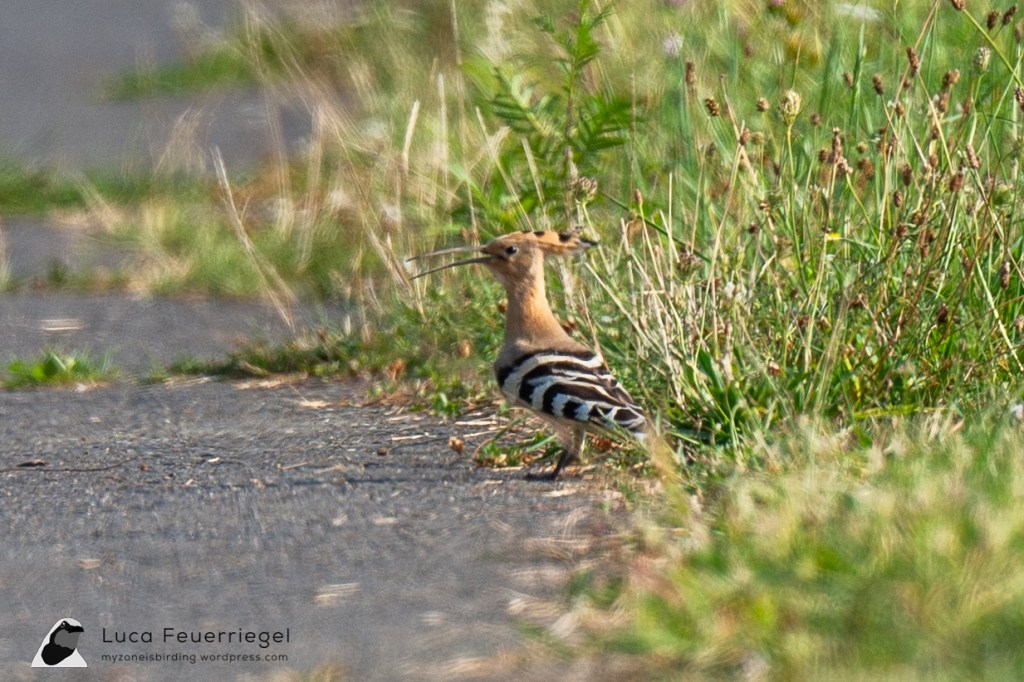
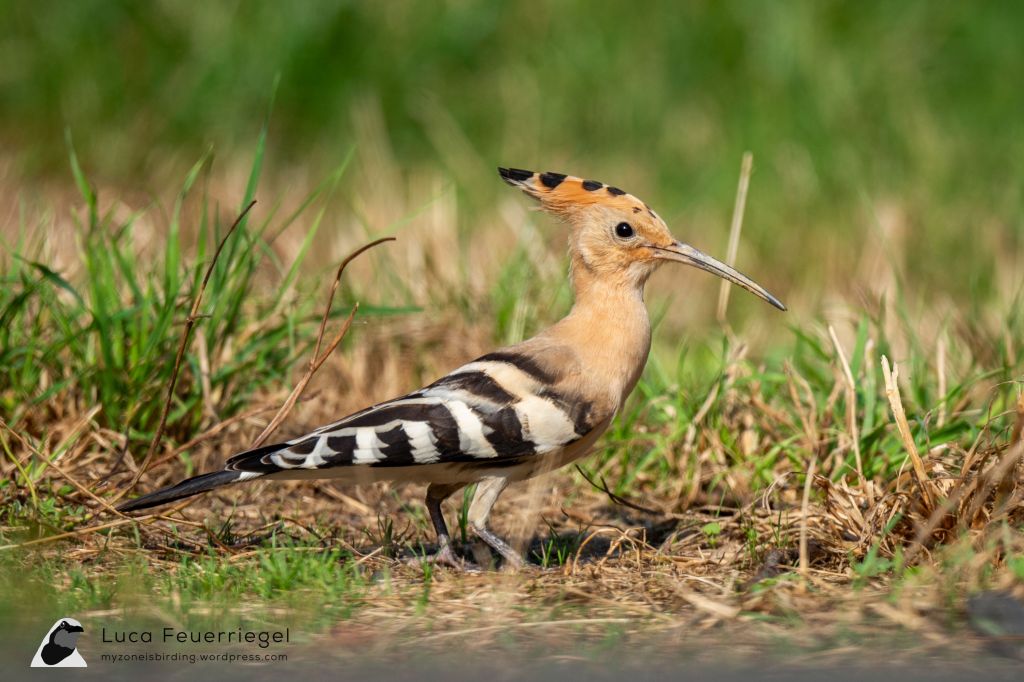
The bird had luckily perched on a fence on the edge of the vineyard and soon alighted on the ground and resumed feeding. By approaching in the cover of a small bush that kept me out of sight, I managed to crawl quite closely towards the direction into which the hoopoe seemed likely to move. This fortunately paid off, as I soon obtained cracking views of this bird as it hopped around just metres away, oblivious to my presence. It was quite comical to watch the contrast between short bouts of frozen stares to inspect its environment interspersed with the frantic pecking movements when it detected a tasty morsel underground.
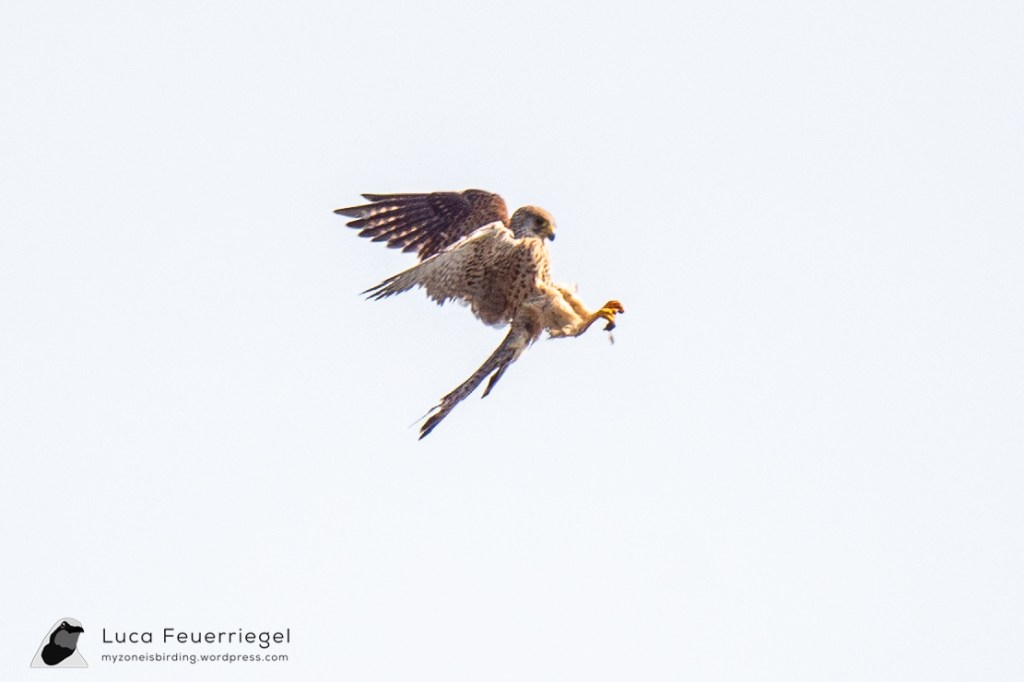
Not many other birds were around, although several Black Redstarts frequented the vineyards and a few Tree Pipits, probably on passage, were passing overhead. I also watched a Common Kestrel hawking insects overhead. Its apt name belies the agile antics of this bird, which are all but boring to watch (although I must admit that I rarely give this bird a second glance when I’m out birding and hope for less common species).
This was one of my best sightings of a Eurasian Hoopoe. The only thing that could’ve made this moment better would have been its crest fully fanned out, but I don’t want to ask for too much. I have had great sightings of the African subspecies in our garden when we lived in South Africa, and in various other places including Kruger National Park. Back then, these were still considered separate species (otherwise I could have removed the “one of” in the first sentence of this paragraph).
 My Zone Is Birding