
As part of a lovely vacation to southern France with my university friends, I planned to do at least one dedicated birding outing as I’ve never been in this region. My friends are very supportive of my birding obsession so I was able to do a day trip to an excellent birding site in the region, the réserve naturelle des Coussouls de Crau. This arid site seemed to be the best birding destination for me in the area – quite a feat as some of Europe’s wetland birding is also to be had here, at the Camargue. However, the selection of mouth-watering arid country species, such as Calandra Lark, Pin-tailed Sandgrouse, and Little Bustard, made me opt for the steppes.
As the Crau was a two-and-a-half hour drive from our accommodation, I left at 3AM to be there by sunrise. This was the first long drive I did by myself and in the dark since I obtained my drivers license a few weeks earlier (in fact I have to admit that part of my motivation for obtaining the license before the summer holidays was to visit the Crau…), but everything went smoothly and I arrived as the sun was rising over the steppe. Along the track approaching the steppe, Glossy Ibis and Western Cattle Egrets were in evidence. A a Eurasian Hobby passed overhead at the parking lot.
It was surprisingly cool and drizzly as I set off towards the Bergerie Peau de Meau. According to sighting locations on eBird and some existing trip reports (this one provides some useful information) that I used to prepare for the outing, many of the Pin-tailed Sandgrouse sightings come from this area. Eurasian Skylarks were singing everywhere, and several Stone-Curlews hurried across the bare plains. Two Caspian Terns passed overhead, a surprising sighting. Yellow-legged Gull, Black Kite and Common Bussard were much more expected.
It was still mid-morning by the time I arrived here, but the sun was already beating down. Photography also became increasingly difficult as the heat haze developed. Fortunately however, I had a great collection of sightings from the track leading from here to here. Eurasian Skylarks were still dotting the sky and some of the small rocky mounds erected across the steppe. These mounds were also popular amongst Common Kestrels, though I hoped at least one would be a Lesser Kestrel (to no avail). Scanning distant areas with my scope, I observed a curious interaction between a Red Fox and large male European Hare, with the fox slowly trotting behind the hare, which eventually stood up on its hind legs to an impressive height, making the intimidated fox abandon its pursuit. Large numbers of Common Swift now careened overhead, while Great Cormorant, Western Jackdaw, Eurasian Magpie, Carrion Crow, Barn Swallow, and White Stork also passed overhead.
As I was scanning the plains, I heard an odd frog-like call, very distant and hard to locate. As the sound slowly moved off into the distance, I realised that it came from above but could not see anything. For a second, I saw the distinctive shape and white belly of two Pin-tailed Sandgrouse, before they became invisible in front of a white cloud. I was elated, as this was a bird I had wanted to see for years and my main target of the day. Obviously, this did not come close to the clear, extended views I imagined that would allow me to fully appreciate its beauty, but I was very satisfied nonetheless. A Tawny Pipit also posed nicely in this area, while a Crested Lark was also around.
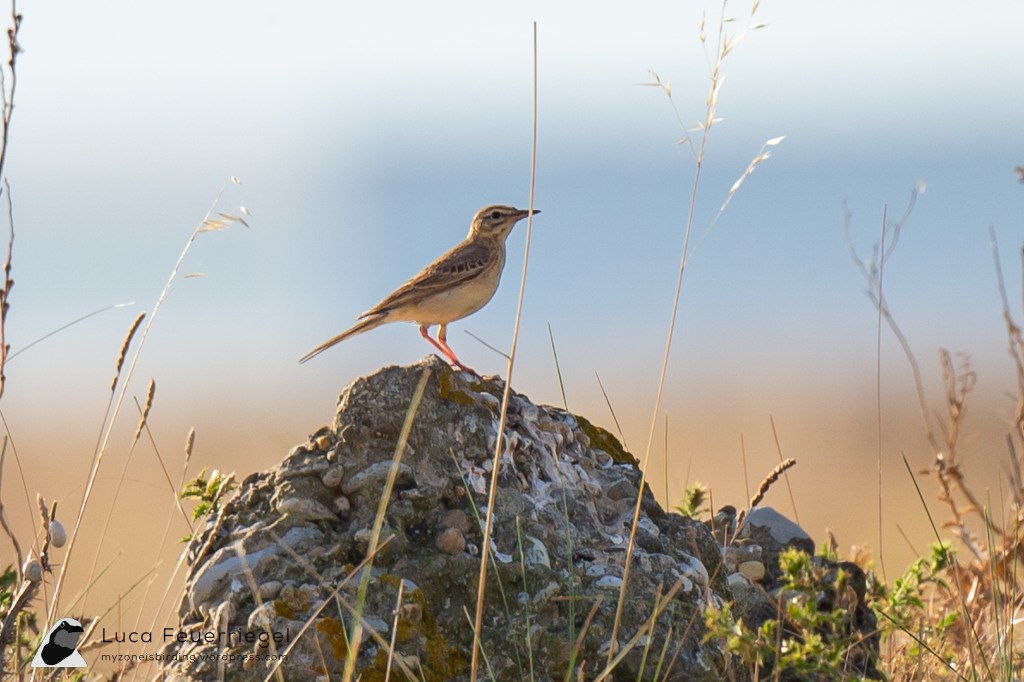
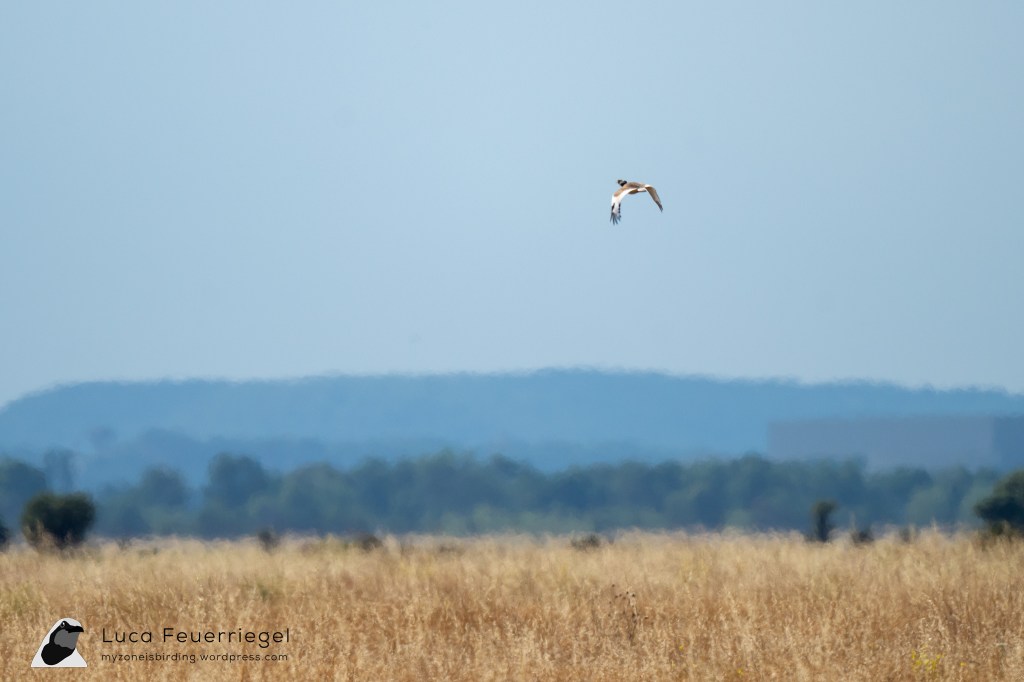
Vegetation along a small canal here held European Goldfinch, Common Starling, Corn Bunting, and even a Great Spotted Cuckoo. This species make this area feel very distant to the other places I’ve been birding in Europe, as I only know this cuckoo from the woodlands of South Africa. Shortly afterwards, after a few more Stone-Curlews, two Little Bustards flushed a large distance, showing off their amazing white wings. This was another lifer that I had wanted to see for ages, and the rate at which the good birds were coming was very welcome.

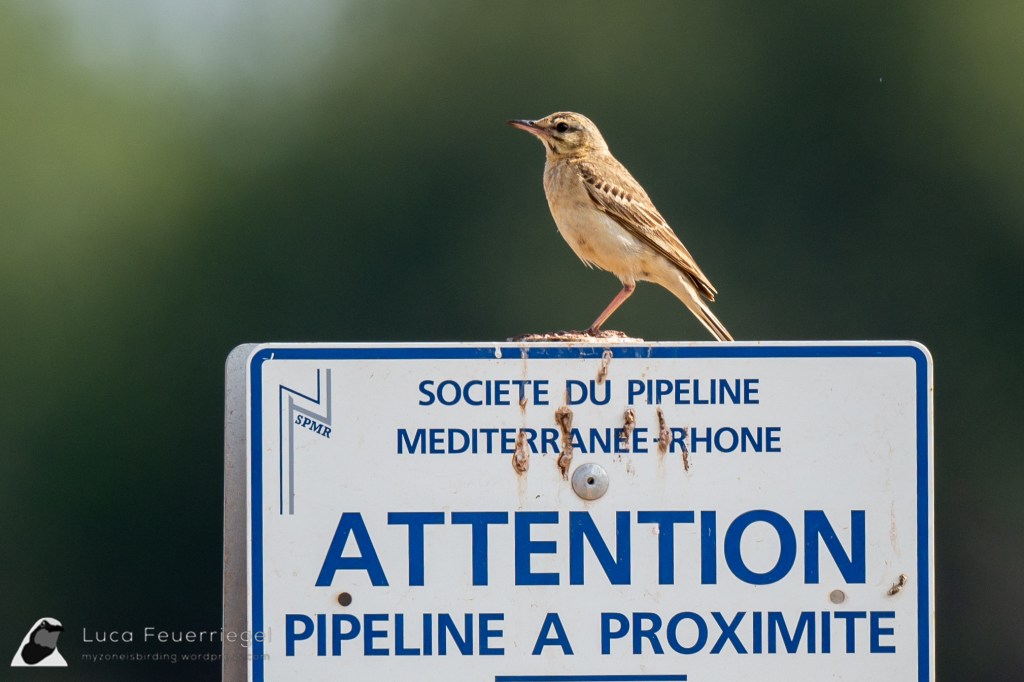
I tried hard for Calandra Lark around this track leading northwards, but was unsuccessful. I hoped to see this species as I’ve had a few probably sightings in Southeast Europe and would have loved a definitive sighting. A few Tawny Pipits were feeding on this track, and they seem to be quite sedentary as I photographed one on the same sign as another photo I saw somewhere on eBird.
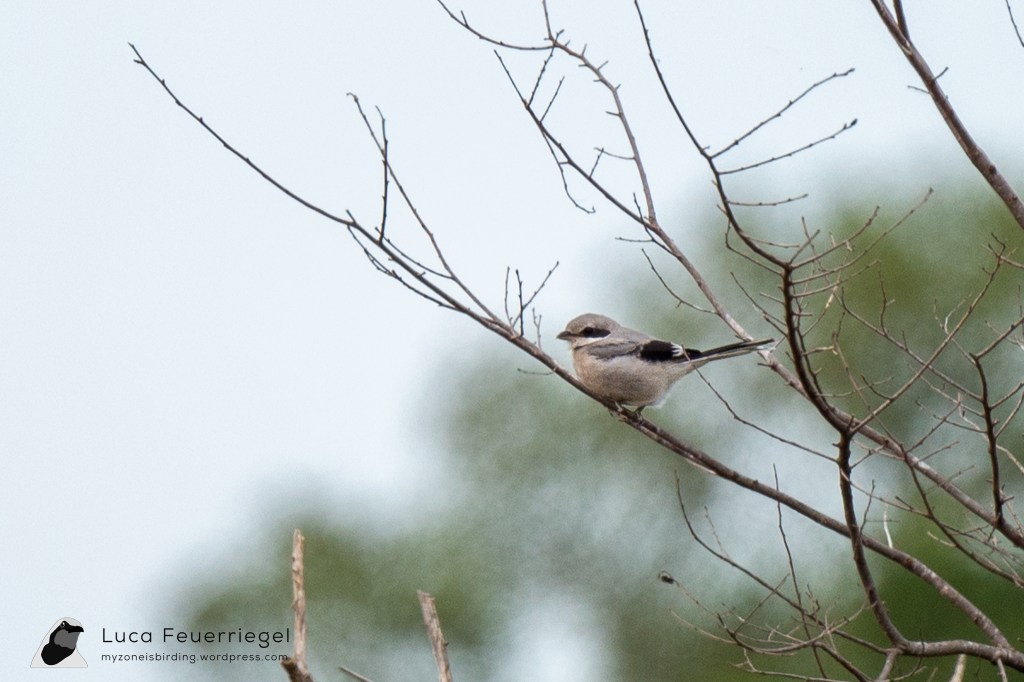
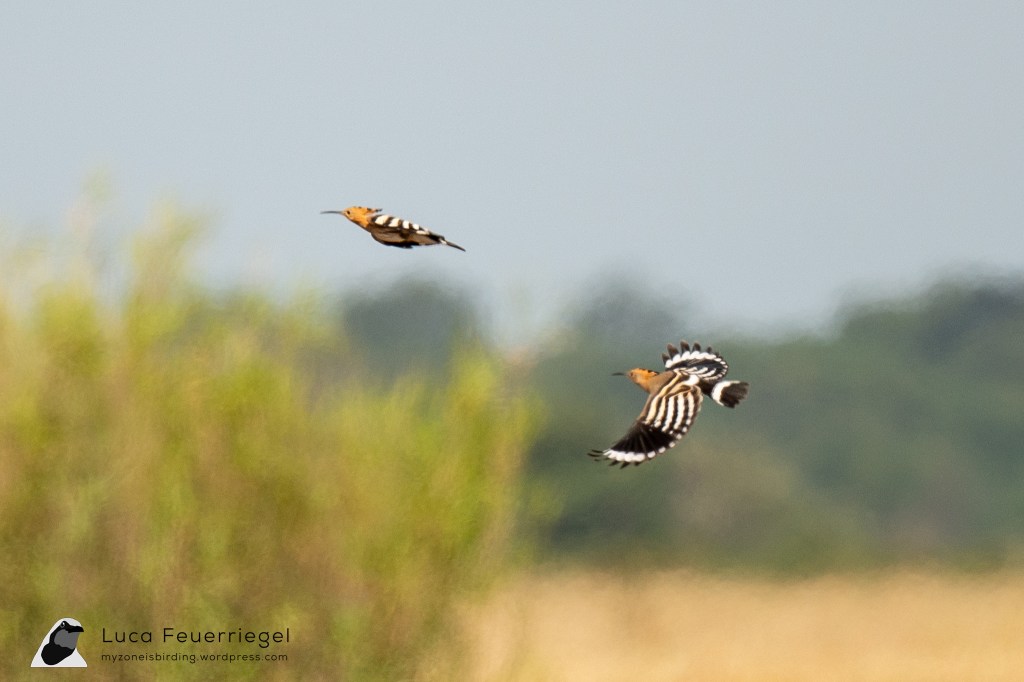
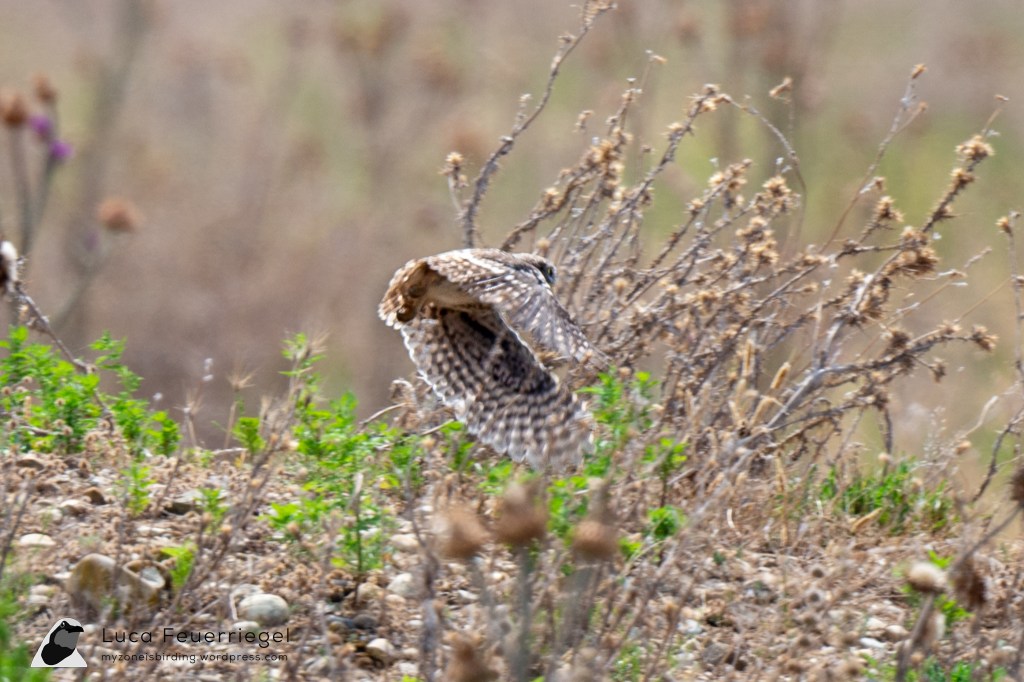
The longer grass in this area clearly attracted different birds, with a Iberian Grey Shrike, a group of six Eurasian Hoopoes, and European Roller. I continued in a northwesterly direction, picking up Red-legged Partridge, Zitting Cisticola, and Corn Bunting along the way. I was surprised by the number of Little Bustards in this area, as I flushed a pair here and then a single bird here. I was already in a bit of a hurry as it was quite a distance back to the car, but as I noticed that some people saw Little Owl in the old farmhouses dotted around the steppes, the fifth and final house I passed also had to be investigated. Here, I finally a Little Owl, that descended onto the ground from the building and then flew into denser grass. As if this wasn’t enough, a Short-toed Snake Eagle was also soaring above, the final lifer for the day.
I returned to the car quite exhausted, covered in dust and grass seeds, and was rather dehydrated. Nonetheless, I was extremely satisfied with the outing. Apart from Calandra Lark, I saw all species I had hoped for, totalling seven lifers. It’s been many years since I’ve had this many lifers in a single day; in fact looking back, I could only imagine that my trips to Thailand or Borneo six years ago equalled this. This just goes to show how many birds there are left for me to find in Europe, and what an excellent site the Coussouls de Crau is.
 My Zone Is Birding