
Being the only place in Germany with some actually significant elevation (despite having livede in the Netherlands I don’t think other areas in Germany really qualify as mountaineous), the Alps obviously offer a different suite of birds than the rest of the country. I have only been to the foothills so far and as a result, several localised but common species were still missing on my list. Together with two friends, Jacob and Fynn, who I met during my epic stay on Heligoland last year (see those posts here), I had planned a week-long hiking trip to target as many specie of the Bavarian Alps we could. As my two friends wanted to tick off birds on their German lists, we focused only on the German side, around the town of Mittenwald. Apart from seeing many of our target birds, we had a fantastic tour, with the mentally and physically strenuous hikes being highly rewarding.
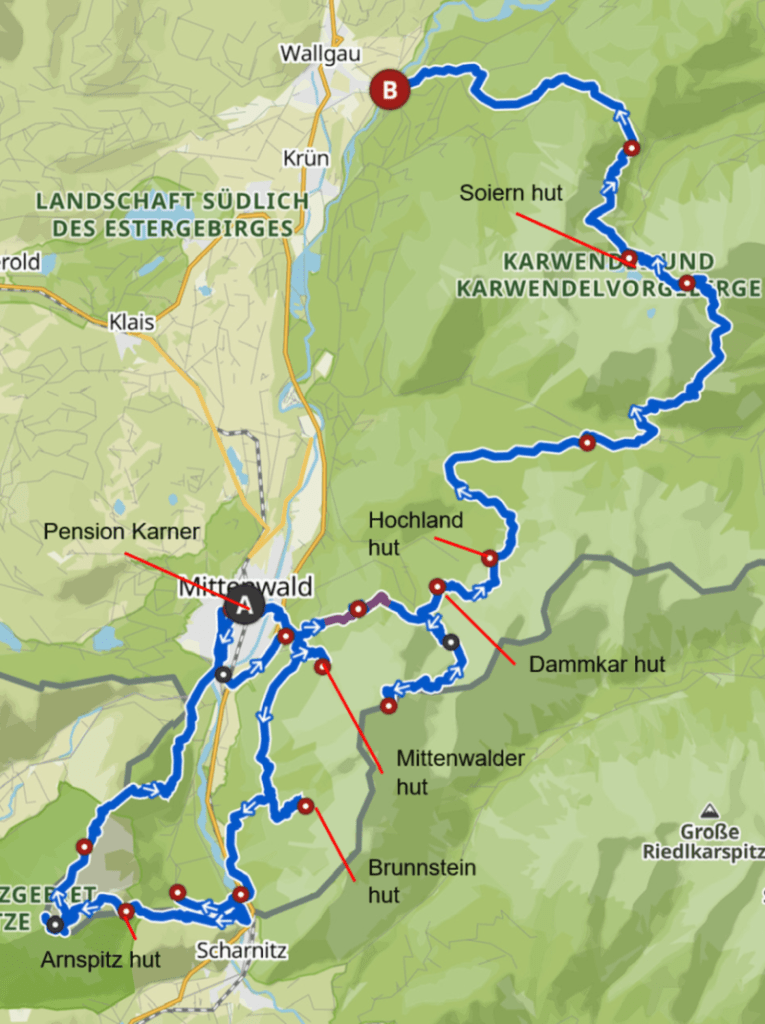
We slept in the huts of the Deutscher Alpenverein (German hiking and outdoors association, DAV) throughout the trip, except in the middle of the trip when we crossed through Mittenwald and enjoyed an unusually comfortable night at the Pension Karner. The huts we stayed at were well-suited to our needs with washing facilities (but no showers) and toilets. It is important to bring sleeping bags specific for huts, as otherwise you will have to buy them at the huts themselves. We were slightly annoyed by most huts charging us when we did not order their food. They understandably justified this by them having to bring all the food to the huts (often using small cablecars) but the price we paid was equivalent to the cheapest food on the menu and so despite having carried all the necessary food, we ended up eating at the huts’ restaurants most of the nights. The following map outlines our route:
22.06.
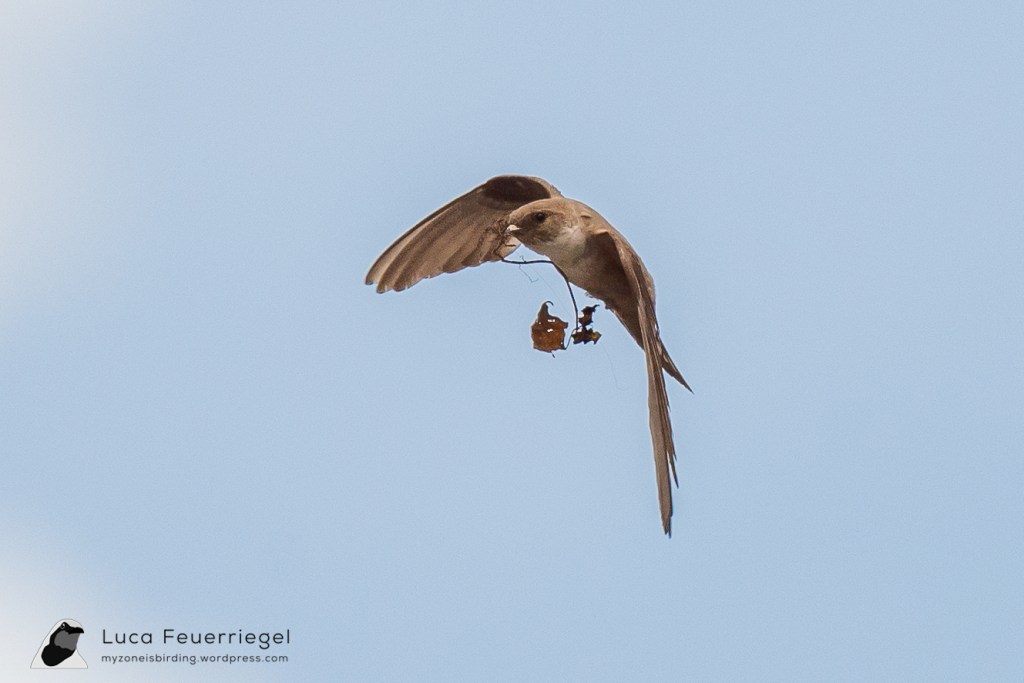
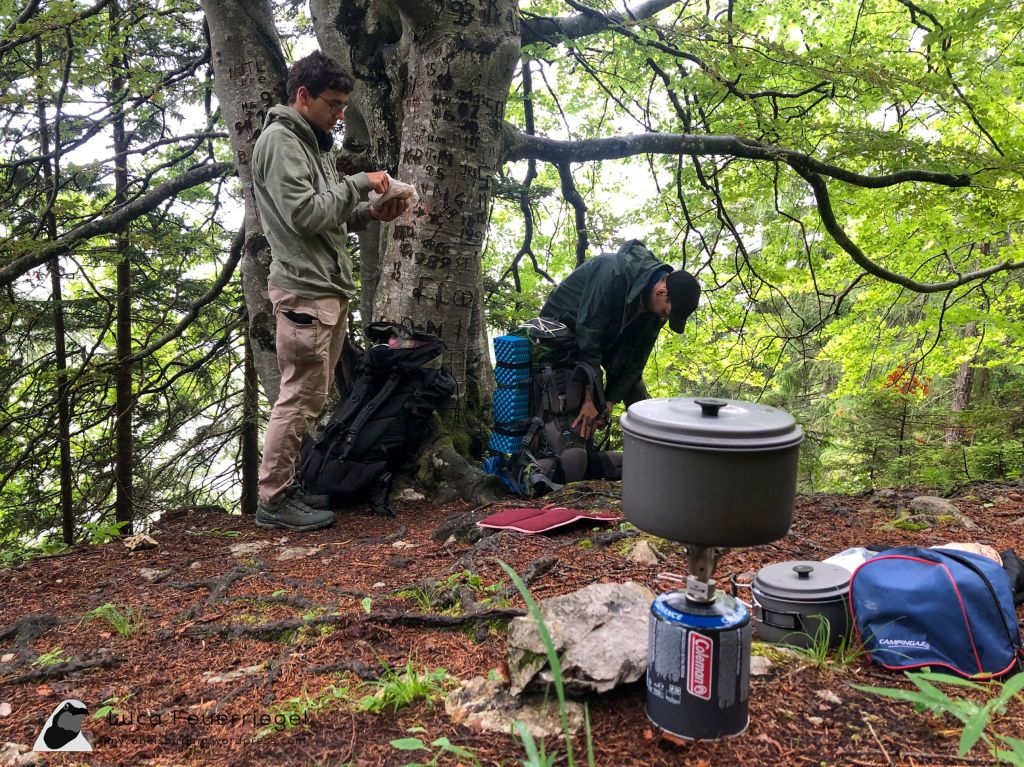
I met Jacob in the train from Munich to Mittenwald, where Fynn joined us. Fynn already did the groceries, which we distributed amongst our backpacks and noticed with dismay that they were significantly heavier than we expected – around 20kg each. This was largely because we definitely prioritised having all available optics over limiting the weight – I had taken my scope and Jacob his tripod (mainly to be able to look for Rock Partridge at the Arnspitz later on the route). However, being excited to see each other again and for the days to come, we set off towards the Mittenwalder hut on the slope of the Karwendel mountains, around 500 meters above the town. Still in Mittenwald, we stopped to watch a pair of Eurasian Crag Martin breeding here, a rare breeding bird in Germany.
Ascending the mountain, we started having a selection of typical forest birds including Eurasian Treecreeper, Eurasian Firecrest, Eurasian Bullfinch, Common Chaffinch, Western Bonelli’s Warbler, Coal Tit, and Black Woodpecker. The highlight and simultaneously most frustrating sighting was that of a Red-breasted Flycatcher. It called for ages from dense thickets (here), but I only managed a split-second glimpse of a red-throated bird with a cocked tail that could not have been anything else (despite our confusion regarding the wren- and robin-like call). Northern Raven and Alpine Cough joined the list, while a Eurasian Nutcracker remained heard-only. We arrived at the hut at 5pm sharp, the latest by which guests should arrive.
23.06.
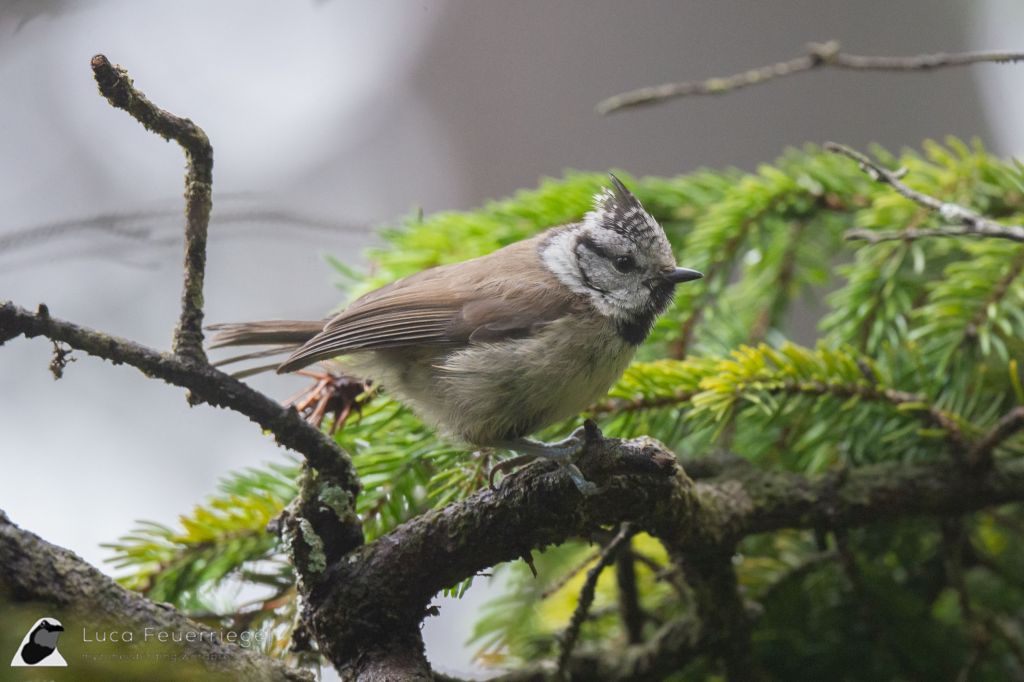
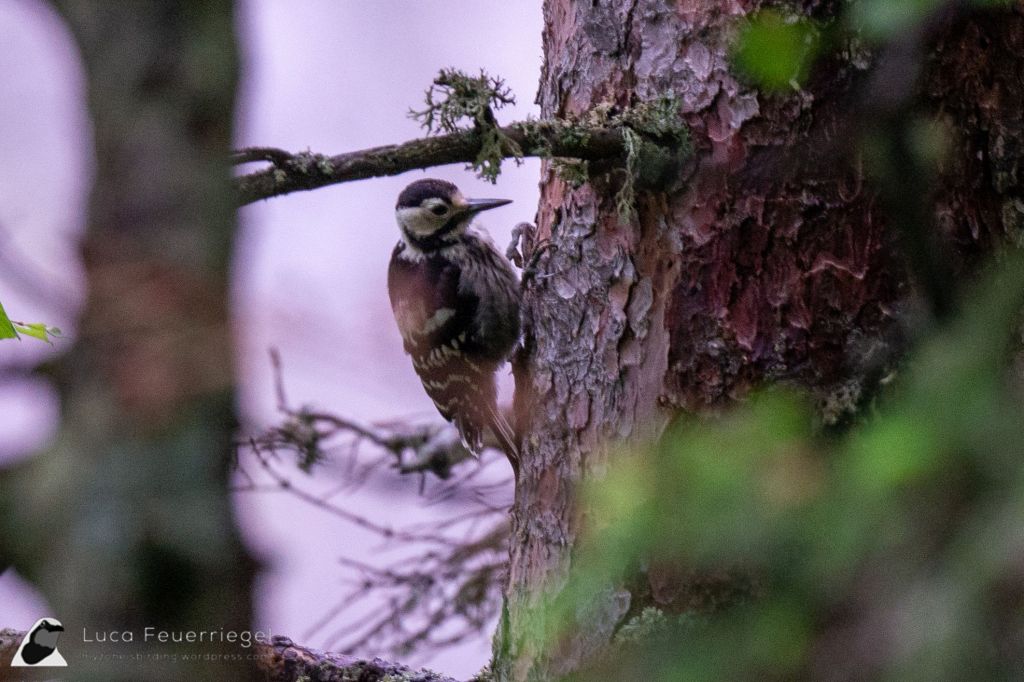
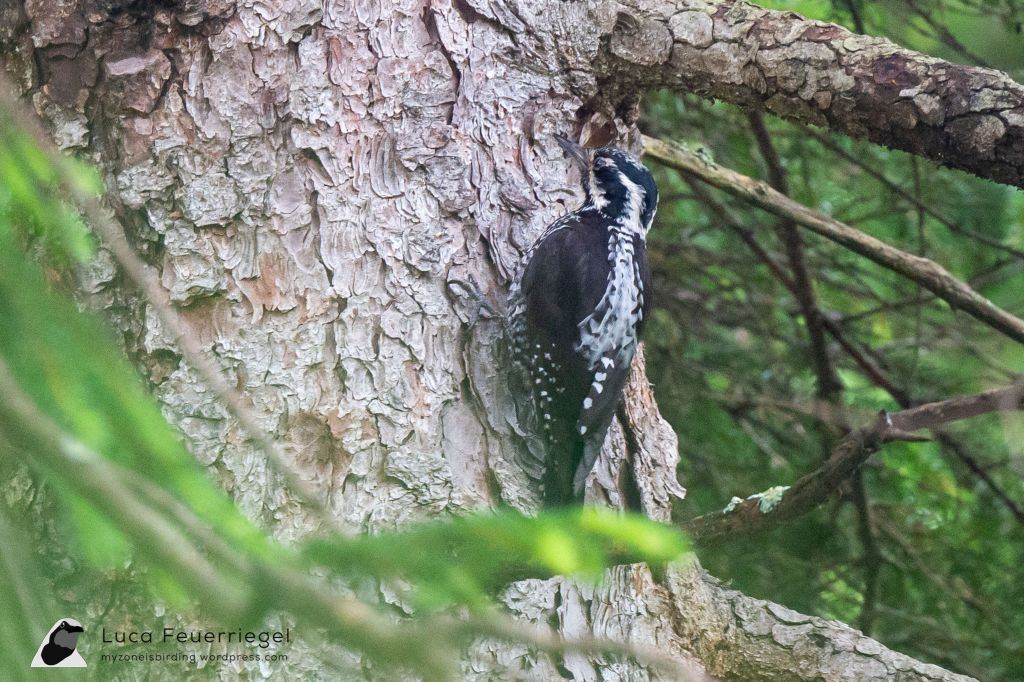
We initially planned to ascend to the Karwendelgrube and from there hike to the Brunnstein hut, but aving heard from other hikers that the trail up to the Karwendelgrube will be impossible to do without climbing gear, we decided to pursue a different route and descend a bit before hiking to the Brunnstein hut. This was definitely a good decision as we chose the initial route rather naively without knowing the conditions. However, we were desperate to reach the Karwendelgrube later on the trip, given the selection of good birds to be found there. Any regrets evaporated however when we saw a White-backed Woodpecker a few hundred meters below the Mittenwalder hut, a lifer for me. After a nice breakfast on the trail, we had a Eurasian Three-toed Woodpecker in an area with spruce, another great bird. Some other nice sightings were Western Bonelli’s Warbler, Eurasian Nutcracker, Northern Raven, Coal, Crested, and Willow Tits, Goldcrest, Mistle Thrush, Eurasian Bullfinch, and Common Crossbill. Around the Brunnstein hut we had Black Redstart and Lesser Whitethroat.
24.06.
This was a long day as we descended all the way into the valley, only to hike up 1000 metres to the Arnspitzhut on the other side. Nothing new was seen on the way down, but we happily got some coffee at the filling station before crossing a small bridge (seeing White-throated Dipper, Grey Wagtail, and Common Sandpiper) and having breakfast in the Riedboden. This area is supposed to hold Black Grouse, but we were not successful. However, we had nice sightings of Western Bonelli’s Warbler, Eurasian Bullfinch, and Hawfinch, and I was happy to see my first-ever eyed ladybird.

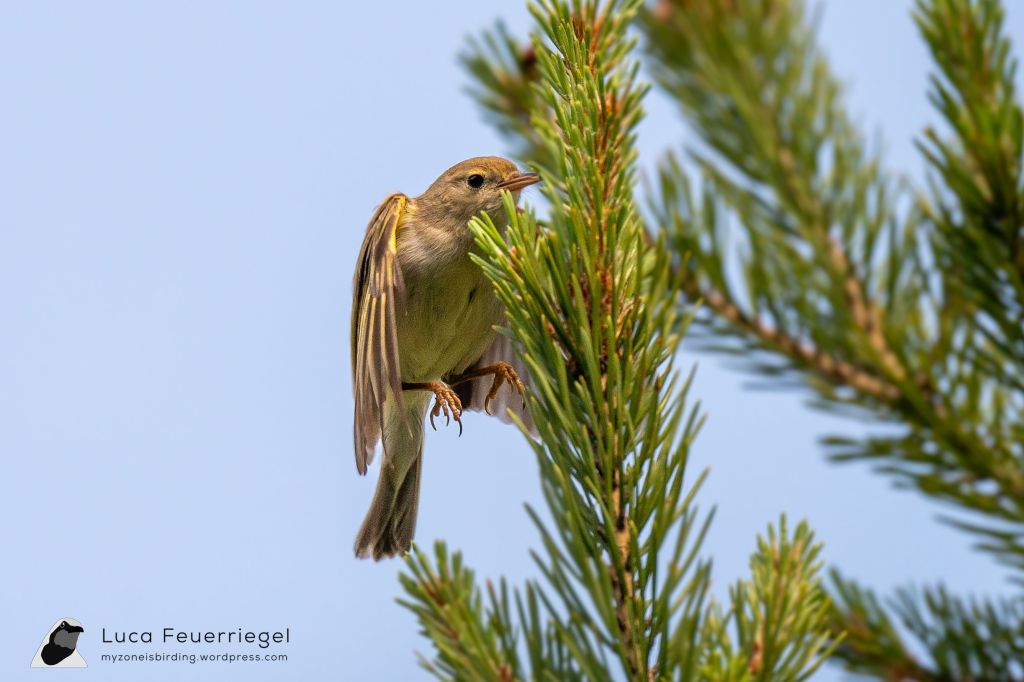
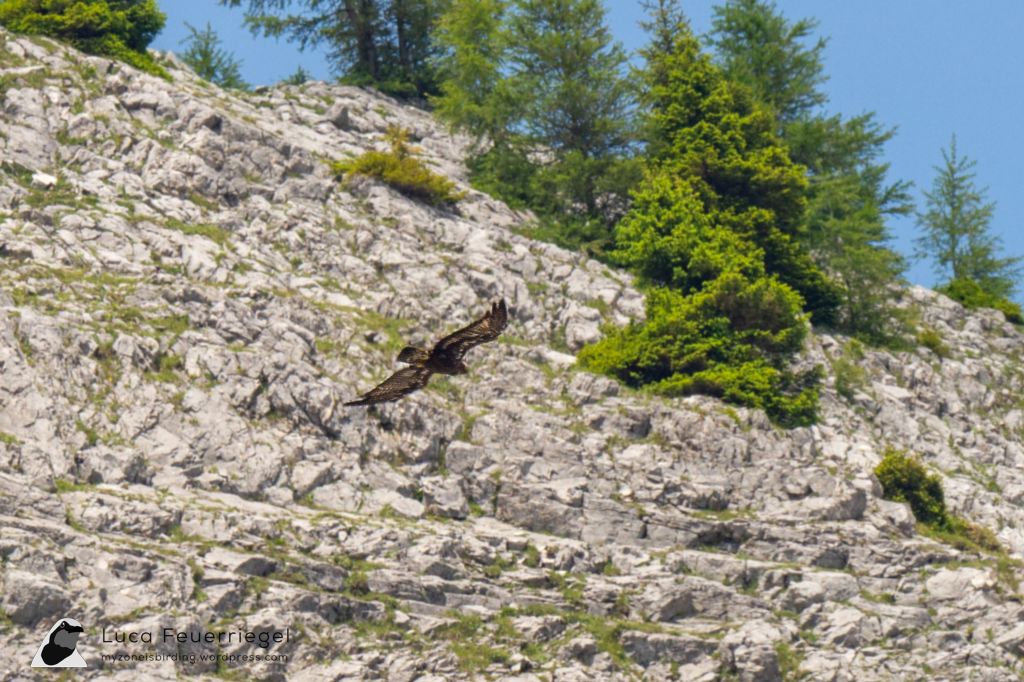
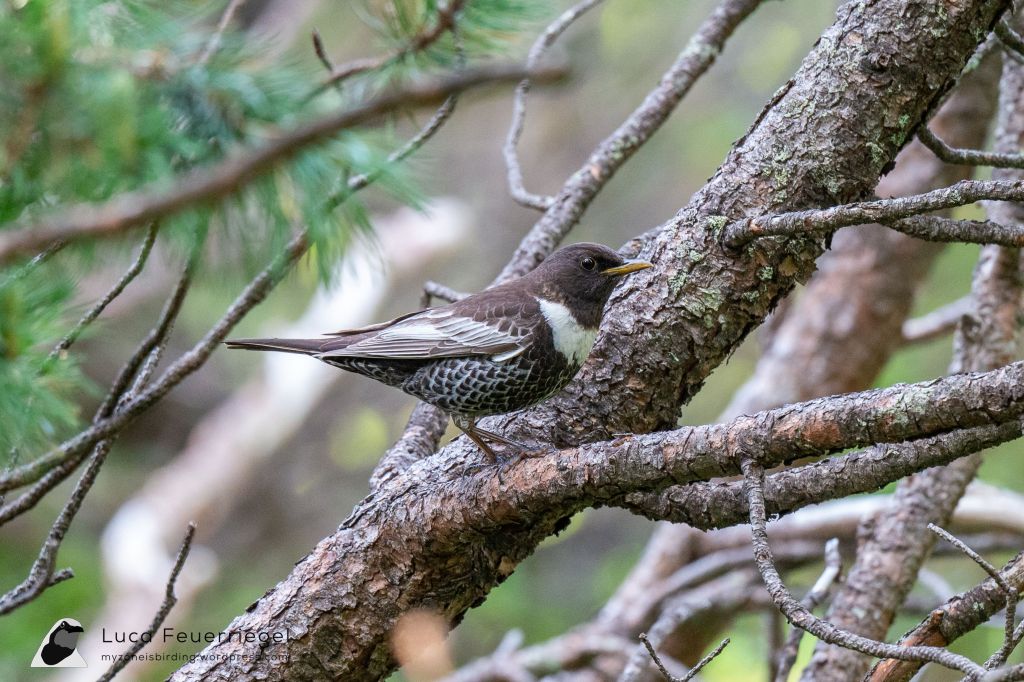
Seeing the vegetation transform on our hike up the Arnspitz was fun, but the trail was steep and narrow. We saw Black Woodpecker in the beech forest at the lower reaches. Getting into an area with smaller trees here, we had Great Spotted Woodpecker, our first Ring Ouzel, and heard a Common Cuckoo. We scanned for Rock Partridge around here but instead got a nice sighting of a Golden Eagle. The last stretch to the Arnspitz hut was extremely tiring and we stopped every few metres. This area around the hut yielded Lesser Redpoll, Lesser Whitethroat, and Water Pipit.
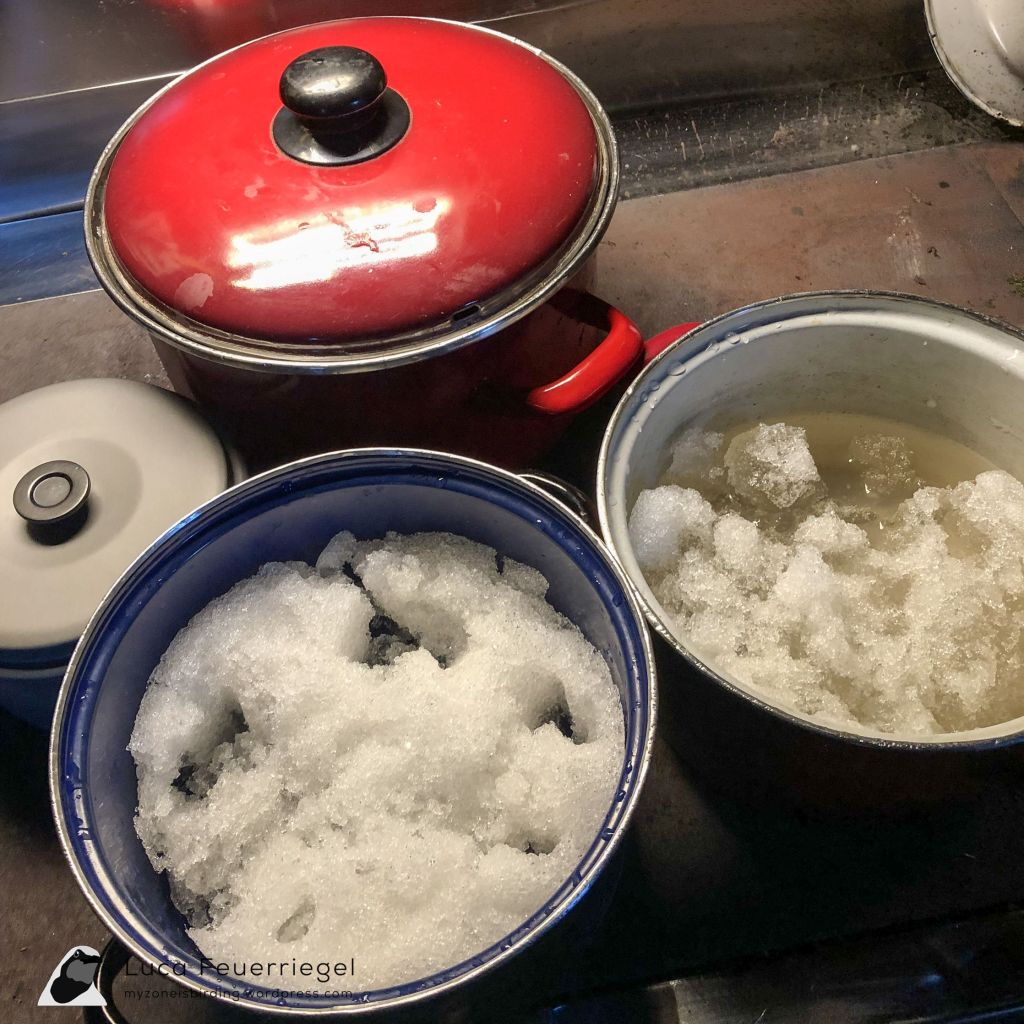
Despite our exhaustion, we were very eager to climb the peak of the Arnspitz, so we headed up without our backpacks, a very enjoyable feeling. Arriving at the peak at 2196 metres and the cliffs breaking off nearly vertically in places with the valley being visible far below, I suddenly felt more like sitting down than strolling around on the peak. Fortunately, we had a smooth descent and were happy to find that we were the only ones sleeping at the hut. The hut itself was fantastic, being tiny but offering all the we needed. It had way more character than the other huts (even with a tiny well-stocked bookshelf!), and made us want to stay two nights. However, we realised that we did not bring enough water (there was no running water). We had already filled up some of our bottles in the Isar river earlier in the day as we significantly underestimated the amount of water we needed (the previous days were cloudy and cool, meaning we drank much less). Fortunately, there was a small snow field in front of the hut, which allowed us to “harvest” some snow and melt it on the wood-fired stove. This was actually very fun and we enjoyed fantastic views of the surrounding mountains while eating dinner.
25.06.
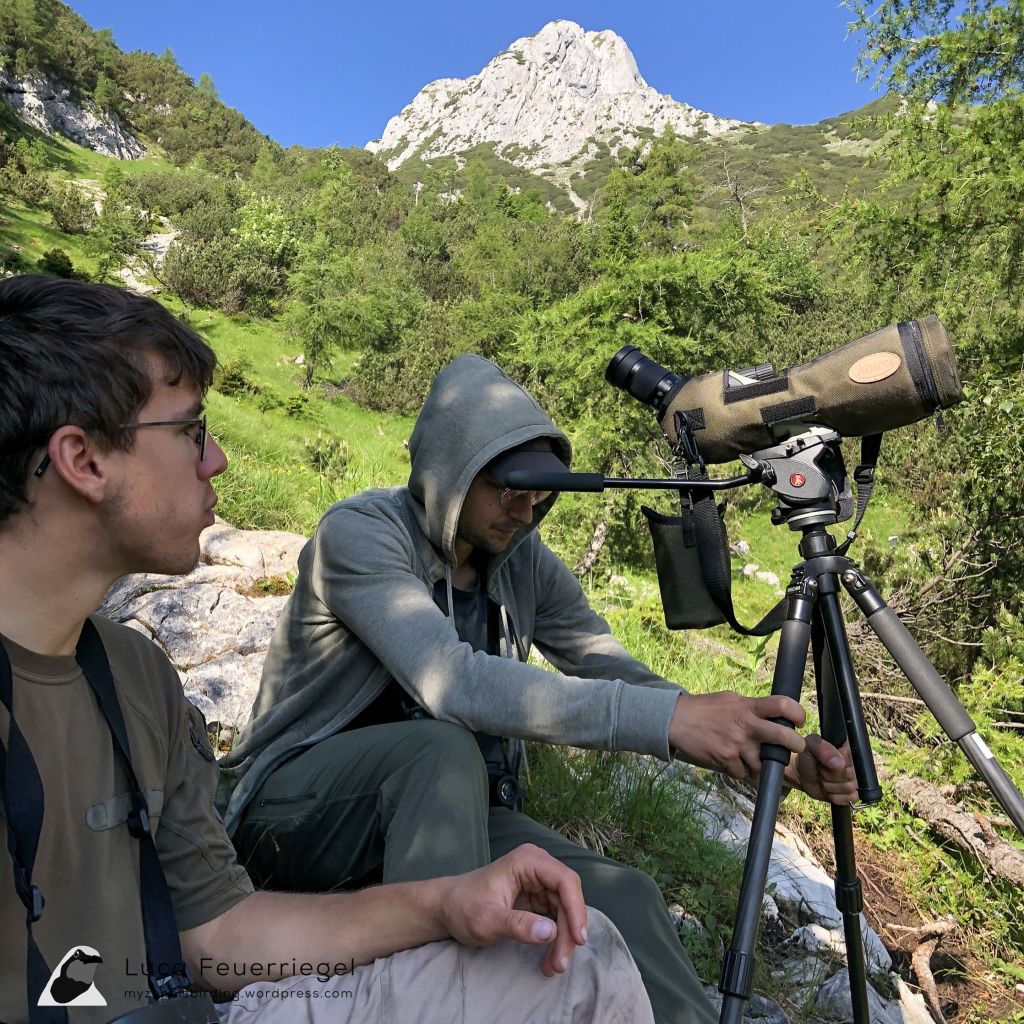
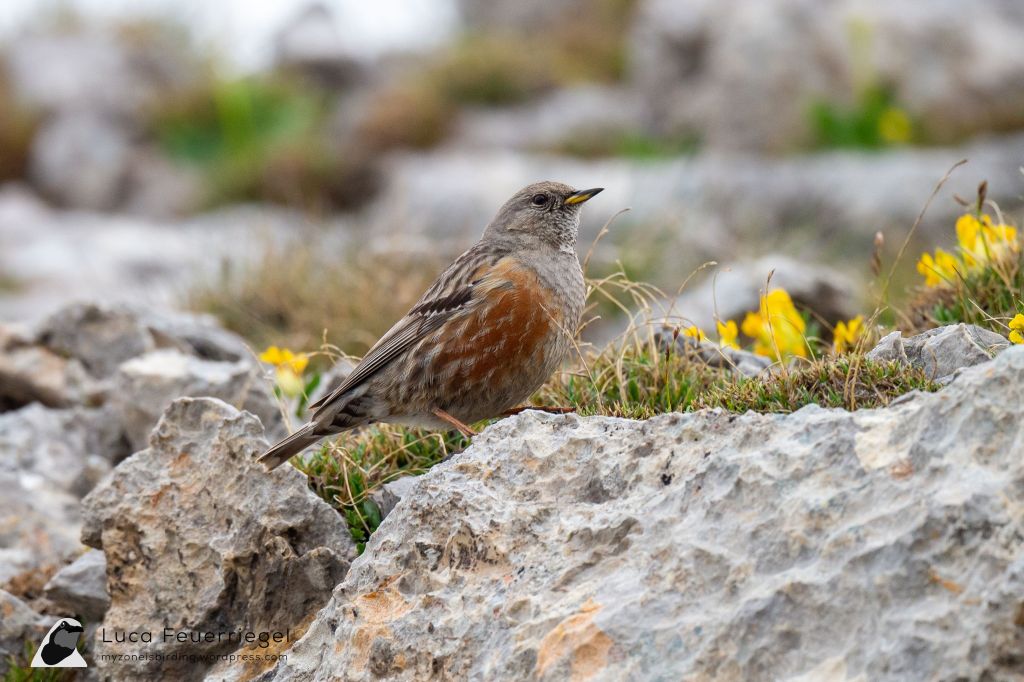
Today, we would descend back to Mittenwald, but our priority for the morning was to find Rock Partridges. We headed downhill with our birding equipment including scope and tripod, arriving in the correct area at 5AM. This is pretty much the only spot in Germany where Rock Partridge can be found, pretty much invariably located by their calls (which had largely died down by this time of year). Two birders were already there, saying they heard the bird twice (first time at 3AM), but did not see it. Despite extensive scanning, we remained unsuccessful. We didn’t expect to see this bird, but it would have been nice as it would have been the only potential lifer for Fynn on the trip. We returned to the hut, packed our bags, and headed towards Mittenwald. The rocky slopes of the Arnspitz held large numbers of butterflies, Alpine Accentor, Water Pipit, Northern Wheatear, and Golden Eagle. The managed spruce forests closer to Mittenwald seemed rather devoid of birds, but we saw Spotted Nutcracker in the transition between the upper reaches and the final stretch, an area that appears to be good for Hazel Grouse (Boreal Owl has also been seen here).
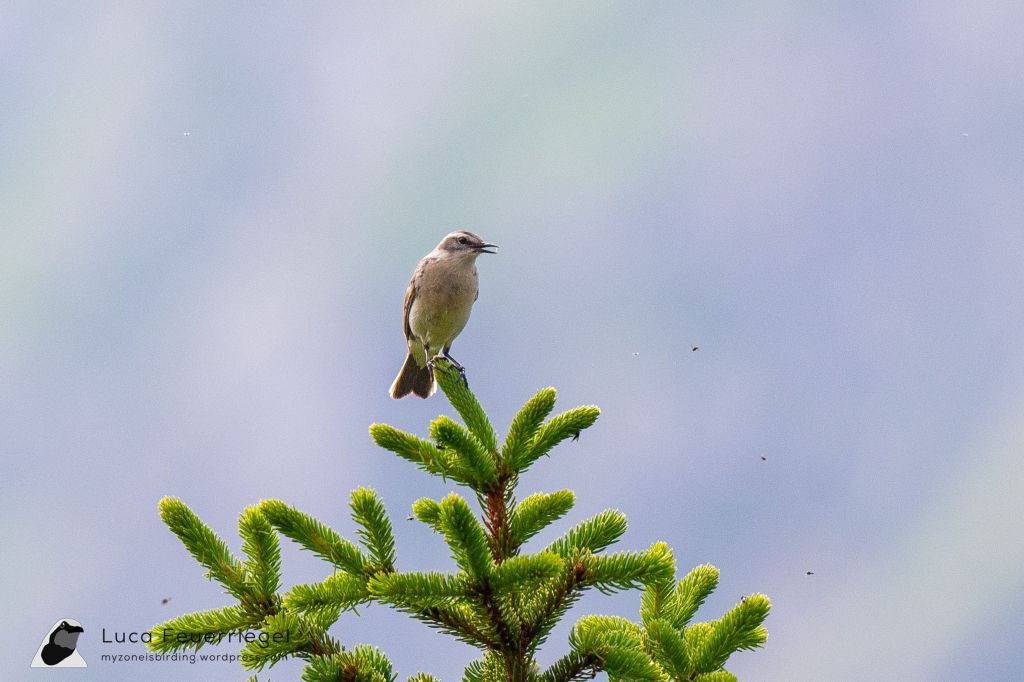
Arriving in Mittenwald, we greatly welcomed the comfort of our accommodation, Pension Karner – having a shower and a comfortable bed was pure luxury! We wanted to treat ourselves to some nice food and opted for pizza. This ended up being a mistake which I’ve committed several times, and never seem to learn. Previously on exhausting cycling trips, I’ve had the desire for pizza which always ended to way too heavy to digest. We had a great evening however, with an intense lightning storm making us even more happy to be in a cosy house.
26.06.
After a relaxing and extended breakfast in the sun at the Pension Karner, we headed towards the Dammkar hut. The way up was rather uneventful, although we had nice sightings of Goldcrest, Common Firecrest, Dunnock, Eurasian Treecreeper, a tame family of Willow Tits, and a Spotted Nutcracker. We arrived at the Dammkar hut in the late afternoon, and got ready to head up the steep path towards the Karwendelgrube very early the next morning.

27.06.
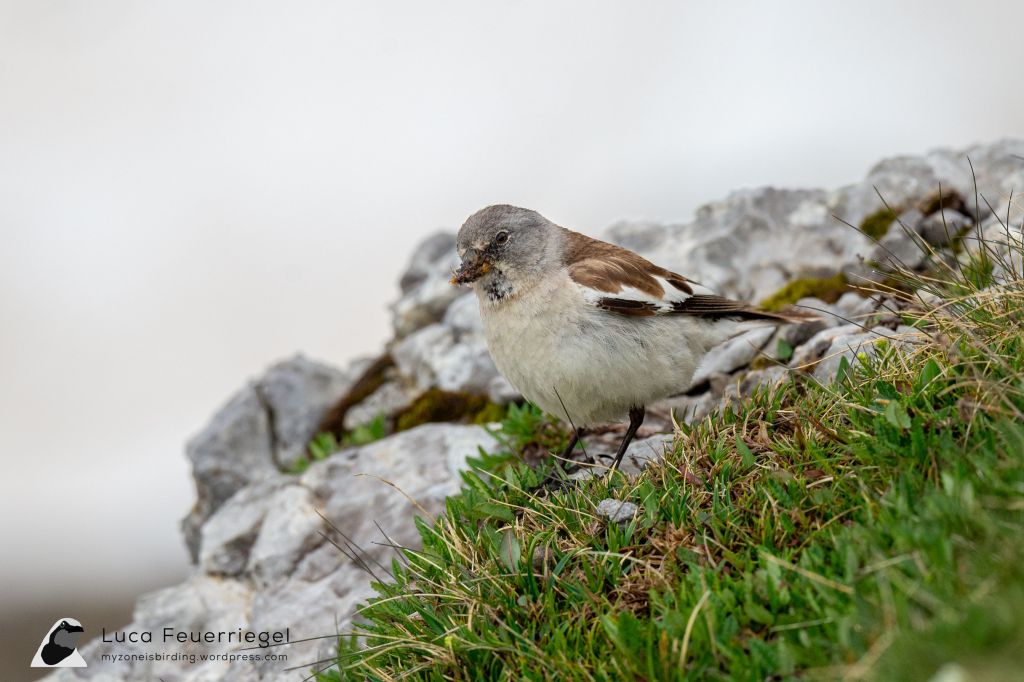
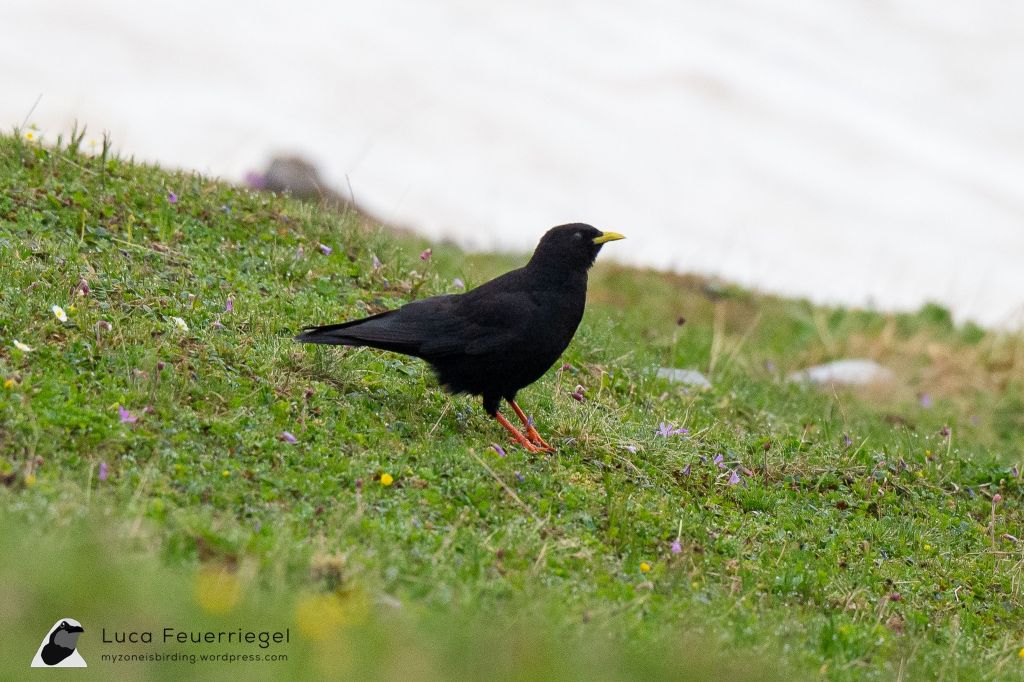
Soon after leaving the hut, the track became very tough to traverse as it alternated between loose spree and snowfields, being steep all the way up to the Dammkartunnel. It was still rather dark, but we saw Black Redstart, White-winged Snowfinch, Northern Raven, and Alpine Chough. The real special was a Wallcreeper that I spotted at a distance on the high cliffs that engulf the narrow valley. The area here right in front of the Dammkartunnel is apparently good for Rock Ptarmigan, but we didn’t see any.
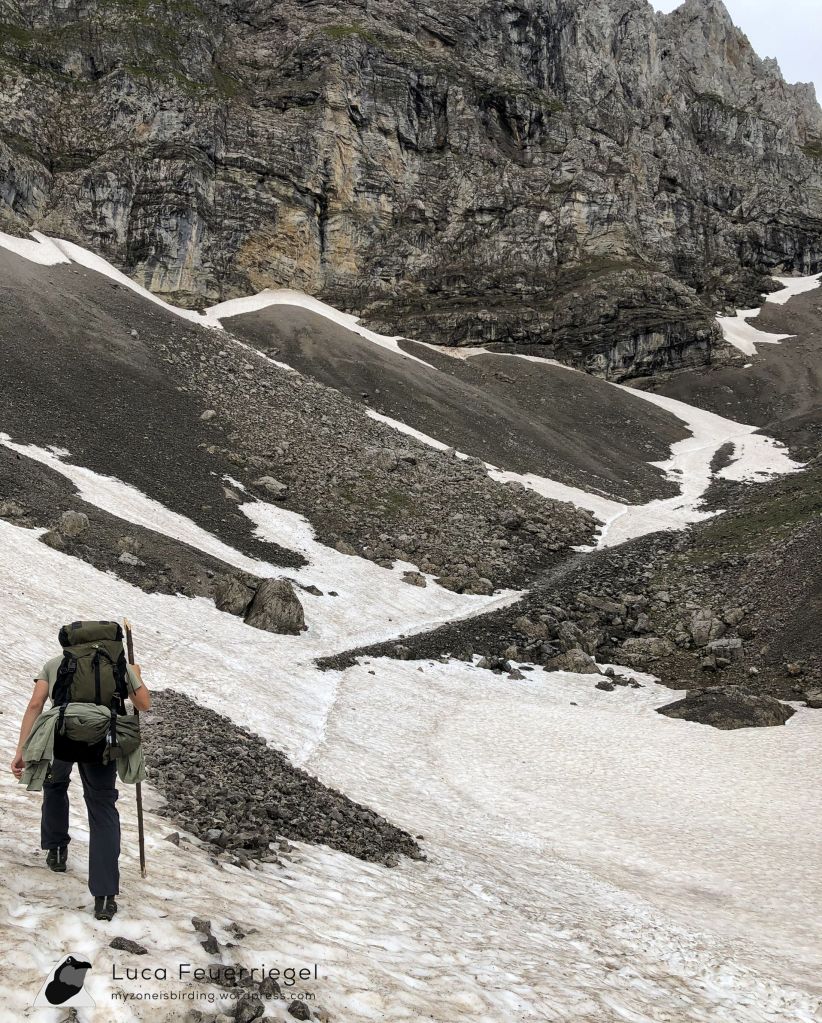
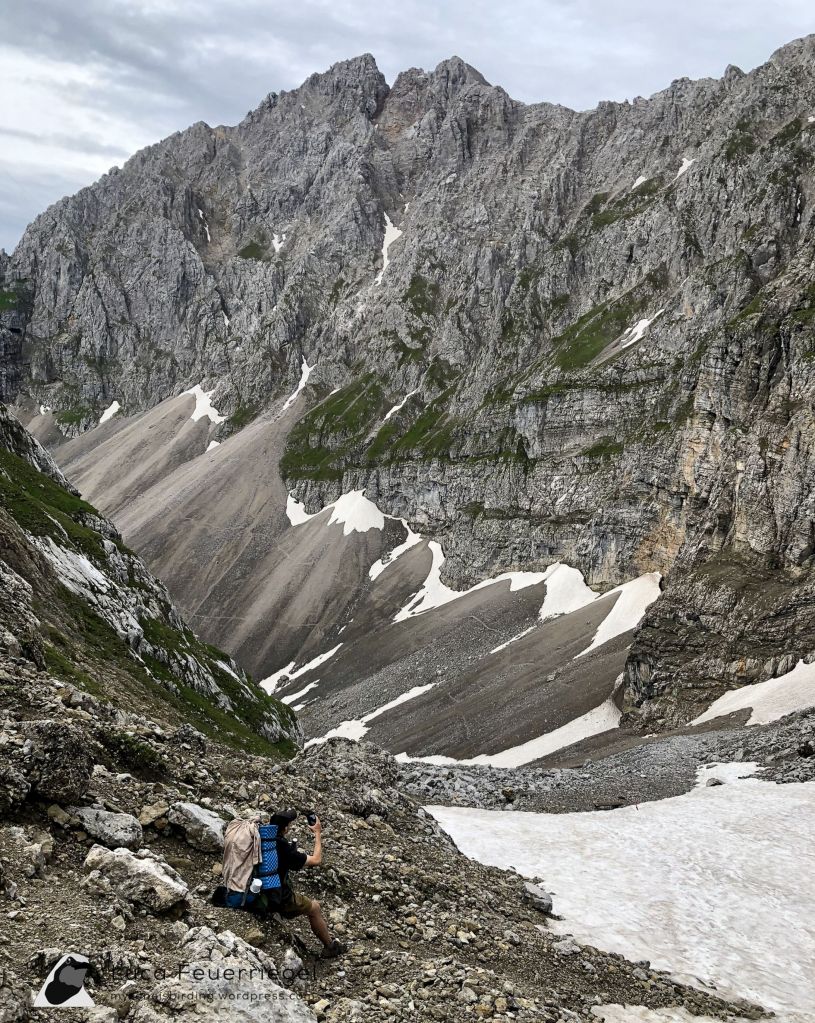
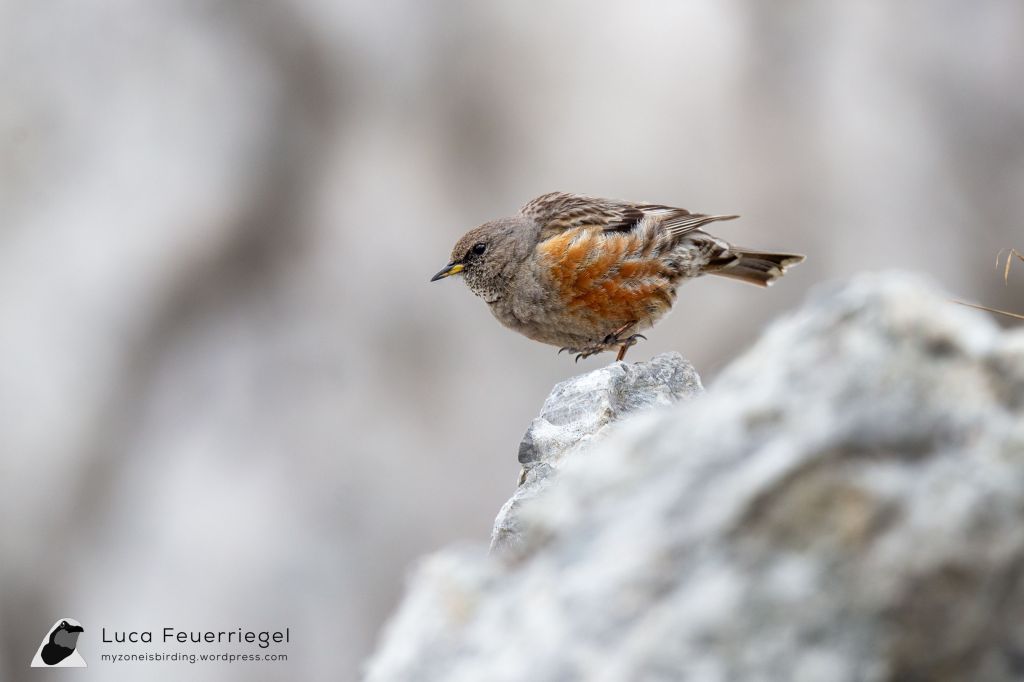
After crossing the uncomfortably cold tunnel, we arrived at the Karwendelgrube still quite early, but unfortunately also covered in fog. We easily had Alpine Accentor, Alpine Chough, Black Redstart, Water Pipit, and White-winged Snowfinch. We began walking the Passamani trail that loops around the Karwendelgrube, scanning intently for Rock Ptarmigan. Across the pit from the restaurant, a croaking sound suddenly exploded out of nowhere and a we had a brief view of a fly-by Rock Ptarmigan, white wings gleaming, before it cleared the ridge and disappeared out of sight. The bird probably flew in and prepared to land in the pit, only seeing us after it flew over the rim of the pit. We hoped for the rest of the morning for a resting bird, but to no avail.
For breakfast, we had bread with jam and peanut butter that we carried all the way up from Mittenwald, and enjoyed some hot chocolate at the restaurant. We stayed here for a while as Jacob was not feeling too well. He had food poisoning just before the trip, and the water we drank from the river and melted snow, added to the exhaustion, unfortunately proved to be too much. Jacob felt like it would be best to recover at home, so he decided to return to Mittenwald with the cable car and head home from there. This meant that only Fynn and I continued the hike, heading all the way back down over the loose rocks and snow fields we ascended earlier. We arrived at the Hochland hut in the early evening, happy to take off our boots after a very long day.
28.06.
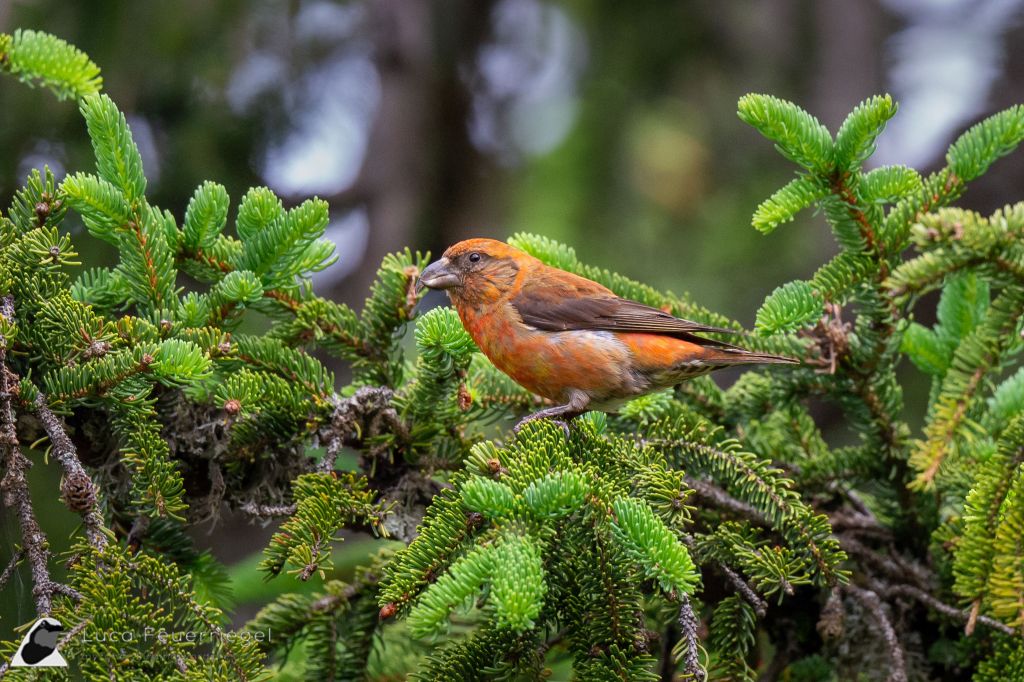
In the morning, we were entertained by Eurasian Siskins and Red Crossbills in a spruce right next to the hut. This was my best crossbill sighting yet. Unfortunately, Fynn also felt rather weak since the previous day, and was unsure whether it would be a good idea to complete the full hike. We decided to hike for a while up to a junction in the trails where we could decide how to proceed. The hike produced the usual selection of passerines, and we also saw Northern Raven, Spotted Nutcracker, and very active Three-toed Woodpeckers. Arriving here at midday, we eventually decided after a lot of back and forth that Fynn would return to Mittenwald while I’d continue to our initial destination for the day, the Soiernhaus hut. It was a real pity not to be able to complete the hike together, and as I headed towards the Soiernhaus I repeatedly wondered whether I should also have completed the trip with Fynn. However, the next few hours were very enjoyable as I passed through some different habitats, seeing Common Kestrel, Northern Wheatear and Ring Ouzel around the ascent to the Soierngruppe. This seems to be a rather harsh “whoever falls behind is left behind” ethic as in Pirates of the Caribbean, but as in the situation with Jacob, we agreed openly that this would be the best decision, and so it was comforting to know that we managed to find the solutions that worked best with everyone.
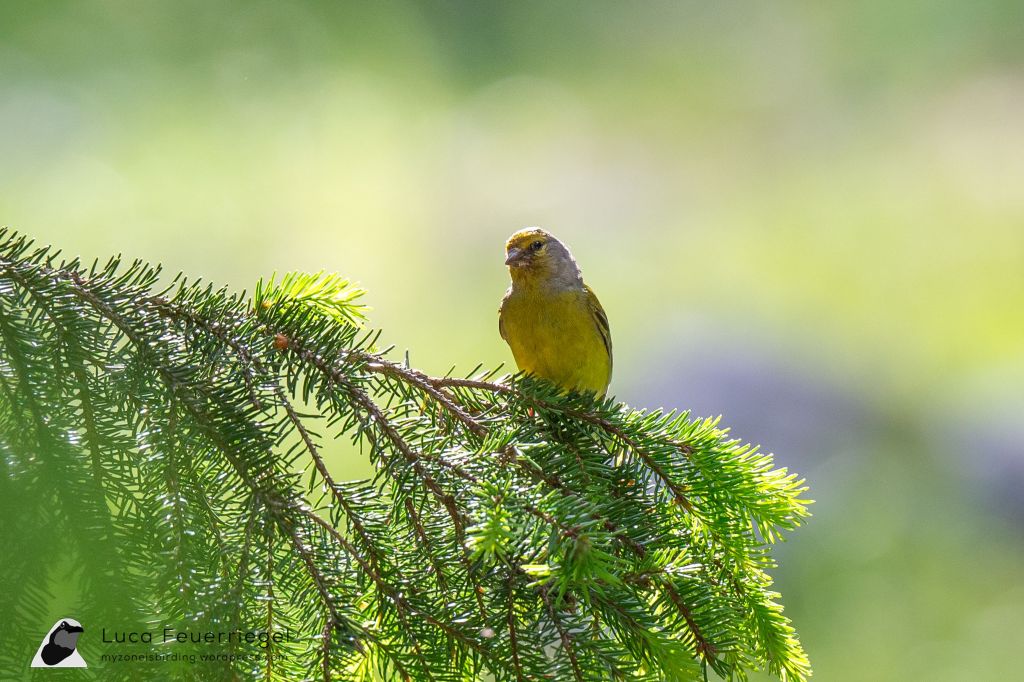
I saw a nice pair of Water Pipits as I hiked towards the small Soiern lakes. The Soiernhaus is beautifully located so I had a cold drink upon arrival, enjoying the view of the surrounding mountains in the afternoon light. In the evening, I headed down to the lake for a little swim. There was a surprising number of birds, with Grey Wagtail, Red Crossbill, Ring Ouzel, Common Firecrest, Eurasian Blackcap, and Common Chaffinch being very active. However, the cherry on top was a small group of Citril Finches, a lifer that I hoped to see here.

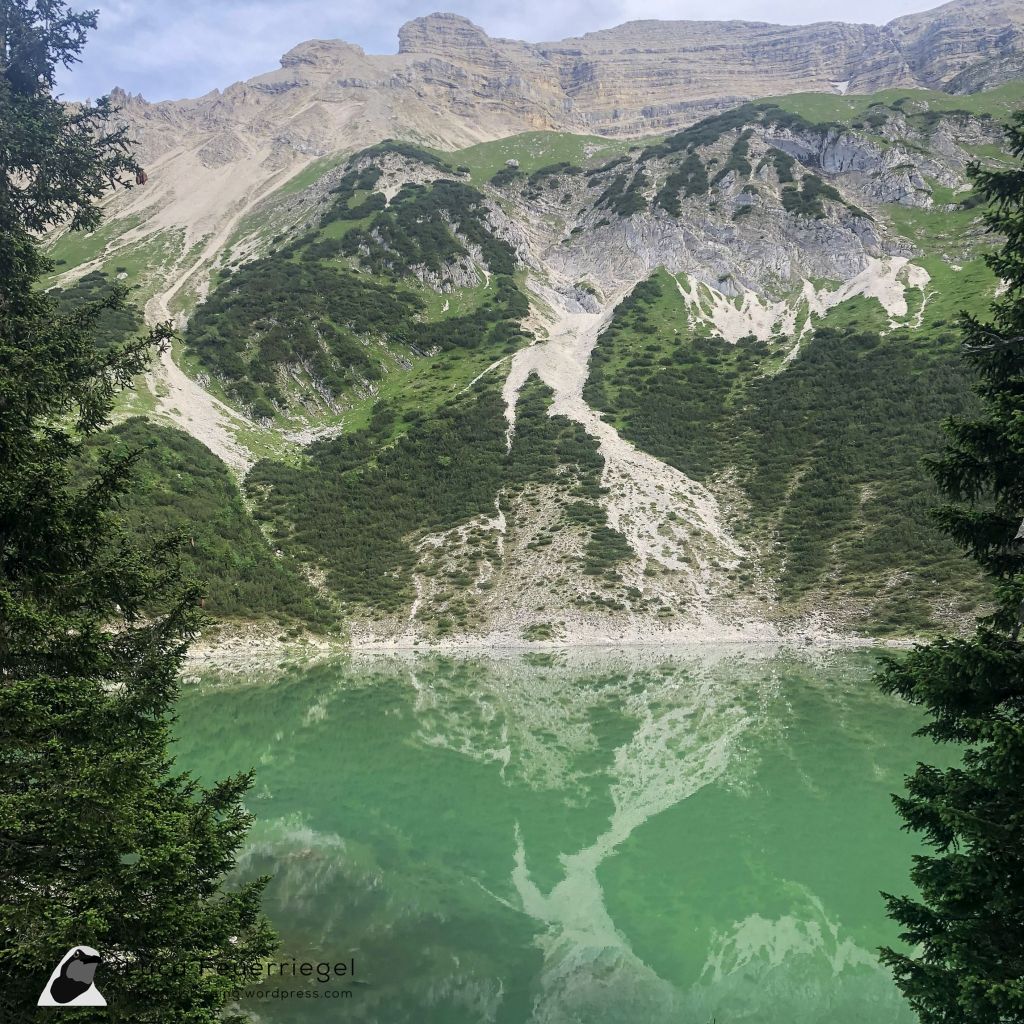
29.06.
On the last day of the tour, I headed down towards Wallgau. Great Spotted, Eurasian Green, and Black Woodpeckers, Western Bonelli’s Warbler, Coal Tit, and Red Crossbill entertained me on the descent. Near Wallgau, I had Yellowhammer, White Wagtail, Garden Warbler, and Yellow-legged Gull as I cooled off in the Isar river. I caught the bus from here towards Mittenwald and then returned to Munich by train, leaving the Alps behind me.
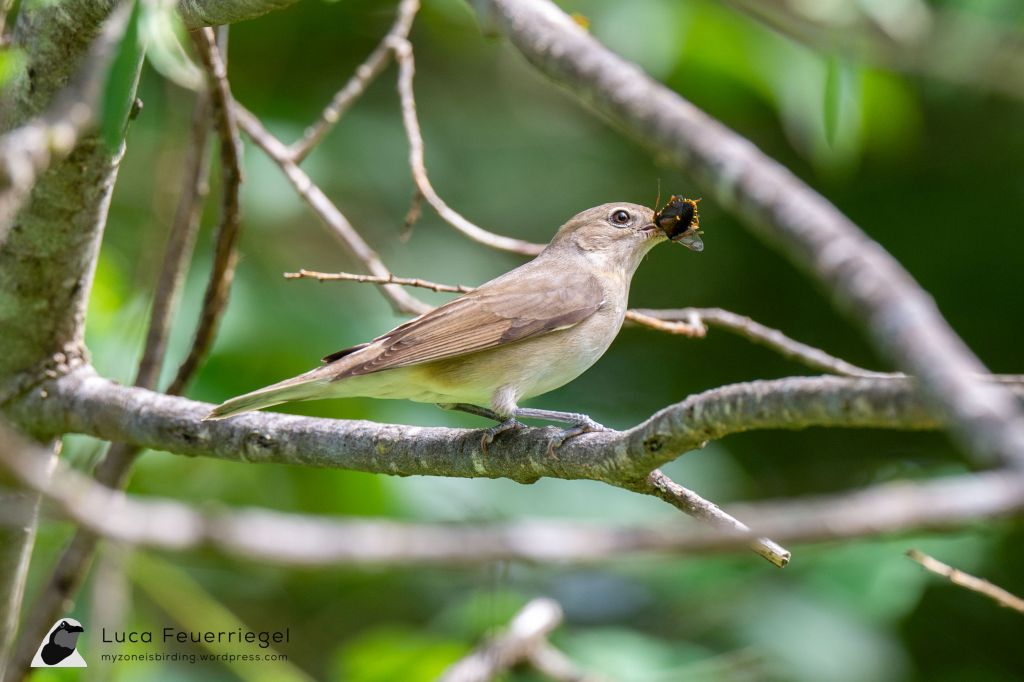
Looking back, the trip was one of the best outdoors experiences I’ve had in recent years by combining intense physical activity with birding. This was a bit similar to the cycling trips I’ve done in Sri Lanka and Southeast Europe, although this time it was with friends who are also birders, which has its obvious advantages. It was very unfortunate that we could not complete this trip together, but I was very happy to have shared nearly all of the seven lifers with Jacob and Fynn – a great haul for me. I am looking forward to eventually seeing the several species of grouse that we dipped.
 My Zone Is Birding
Wow what a hike Luca that is so cool and such beautiful scenery and of course such a variety of beautiful birds you showcased. Loved travelling with you and your mates, it was a great read, thanks. Excellent presentation and photography my friend.
LikeLike
Thank you so much, that’s lovely to hear!!
LikeLiked by 1 person