
This is the second entry on my two posts about my time as a volunteer on the island of Helgoland, following my previous post. By now, the work at the observatory and the other routines had become very familiar and I knew the island well. This was great as I could target areas in a more directed way and overall simply felt perfectly comfortable with the people and living on the island.
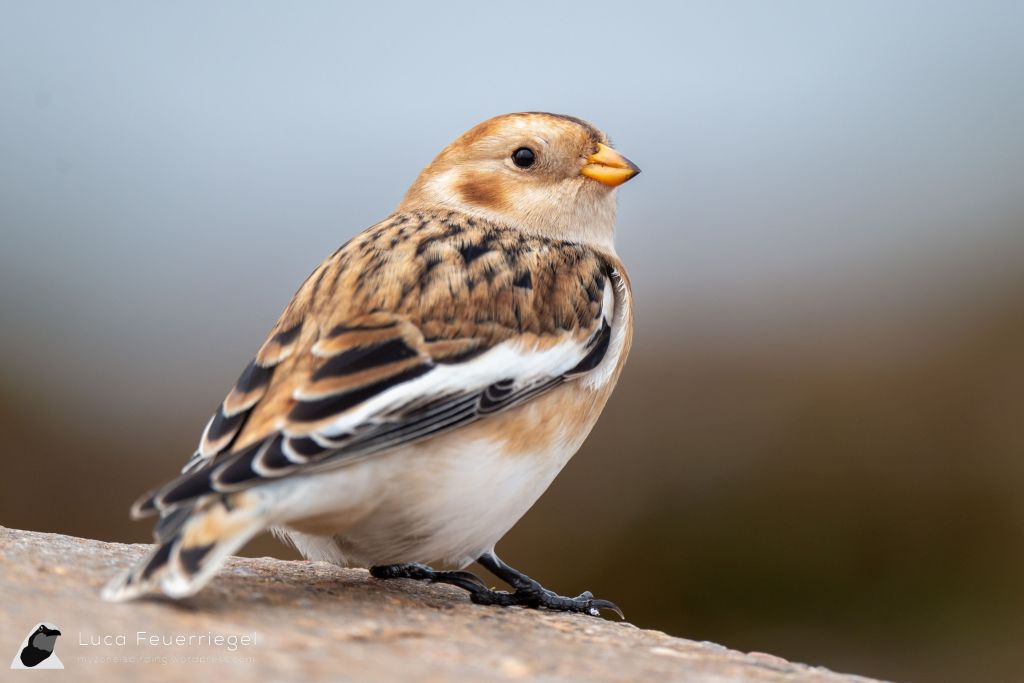
At the North-Eastern beach, Rock Pipit was added to the list of common birds, with two individuals always being there. Grey Plovers arrived as well; up to four individuals were present on some days, while Curlew Sandpipers also attracted some attention. One of my main hoped-for species eluded me in my first two twitching attempts, but I finally flushed a Little Bunting found by another birder earlier at the “sand-bag path” adjacent to the beach. This path is an excellent vantage point over the beach and Northeast area. The best bird at the beach was a fly-by Richard’s Pipit. I eventually got another excellent view of this bird, which I had only seen once before in Mannar, Sri Lanka, in the North-East area. A tame Snow Bunting, the fifth bunting species, was also enjoyable to watch.

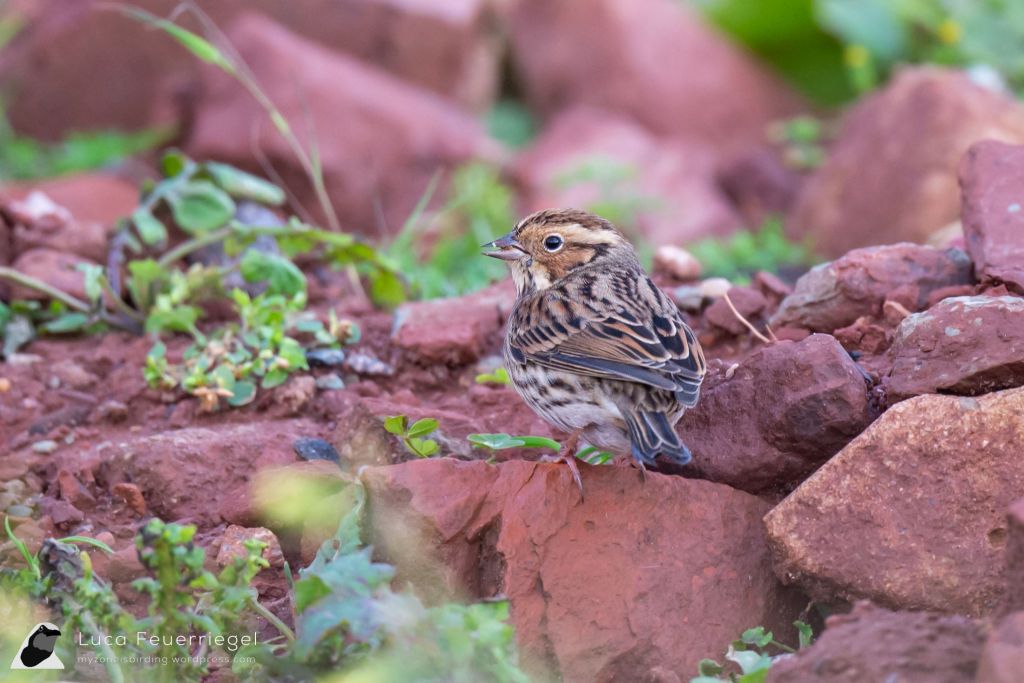
The Greenish Warbler and Iberian Chiffchaff continued to call from the bushes by the compost. The Northeast area also revealed Stock Dove, Sedge Warbler, and Common Reed Bunting, as well as Firecrest and Goldcrest, which appeared everywhere pretty much from one day to the next. This included the observatory, and ringing a Goldcrest was a highlight for me. A few days after our first sighting, Jacob and I were lucky to find two Little Buntings by the lighthouse. I did not expect that this species would be so regular, as several Little Buntings were recorded within the next few days, including a very tame bird at the Library.
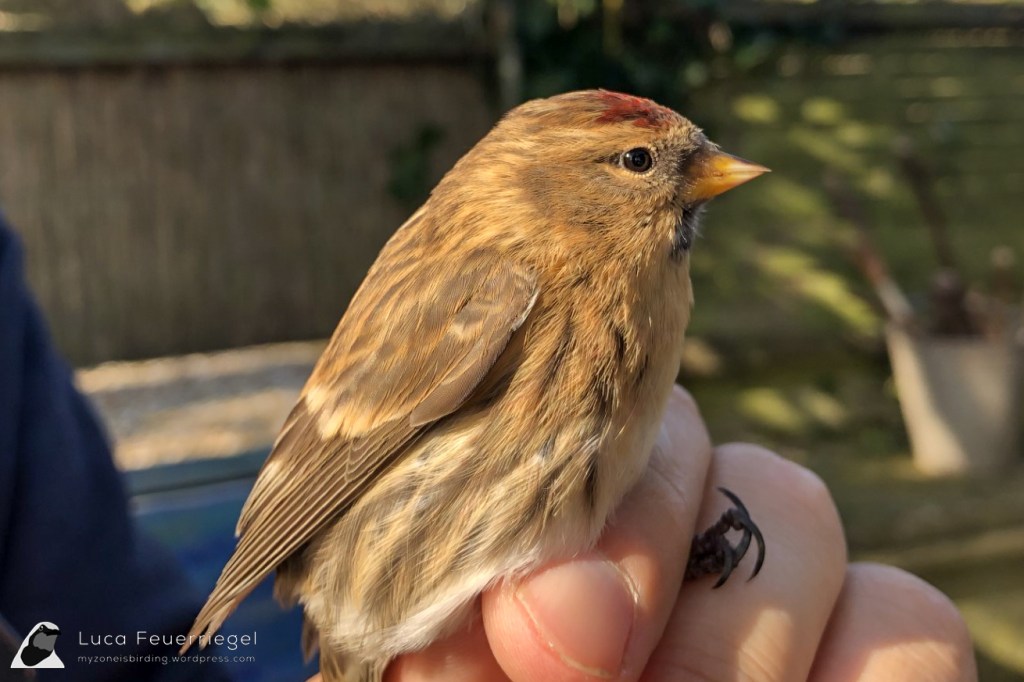
Brambling and Lesser Redpolls had also arrived – I saw groups of the latter on the Pinneberg. The former was a very popular catch in the mist nets of the observatory, and the latter was caught once in the Helgoland traps. I saw groups of the latter by the Pinneberg, a site that I went to regularly in the hope for Lapland Longspur (which sounds way cooler than Lapland Bunting), one of my main targets that I ended up missing on Helgoland.
Towards the end of my stay, it was interesting to see how patterns in migration were clearly visible. The Common Redstarts and Garden Warblers that used to be the most common birds we trapped became infrequent, and Song Thrushes became numerous. Willow Warblers were everywhere in the beginning, but were suddenly replaced by Common Chiffchaffs. Similarly, the exposed branches on which Whinchats used to perch were adorned with European Stonechats seemingly from one day to the next. The feeling of being on an island in the middle of the sea (altough admittedly it’s not that far away from the mainland) and noticing the change in birdlife over this period was one of the loveliest things about Helgoland, and why I eventually understood why others chose to stay for a year.
One of the results of the great birding on the island – combined with the constant awareness that much rarer birds could turn up at any moment – resulted in us having very high expectations. Some days were therefore disappointing as migration was very slow. We had days on which we didn’t trap a single bird in the garden. This was largely attributed to the South-West winds, whereas North-East winds are preferred during autumn migration. Evening routine included us checking the wind forecast and often noting with frustration that South-Westerly winds continue, preventing the fall of birds migrating south along the European mainland. Why couldn’t these winds at least bring some special southern birds?
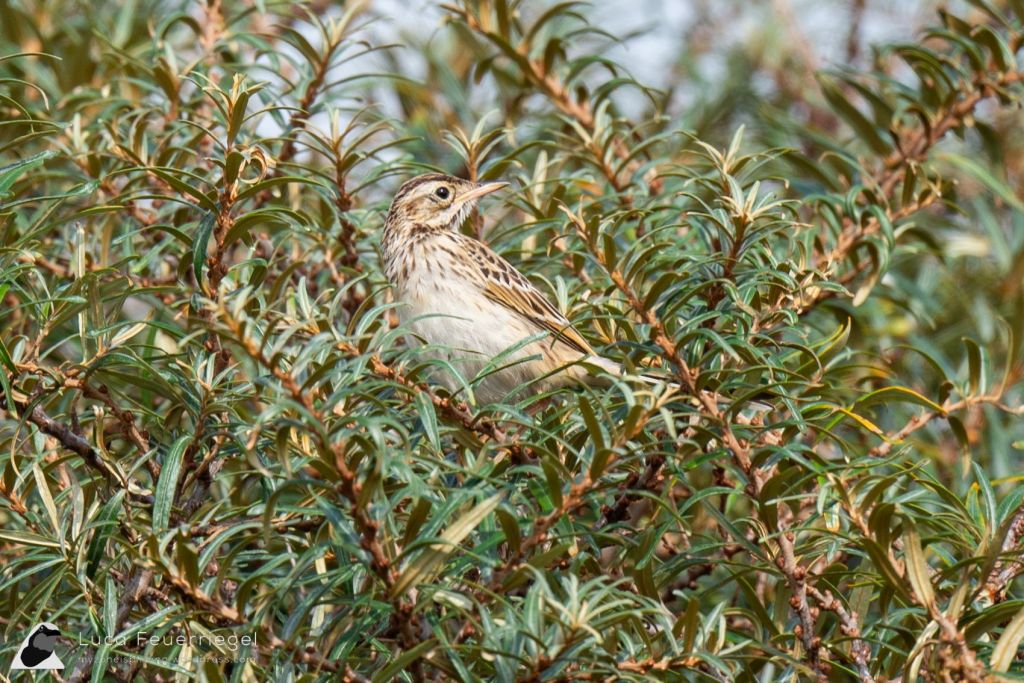
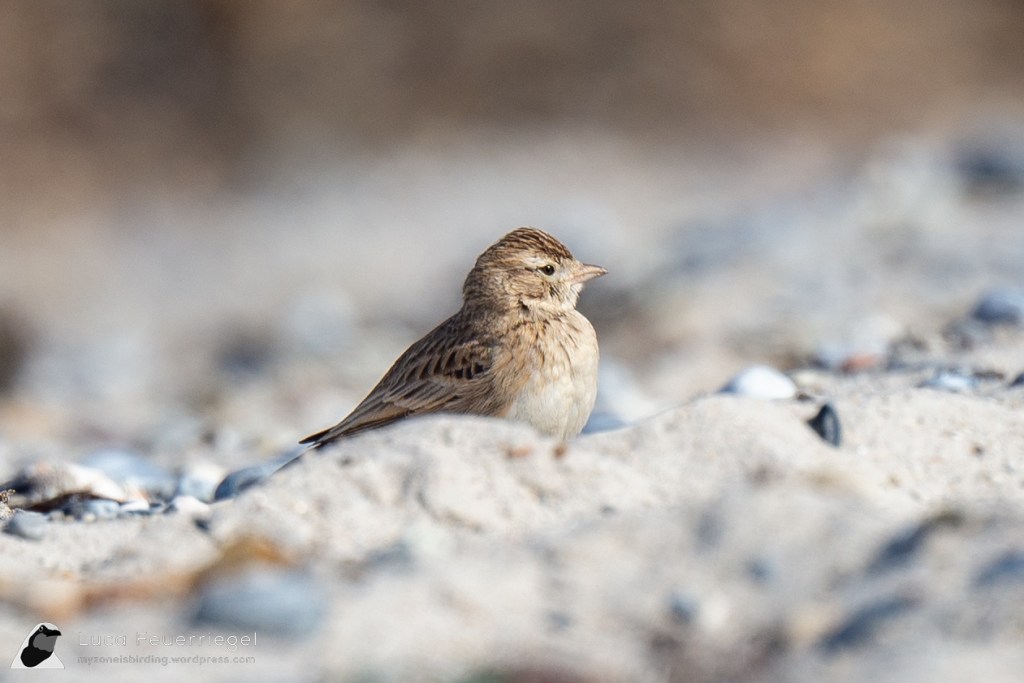
We were not completely disappointed in this regard, as we were to find out. One midday outing to the Düne with Jacob and two others produced nothing of interest along the Northern beach up to the eastern edge, which was teeming with waders. This activity got us happily engaged and I went ahead with the hope of taking some photos. As I rejoined the others, they showed me a Eurasian Skylark. We did not focus a lot on this bird due to the abundance of waders, but I took a few photos as the bird appeared a bit odd to me. I should have paid closer attention to the bird in the field: Looking at the photos with Jacob the following day, I became convinced that this was actually a Greater Short-toed Lark. I checked with Lukas and he confirmed that it was indeed this vagrant! Fortunately, the bird stayed on the island for many days, allowing many other birds to connect with it despite our small ID “failure” (which still annoys me when I remember). The visit to the Düne also produced Mediterranean Gull and Rook.
One of the rarest vagrants came one day as Jacob and I rushed to the Oberland between trapping sessions to watch a very tame Little Bunting that had photographed before. We were unlucky in this regard but as we were some distance apart on two small hills close to the Pinneberg, we both got a notification: Isabelline Shrike, North-East area. We looked at each other and Jacob shouted “let’s run!”. And that’s what we did. We got to the site within a few minutes and were told the bird was flushed from the ground and briefly perched on a bush, but then disappeared into a thicket. We started searching the area with fervour, but some of the tension was lifted as I had the comical sight of birders gradually appearing out of nowhere and walking across the football pitch towards the site, as if they were spawning from some invisible location beyond. We had to return for the last trapping session of the day which fortunately did not produce much; so off we were again, running to the site. This time we were lucky as the bird had been relocated as we arrived, panting. We ended up seeing the Isabelline Shrike for an hour on and off, but apart from a few seconds, it remained incredibly well hidden in the thicket as the light faded. The next morning, there was no trace of it.

This was a completely unexpected bird, but several species were specific targets for me. Jack Snipe was one such species, and a few sightings came in from other birders. Traditionally, good spots are the puddles by the compost heap in the North-East area and the ponds on the Düne. Chatting with others in the kitchen soon after one individual was reported from the rocks of the main island’s north-west pier, I saw a small wader-like bird fly in the direction of the observatory. As it passed, the dark body with golden stripes on the back, the size, and the bill meant only one thing – Jack Snipe!
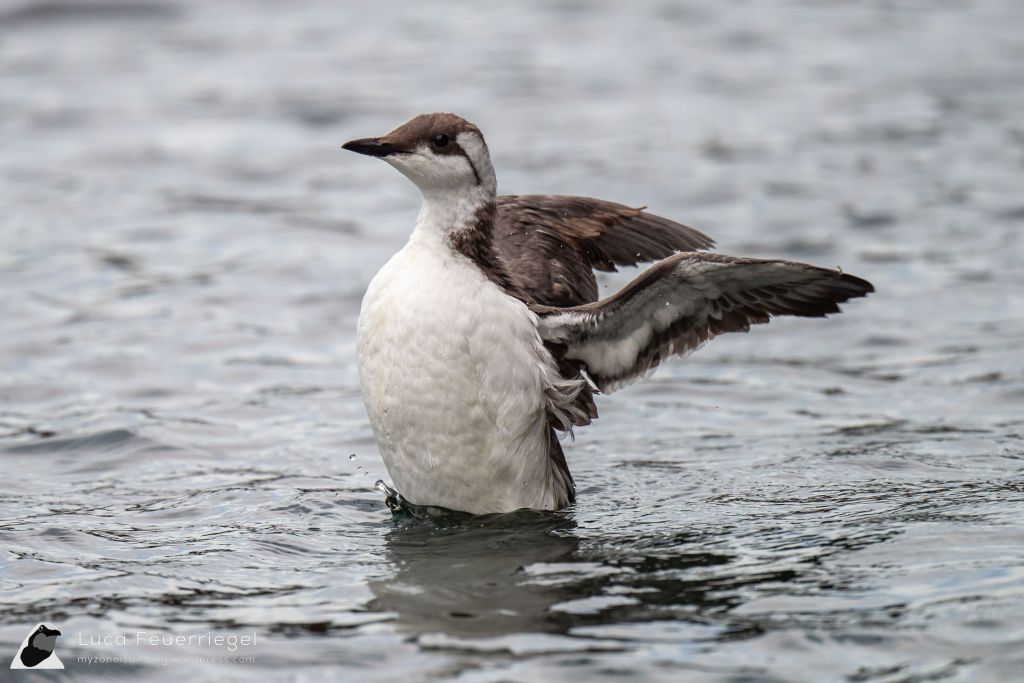
One day, we picked up two Common Guillemots that were brought to Helgoland from a rehabilitation center. We ringed them and released them into the sea at the Northeast harbour, easily a bird handling highlight for me. Their dense but incredibly soft plumage was amazing, and their bubbling calls as we let them go by the water’s edge were adorable.
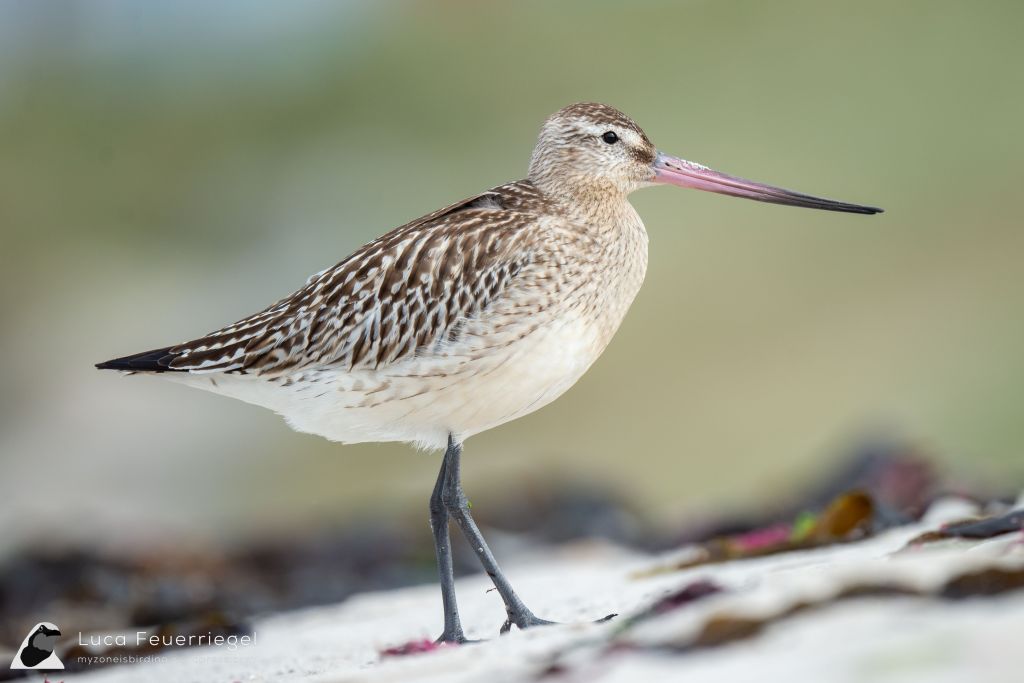
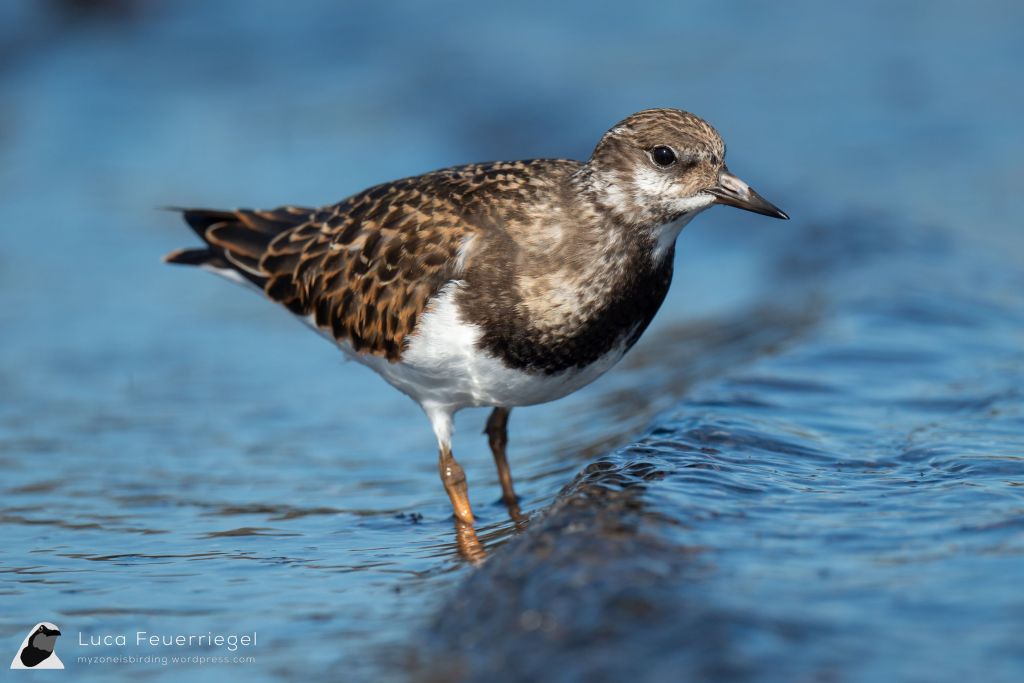
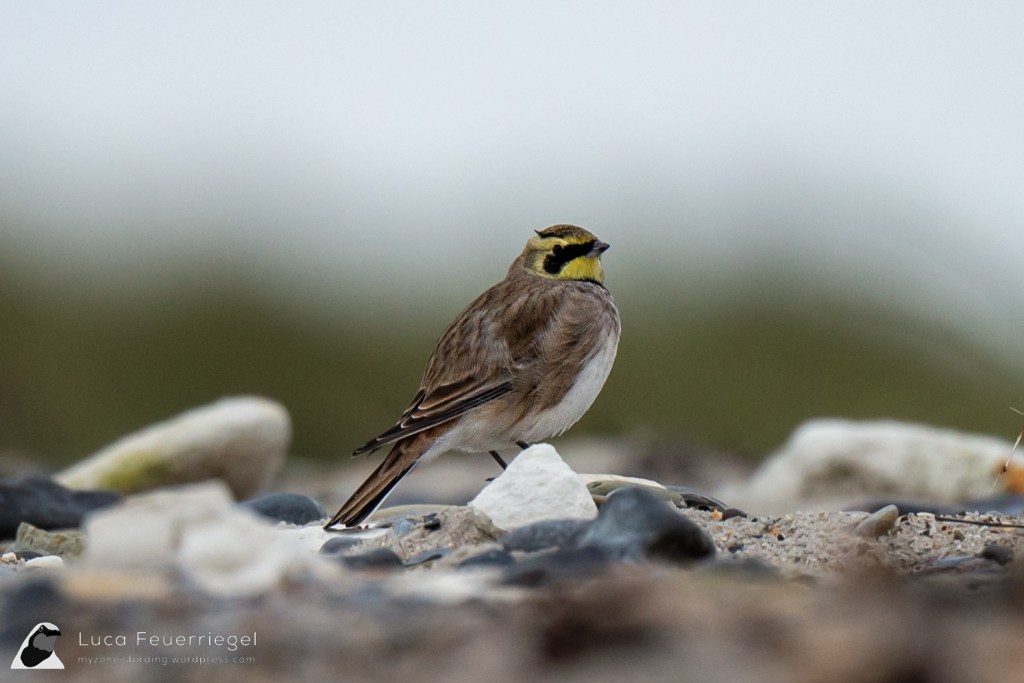
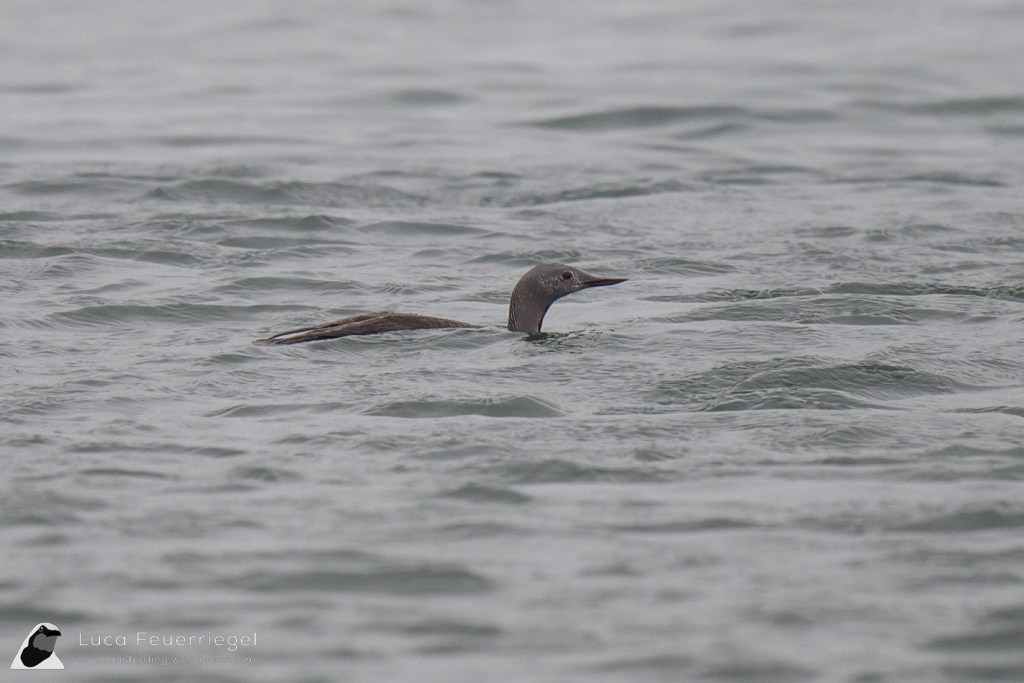
On my second-to-last day, Jacob and I took the morning off to spend some time on the Düne. Particularly large numbers of of the usual waders – well over 100 Dunlins, and nearly as many Ruddy Turnstones and Common Ringed Plovers, in addition to large groups of Bar-tailed Godwits, Grey Plovers, and Red Knots rested on the Northern beach. Jacob picked out a Purple Sandpiper from the masses, and I found an unusual migrant at this time of year in the form of a Black Tern. We also found the Greater Short-toed Lark again along the beach (some consolation that at least we could immediately identify it this time). The highlight came in the form of two Horned Larks. This was a long-awaited lifer for me, and what an attractive bird! We also picked up a Eurasian Skylark on the “Aade” to increase our lark tally, although trying to turn it into a Oriental Skylark was unsuccessful – not that we recognized ourselves as authorities for rare larks anyways, at this point…. The highlight at the Aade however was a breeding plumage Red-throated Diver fishing in close proximity to the beach, easily my best sighting of this species. The Golfteich chimed in with Common Snipe and a flushed Jack Snipe providing good views in flight. Despite these great sightings, we heard that the first trapping session in the morning back at the observatory resulted in 60 birds, mainly thrushes. This was a bit of a bummer, as we had hoped for all these weeks to have at least one very productive session. Still, we didn’t complain after our successful morning.
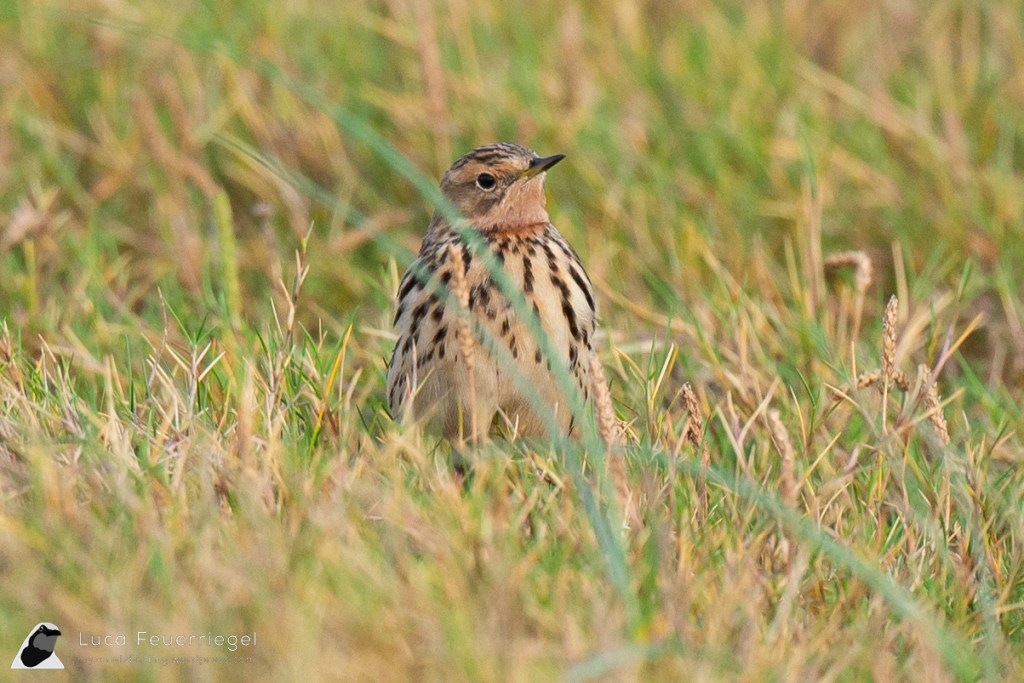
One of my most desired birds that had continually eluded me, a Red-throated Pipit had been located in the South harbour area on my final day. Jacob and I got permission to go between two trapping sessions, giving us an hour to find it. The harbour is quite at distance from the observatory (in terms of Helgoland distances…), so we got to the spot panting. The first birders we met told us the bird had disappeared. However, someone soon relocated it at the often-productive open area adjacent to the South-Western pier, and we quickly had great views of a stunning adult Red-throated Pipit among huge numbers of Meadow Pipits. Most sightings of this species are of flying birds and mainly juveniles arrive on Helgoland, so the beautiful red throat is often not seen. What a stunner, and what an way to end my time on the island!
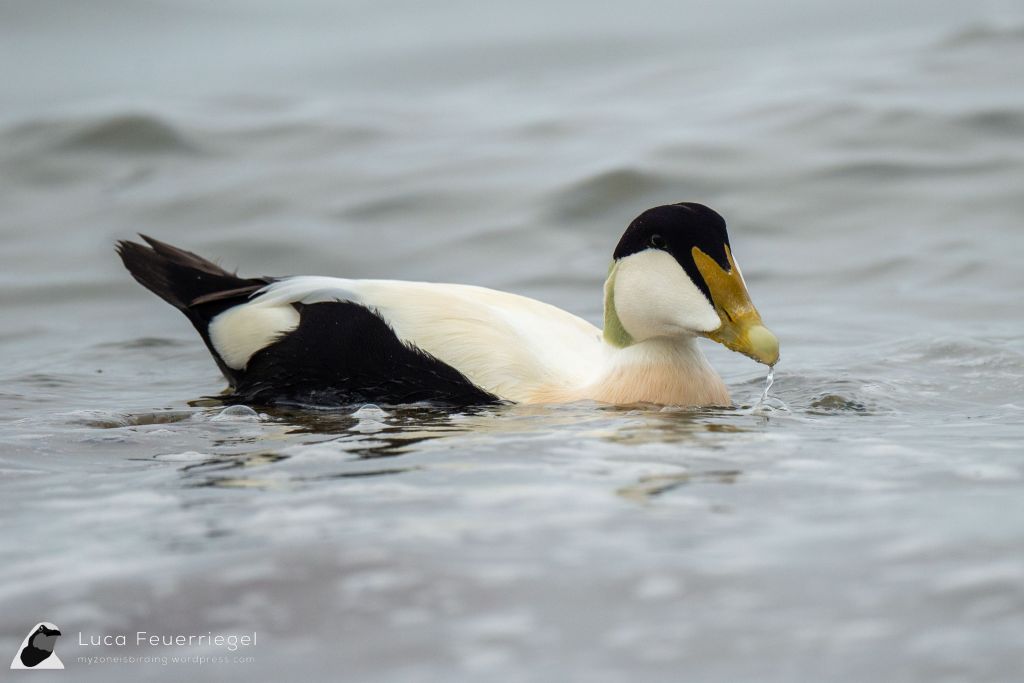
A final visit to the North-Eastern beach produced the usual birds, although we first enjoyed huge numbers of Eurasian Linnets, Meadow Pipits, and a fly-by Great Crested Grebe on the Oberland. The Snow Bunting resting lazily on the North-Eastern pier, with a crowd of photographers nearby, waiting for the ideal photo opportunity and mirroring the activity levels of the bird. This scene was consolidation for leaving the island – the huge numbers of birders and photographeres on Helgoland in October, while surely something that also makes birding there unique, can also get overwhelming as crowds gather for every special or not-so-special sighting. A group of Common Eiders were foraging directly at the water’s edge, the males by now in their stunning breeding plumage. We also saw two Little Buntings, which we later found out had been reported earlier.
I returned to the observatory and after one last trapping session, took my bags and said bye to everyone at the observatory. As the work is very intense and one spends every day together, I grew close to the people and it was sad to say goodbye (but we already have a birding trip planned for the Alps next summer!). The ferry trip to Cuxhaven produced large numbers of Little Gulls, two Red-throated Divers, Arctic Skua, and Northern Fulmar, as well as some Harbour Porpoises, concluding a very fun, interesting, and successful stay. I will definitely try to volunteer at the observatory again and am particularly looking at late May and October, which appear to be very interesting times. This may be partly out of Fomo, which I’ve never experienced as much as during my time on Helgoland and the weeks after. Since the island is so small, you know you can always theoretically get to the site where a rare bird is found within minutes. Secondly, there is always the chance that you will find a rarity, so most of us, even when exhausted, went out birding as much as possible. Even as I am writing this post, I am getting messages of rarities which, frustratingly, have only become better and more frequent since I left: e.g. Pied Wheatear, Red-flanked Bluetail, and Eyebrowed Thrush (second record ever for Helgoland!) within a week after my departure. What an amazing island!
 My Zone Is Birding
2 thoughts on “Helgoland (Part II), 18.09.-02.10.2023”